
Combustion
Since 1948, Purdue researchers have set the standard for combustion and propulsion experiments. Work at Zucrow Labs led to the development of the original Space Shuttle Main Engines. Today, new technologies allow propellants, combustors, and rocket engines to be conceived, constructed, and tested with unprecedented accuracy. With the blossoming private space industry, Purdue combustion engineers are in high demand.
In addition, Purdue has unmatched research facilities in the diagnostics of flames and combustion. The High Pressure Combustion Laboratory at Zucrow Labs is the only facility of its kind in the world. It includes the Tebbe TDI Laser Lab, a 2,000 square-foot climate controlled facility, runs adjacent to 5 brand new test cells, for optimal inclusion of laser diagnostic measurements in combustion experiments.
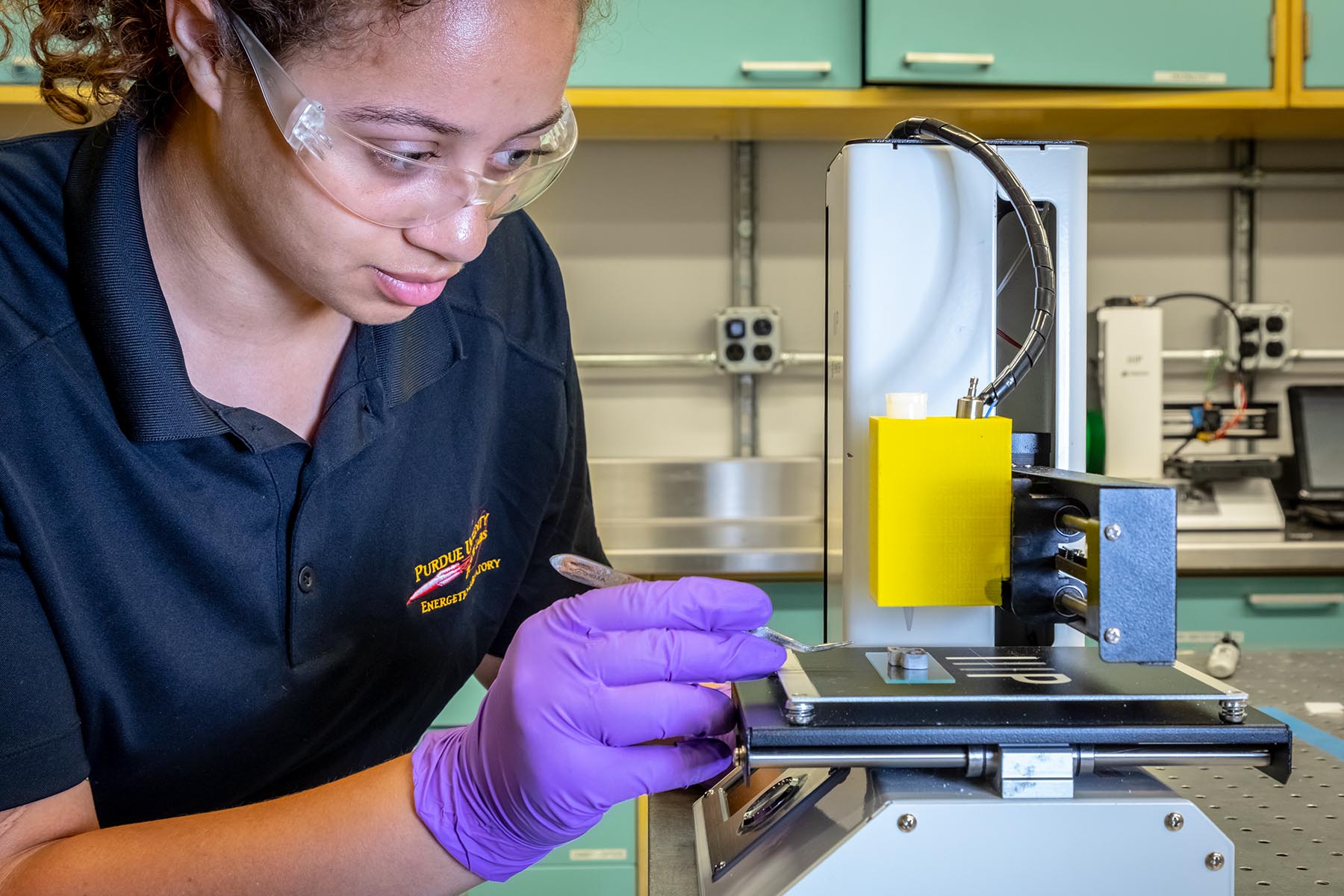
Purdue is also well known for its work with energetic materials: propellants, explosives, and pyrotechnics. At the Purdue Energetics Research Center, new advancements are being made in the formulation of rocket fuel, ammunition, controlled detonations and explosions, and much more.
Zucrow Labs is the largest academic propulsion lab in the world. Facilities include:
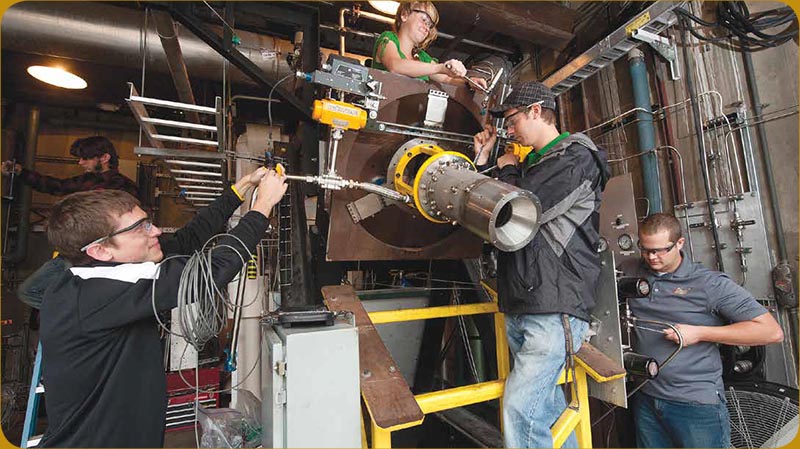
- Multiple reinforced concrete test cells with laser diagnostics
- Propellant labs with mixers, evaluation rigs, and safety equipment for remote operation
- Compressed air delivering 3300 cubic feet at 2200 psi
- Air heater, capable of testing at 1500°F at Mach 4
- On-site bulk storage and infrastructure for hydrogen, liquid oxygen, liquid nitrogen, and natural gas
- Data acquisition and storage with analog/digital sensors, high-speed cameras, and controls
More detailed info at purdue.edu/zucrow



Faculty in Combustion
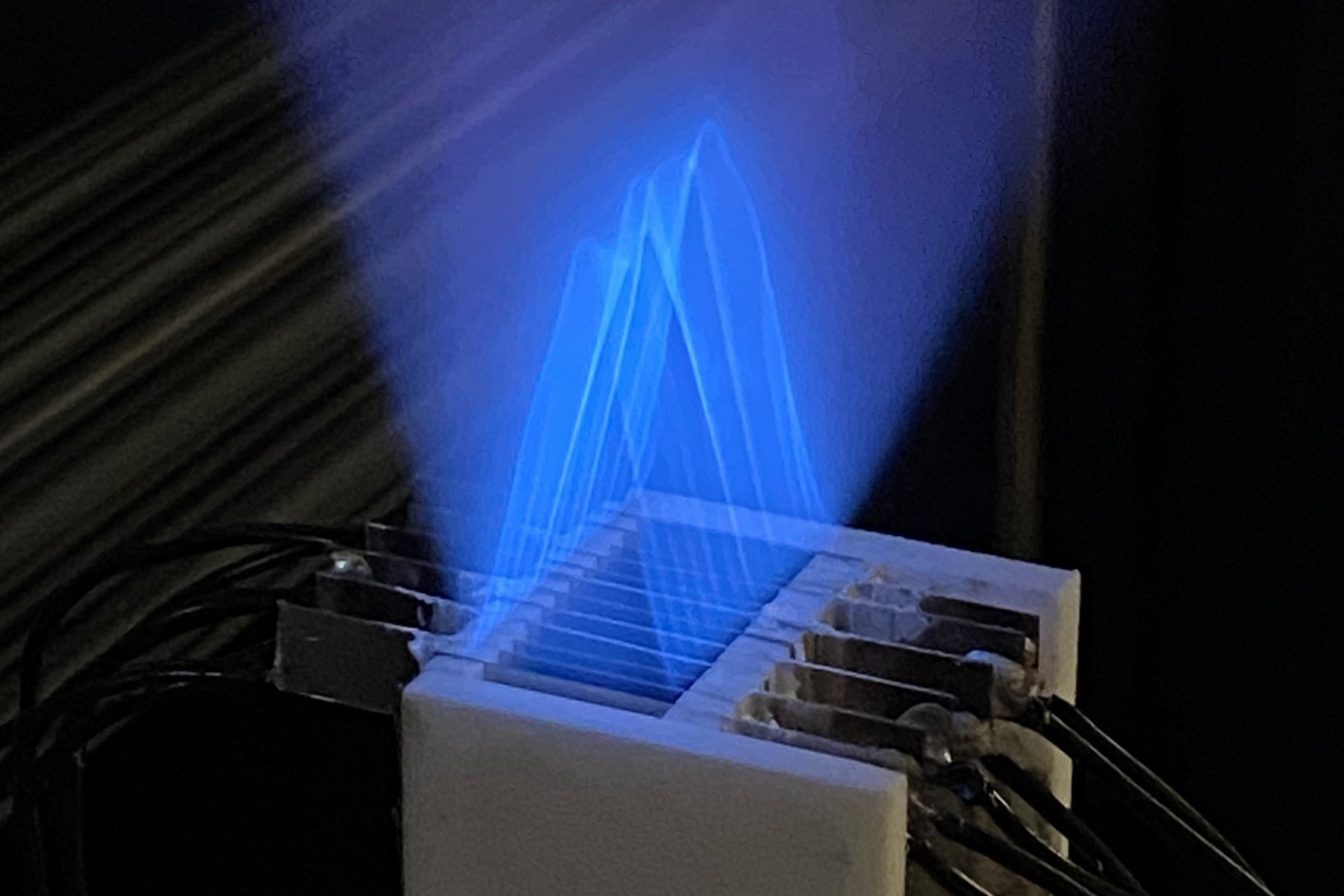
- Laser absorption spectroscopy diagnostics for gas temperature, pressure, velocity, and chemical species
- Laser-induced fluorescence and photophysics
- Non-equilibrium gases and reaction kinetics
- Hypersonic flows, shock waves, and detonation waves
- Combustion and propulsion
- Predictive, multi-scale modeling and simulation of microstructure evolution in confined granular systems, with an emphasis in manufacturing processes and the relationship between product fabrication and performance.
- Application areas of interest include:
- (i) particulate products and processes (e.g., flow, mixing, segregation, consolidation, and compaction of powders),
- (ii) continuous manufacturing (e.g., Quality by Design, model predictive control, and reduced order models), and
- (iii) performance of pharmaceutical solid products (e.g., tensile strength, stiffness, swelling and disintegration), biomaterials (e.g., transport and feeding of corn stover) and energetic materials (e.g., deformation and heat generation under quasi-static, near-resonant and impact conditions, and formation and growth of hot spots) materials.
- Sustainable energy and environment
- Combustion and turbulent reacting flows
- Combustion and heat transfer in materials
- Biomedical flows and heat transfer
- Global policy research
- Computational solid mechanics
- Multiscale modeling of materials
- Finite Elements
- Dislocation dynamics
- Reliability of electronic interconnects
- Shock compression in solids
- Phase transformations
- Energetic materials
- Laser diagnostics
- Diode-laser-based sensors
- Gas turbine and internal engine combustion
- Materials processing and synthesis
- Combustion science
- Fluid mechanics and heat transfer
- Dissimilar material 3D printing
- Additive manufacturing of energetic materials
- Additive manufacturing of materials for high temperature applications
- Quality control in additive manufacturing
- Application Areas: Advancement of high-speed flow and propulsion systems, including high-enthalpy flow tunnels, rotating detonation engines, ramjets, high-speed gas turbine and combined cycle engines, and bench-scale supersonic flight test rigs
- Fundamental Studies: Experimental investigation and detailed understanding of multiphysics thermal-fluid transport in high-speed, turbulent, and multiphase reacting flow environments
- Measurement Specialties: Development and implementation of ultra-highspeed imaging and spectroscopy for a wide range of temperatures, pressures, fluid phases, flow velocities, chemical species, and physical states.
- Gas turbine combustion
- Internal combustion engines
- Laser-based spectroscopy
- Synthesis of energetic materials
- Chemistry of nitrogen-rich compounds
- Characterization of explosives, propellants, and pyrotechnics
- Electrochemical synthesis
- Thermochemistry of energetic material synthesis
- Reactive and agent defeat materials
- Model-based system and control design of commercial vehicle power trains
- Connected and automated commercial vehicles
- Internal combustion engine & after-treatment system design and controls
- Flexible valve actuation in diesel and natural gas engines
- Multiphase combustion, particularly related to propellants, explosives, and pyrotechnics
- Nanoscale composite energetic materials
- Advanced energetic materials
- Microscale combustion