
Fluid Mechanics
Fluid Mechanics affects everything from hydraulic pumps, to microorganisms, to jet engines. Purdue brings together a world-class group of researchers to model these behaviors in the computer, and then apply them to real-world situations.
Whether it’s air flowing over the blades of a turbine, or liquids coating a batch of pharmaceutical tablets, Purdue boasts one-of-a-kind facilities that enable researchers to explore new theories and set new standards: including the largest academic hydraulics lab in the country. Even at the microscopic or nanoscopic level -- even within the human body! -- Purdue researchers have the expertise to forge new discoveries every day.



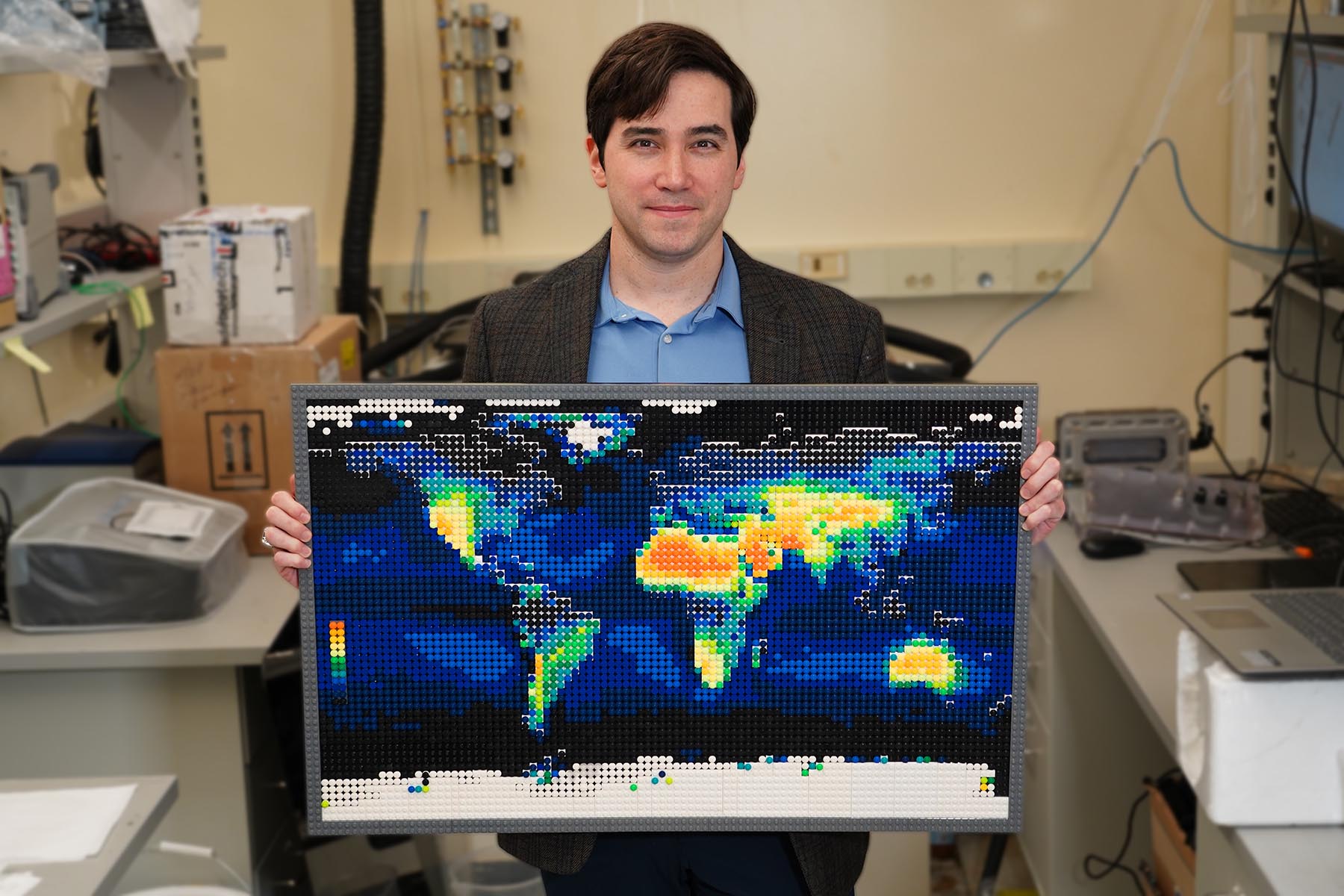

Faculty in Fluid Mechanics
- Fluid dynamics
- Biomaterial
- Multiphase flows
- Non-Newtonian fluid dynamics
- Microfluidics
- Complex fluids
- Soft matter
- Modeling, Experiments and Simulations of turbulent boundary layers: role of initial conditions and bio-inspired micro-surfaces on evolution of velocity/thermal fields.
- Importance of turbulence and complex topography on wind energy.
- Integration of renewable with water and thermal storage.
- Translational research focus on renewable energy & society
- Wall interaction (e.g., bio-inspired micro surfaces) in respiratory flows
- Big data in turbulence, renewable energy and biomedical engineering.
- Energy and social equality
- Experimental fluid dynamics
- Development of flow diagnostic techniques
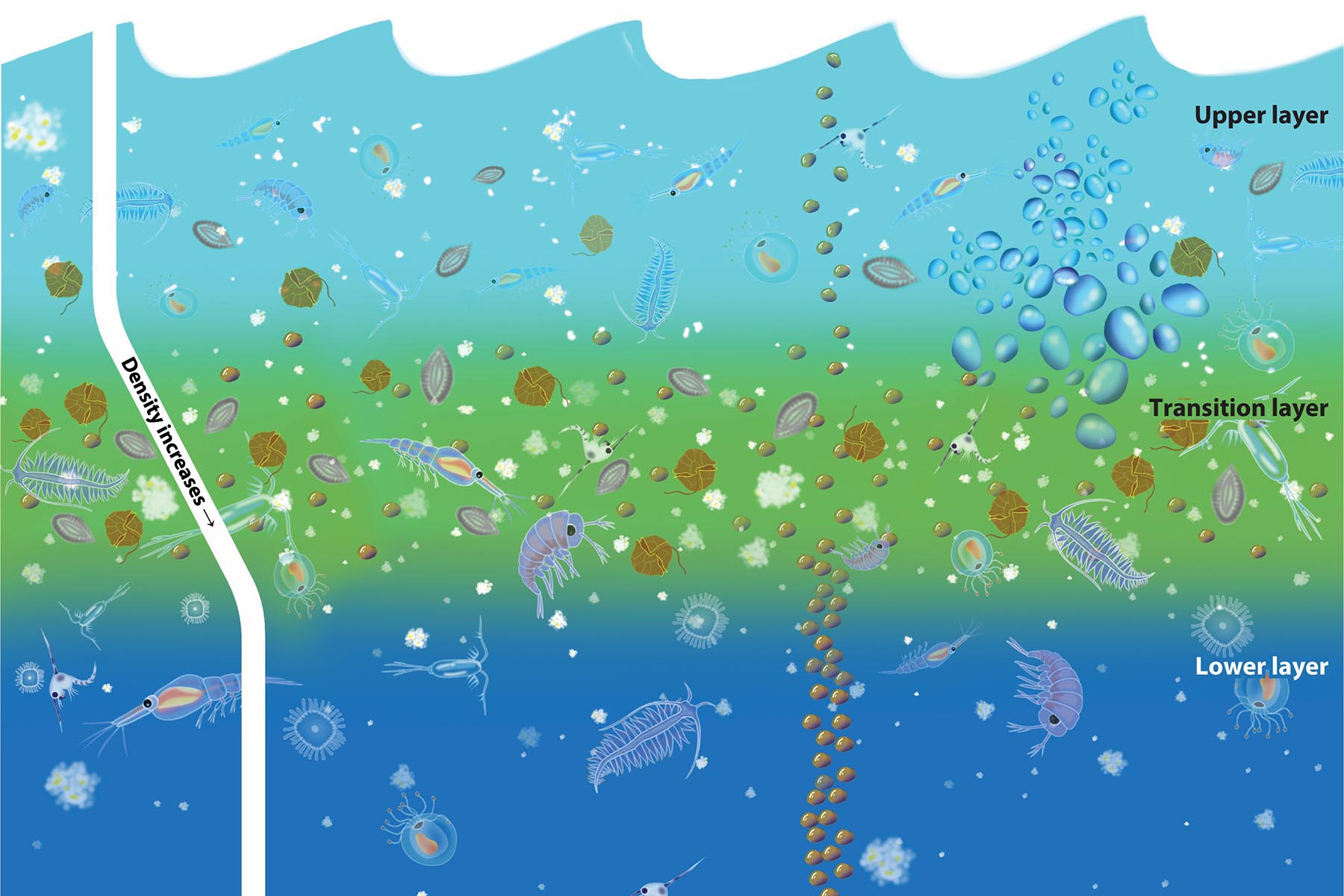
- Flow dynamics in stratified environment
- Turbulent flow measurements and modeling
- Soft hydraulics
- Fluid dynamics
- Non-Newtonian fluid mechanics
- Particulate and multiphase processes
- Computational and data-enabled science & engineering
- Scientific machine learning
- Nonlinear waves
- CFD of multiphase flows
- Turbulent gas-liquid flows
- Cavitation
- Heat transfer
- Laser absorption spectroscopy diagnostics for gas temperature, pressure, velocity, and chemical species
- Laser-induced fluorescence and photophysics
- Non-equilibrium gases and reaction kinetics
- Hypersonic flows, shock waves, and detonation waves
- Combustion and propulsion
- Modeling and simulation techniques for multiphase and multiphysics problems using the phase-field method.
- Isogeometric methods with applications in fluid and solid mechanics.
- Modeling and simulation tools for several biomechanics problems, including tumor growth, cellular migration and blood flow at small scales.
- Computational methods for fluid-structure interaction, especially when the problem involves complex fluids.
- Sustainable energy and environment
- Combustion and turbulent reacting flows
- Combustion and heat transfer in materials
- Biomedical flows and heat transfer
- Global policy research
- Multiphase flows
- Laser and high-speed imaging diagnostics
- Energetic materials (e.g., explosives & propellants) hydrodynamics, combustion, and model validation
- Sprays and atomization
- High-speed fluid mechanics
- Aerothermal aspects of turbomachinery
- Axial and radial compressor performance
- Experimental methods in fluid mechanics
- Acoustic tweezers
- Acoustofluidics
- Acoustic metamaterials
- Ultrasound control
- Underwater communication
- Ultrasound imaging
- Multiphysics wave propagation theory
- Noise control and energy harvesting
- Big data analysis and statistical machine learning
- Predictive modeling and uncertainty quantification
- Scientific computing and computational fluid dynamics
- Stochastic multiscale modeling
- Laser diagnostics
- Diode-laser-based sensors
- Gas turbine and internal engine combustion
- Materials processing and synthesis
- Combustion science
- Fluid mechanics and heat transfer
- Transport Phenomena in Multi-Scale, Heterogeneous Materials & Systems
- Fundamentals of Nanoscale Thermal Transport
- Heat Transfer in Natural and Synthetic Fiber Systems
- Thermofluids Interactions
- Multi-Physics Metrology Design
- Electronics Cooling and Thermal Management
- Scientific machine learning
- Computational fluid dynamics
- Dynamical systems
- Inverse problems
- Application Areas: Advancement of high-speed flow and propulsion systems, including high-enthalpy flow tunnels, rotating detonation engines, ramjets, high-speed gas turbine and combined cycle engines, and bench-scale supersonic flight test rigs
- Fundamental Studies: Experimental investigation and detailed understanding of multiphysics thermal-fluid transport in high-speed, turbulent, and multiphase reacting flow environments
- Measurement Specialties: Development and implementation of ultra-highspeed imaging and spectroscopy for a wide range of temperatures, pressures, fluid phases, flow velocities, chemical species, and physical states.
- Fluid dynamics
- Multiphase flows
- Monte Carlo methods
- Kinetic theory of granular flows
- Heat transfer in granular media
- Rarefied gas dynamics
- Turbomachinery, turbines
- Measurement techniques, experimental turbomachinery
- Air-breathing propulsion
- Mechanobiology and biomechanics
- Diagnostics
- Bacterial biophysics
- Micro/nano fluidics and transport
- Biotechnology development
- Physicochemical hydrodynamics
- Measurement tools
- Biomedical devices and wearables
- MEMS, nanotechnology
- BioMEMS
- Biosensors
- Protein detection
- Aptamers (Nucleic-acid-based receptor molecules)
- Large eddy and direct simulations
- Turbulent Combustion
- Thermoacoustics
- Non-linear acoustics
- Heat-and-mass transfer
- Physical oceanography and limnology
- Numerical methods for complex geometries
- Designing and modeling hydrostatic pumps and motors
- Hydrodynamic pumps and turbines
- Fluid power systems
- Advanced computational and experimental tribological analysis
- Multiphase combustion, particularly related to propellants, explosives, and pyrotechnics
- Nanoscale composite energetic materials
- Advanced energetic materials
- Microscale combustion
- Modeling and simulation of hydraulic systems
- Modeling and testing of pumps and motors for fluid power applications
- Hydraulic valves modeling and testing
- Reduction of noise emissions in fluid power systems
- Two-Phase Flows and Heat Transfer
- High-Heat-Flux Thermal Management Systems for Several Applications, e.g., Outer Space Missions, Electric Vehicles, Ultra-Fast Charging Systems, Electronics Cooling, Avionics, Nuclear Reactors, Metal Manufacturing, Superconductors, Data Centers, etc.
- Gravitational Effects
- Experiments onboard the International Space Station (ISS)
- Two-Phase Flow Instabilities
- Fluid-Structure Interactions & Non-Newtonian Fluids in Biological Systems
- Measurement science and instrumentation
- Particle image velocimetry
- Quantification of uncertainty
- Multi-phase flows
- Flow induced vibrations and hydro-kinetic energy
- Biological flows
- Biofluid mechanics
- Biomedical cardiovascular devices
- Heart failure and diastolic dysfunction
- Desalination & Water Treatment
- Water-Food-Energy Nexus
- Thermofluids
- Nanotechnology
- Membrane Science
- Discrete element method (DEM) modeling for particulate systems
- -- model development, e.g., fibrous particles, particle breakage, particle shapes
- -- application to manufacturing, e.g., storage and flow, blending, segregation, drying, coating, wet granulation
- Finite element method (FEM) modeling of powder compaction
- -- e.g., roll compaction, tableting, picking and sticking
- Multi-scale modeling (FEM combined with DEM) of powder dynamics
- -- model development and application to hopper flow, blending, and segregation
- Laser-matter interactions
- Laser-induced plasma and laser-plasma interaction
- Laser applications in manufacturing, materials processing, and other areas
- Image-based computational and experimental fluid dynamics for porous-media and biomedical flows
- Translational research integrating high-performance CFD, image-based and physics-informed machine-learning, and uncertainty quantification to address unmet clinical needs
- GPU-parallelized lattice Boltzmann method for DNS and LES of turbulence
- Micro-bubble coalescence and detachment in microfluidics