
Purdue Sim Racing Club spends 24 hours behind the wheel at digital Daytona
A 24-hour endurance auto race pushes everyone to the limit. So a computer simulation should be easy, right? Think again. The students of Purdue's Sim Racing Club entered multiple cars into iRacing’s virtual 24 Hours of Daytona event — enduring a full day of wheel-to-wheel contact, exhaustion, and at the checkered flag, elation.
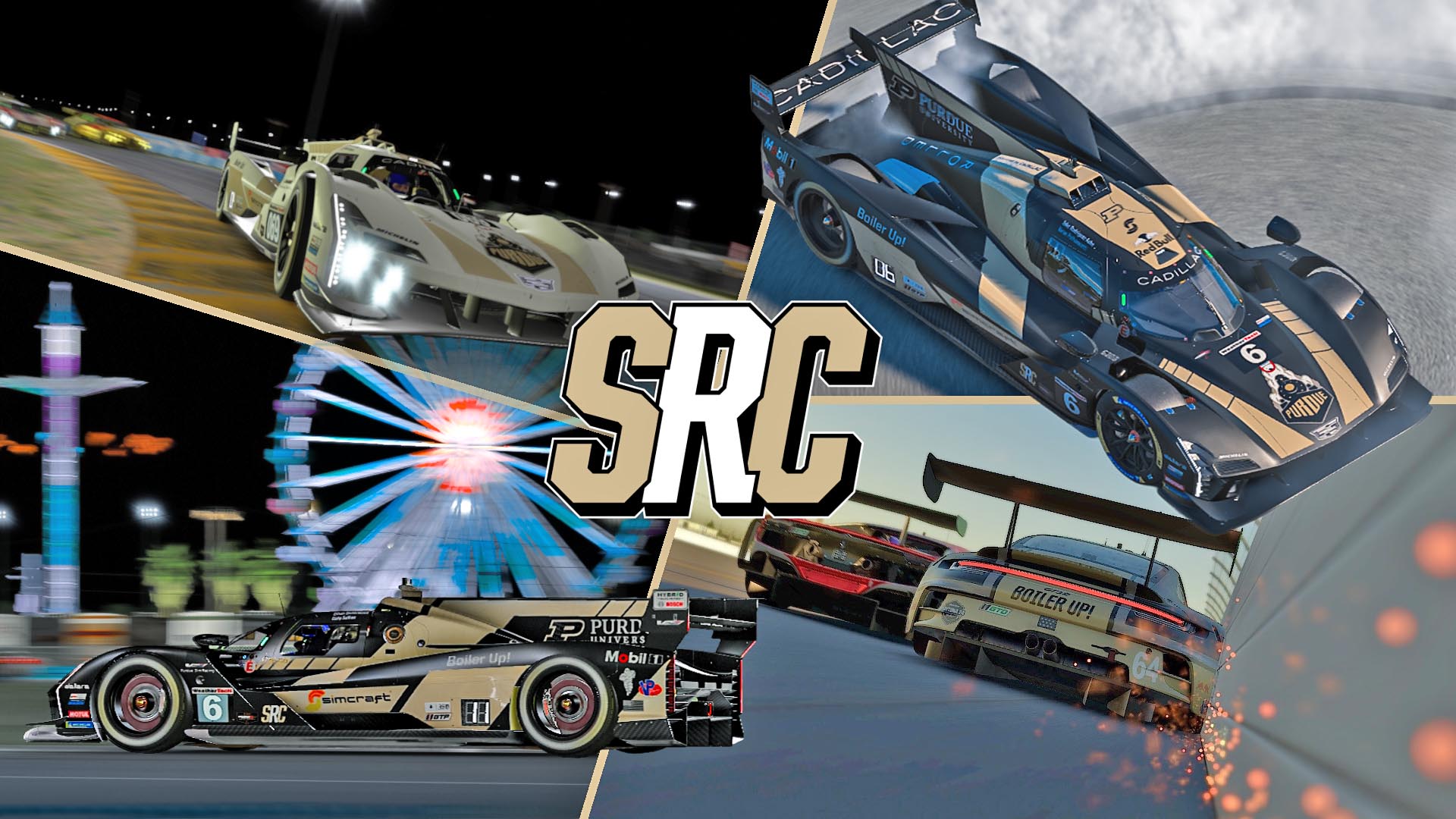
Sim racing (short for “simulation”) involves competitors sitting behind the wheel of a computer rather than a car, and racing their virtual cars against other competitors around the world. As technology has advanced, sim racing has become more and more like the real thing, taking its place as a legitimate tool in the motorsports industry.
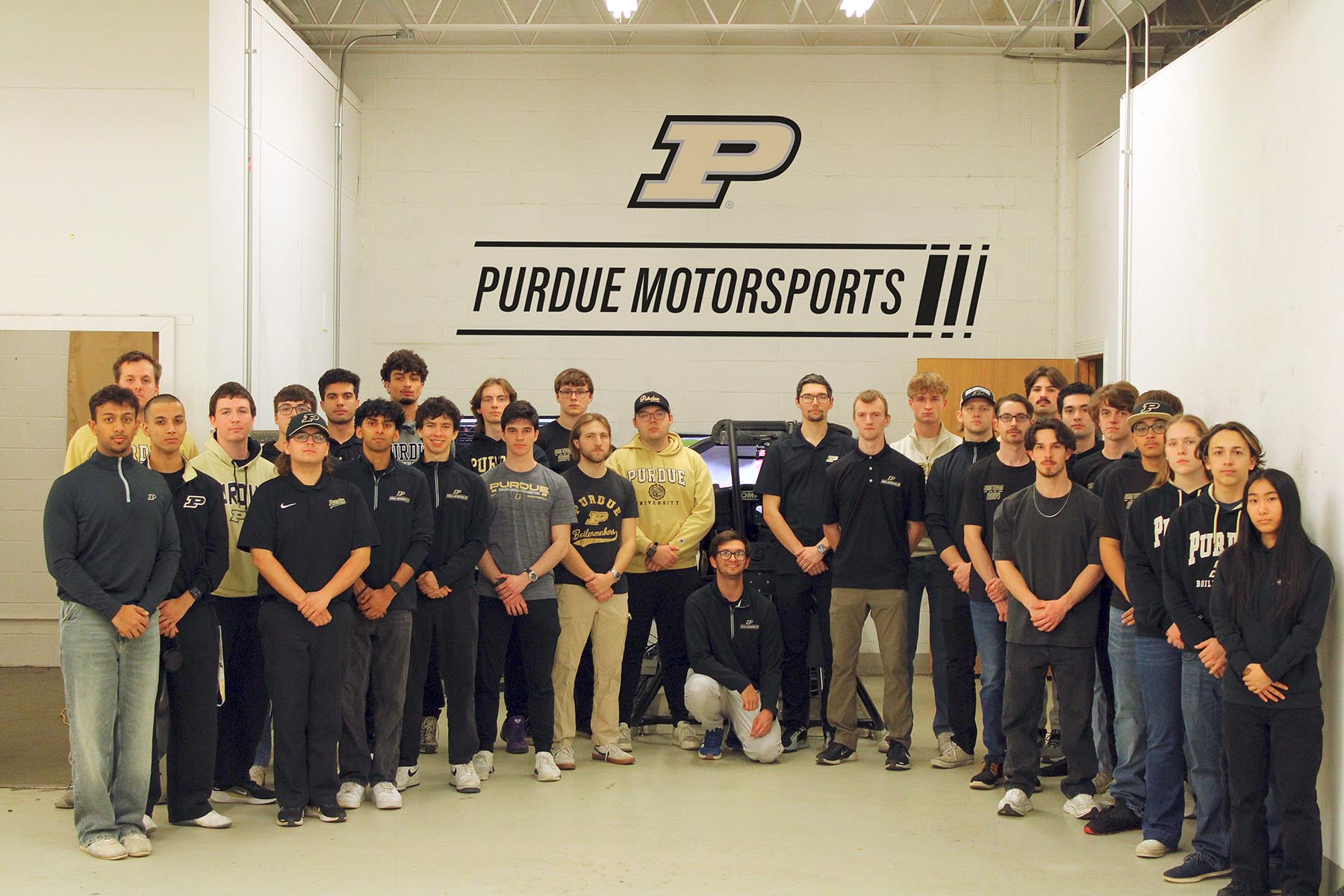
Purdue University has its fair share of motorsports enthusiasts, hosting the only accredited motorsports engineering degree in the country. We talked to members of the Sim Racing Clubs in Indianapolis and West Lafayette to learn how they survived the brutal 24 Hours of Daytona event.
Alex Meuche (Indy): “Here in Indy, we’re interested in everything: F1, IndyCar, sportscars, and we have quite a few NASCAR people.”
Bryson Duff (West Lafayette): “I love racing. In addition to sim racing, I also drive for Purdue Grand Prix and evGrandPrix, and I’m always on the lookout for other opportunities to drive.”
Max Stein (Indy): “I’m from Connecticut, and NASCAR is not really a big deal up there. But at Purdue, I’m surrounded by people who all love all things racing, and it’s just so awesome. It’s such a diverse and accepting community, and everyone’s always ready to talk about racing. It’s like I found my people!”
Cody Salhus (Indy): “Same thing; I’m from the Pacific Northwest, and no one cares about racing. When I came to Purdue and joined this club, I was suddenly surrounded by people who are watching the races on TV and talking about every aspect. And competing with them in iRacing is even better, because we learn so much from each other. It’s a great community to be a part of.”
What is iRacing?
The current industry standard in sim racing is iRacing. This platform hosts thousands of virtual races a year in NASCAR, IndyCar, IMSA, and even dirt racing. Like the real motorsports world, drivers start in lower levels of racing until they achieve a certain amount of success (called an “iRating.”) This advances them to higher levels of racing with greater stakes.
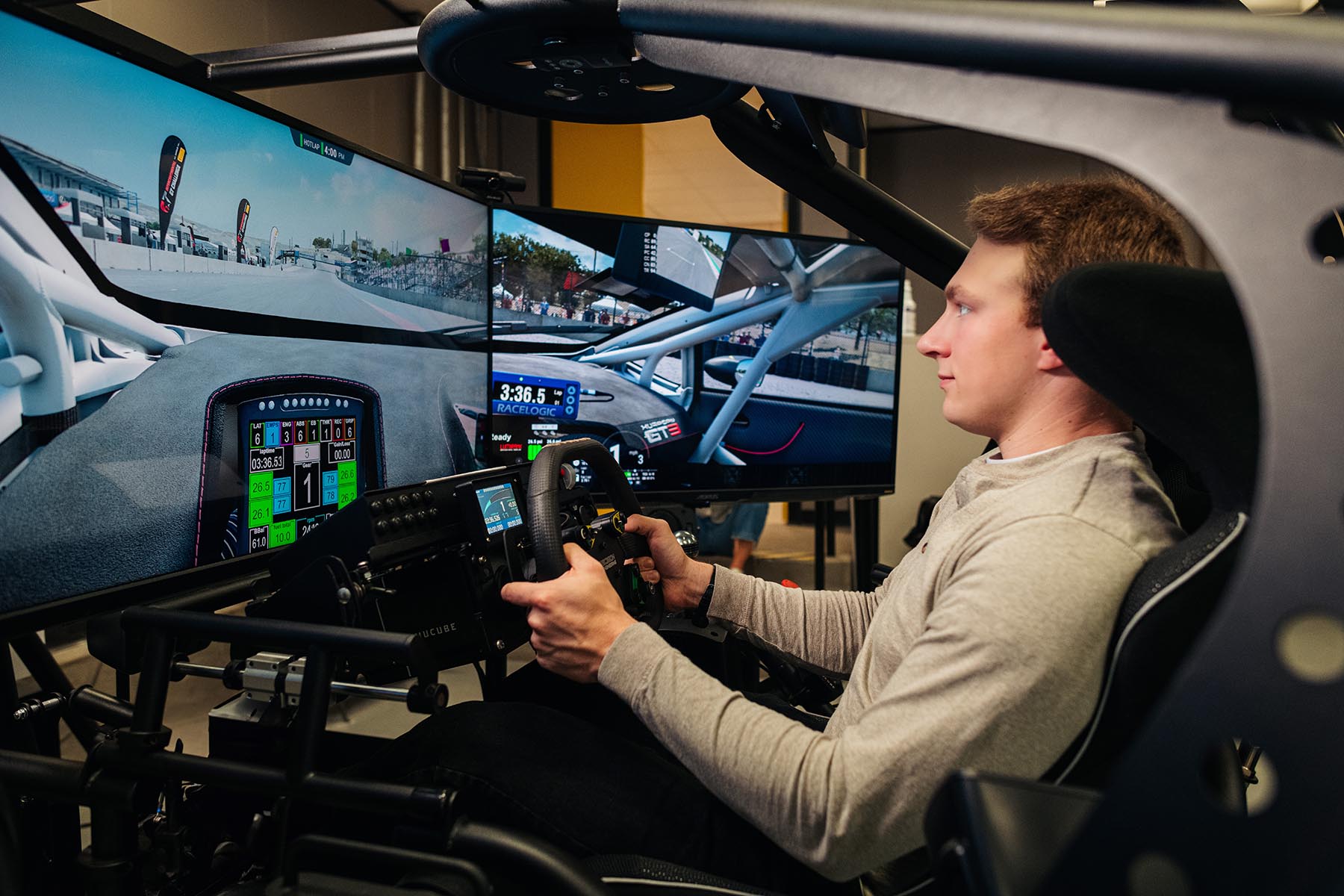
Alex: “iRacing is more than just a video game — it’s a full-on simulation. They go in-depth on individual vehicle models and tracks; how each car’s dynamics are set up; and how they react to real-life racing situations. Any time we make a change, we can feel the difference right away. If you crash, you have to take it to the pits and make repairs in real time. Professional NASCAR drivers use iRacing to simulate each track and get ready for their races.”
Max: “In the upper echelons of motorsport, they really treat it less as a game and more as a valuable tool. It’s being implemented in their actual day-to-day training — both for drivers and engineers — so they can be prepared for the next race before it even happens.”
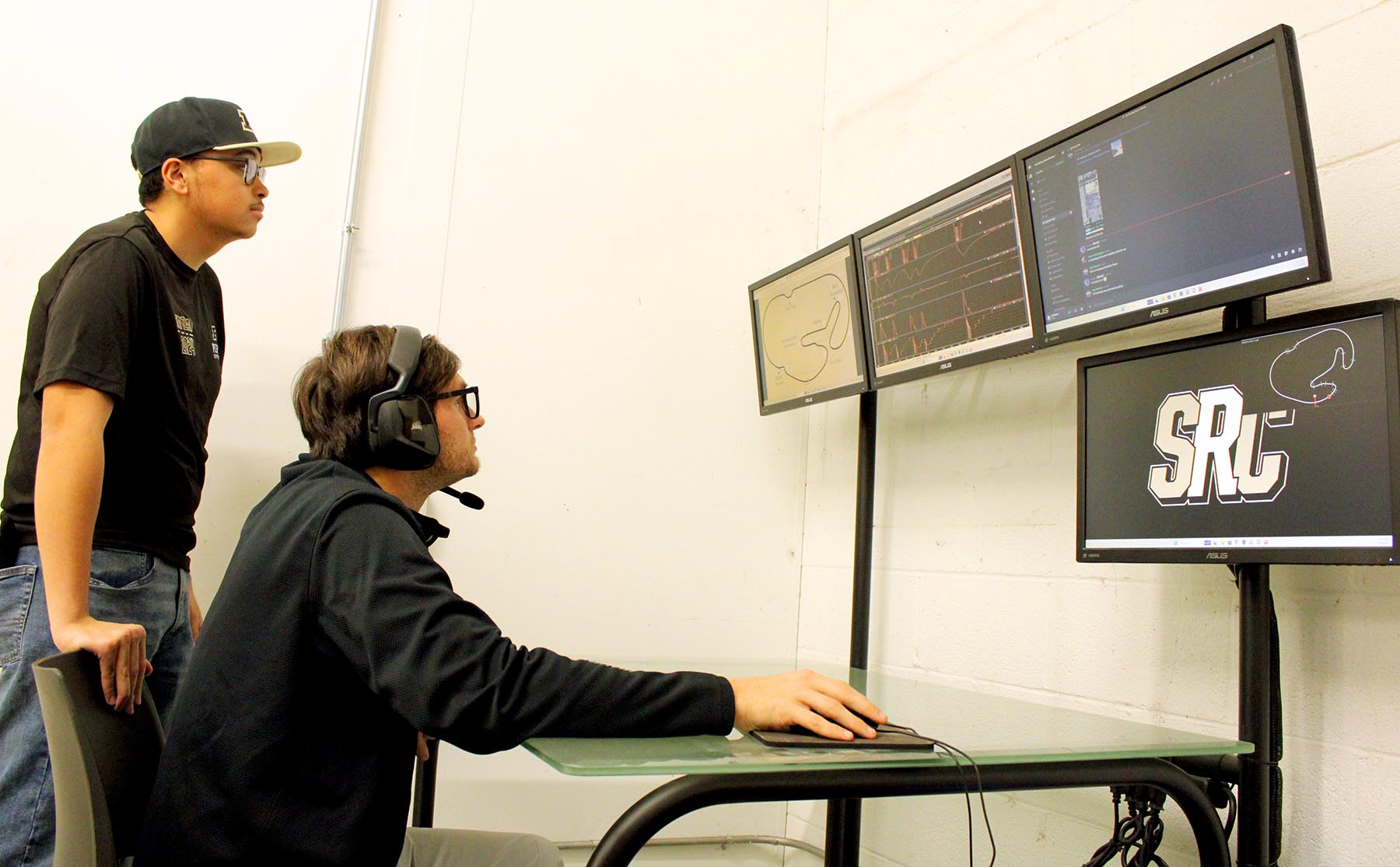
Alex: “Just like a real race, we can download the telemetry data from the car post-race, and that plus the driver’s feedback informs how we can improve the car for the next race.”
Bryson: “I started sim racing during COVID, because obviously we couldn’t go out, not even to race go karts. I started with the cheap Playstation plastic steering wheel, and progressed from there. When I got to Purdue, we started racing informally on a Discord channel, and soon we had 150 people in there. So then we formed a proper club.”
Alex: “Everyone specializes in a different area. One might be better on ovals, while another excels at sportscars. We have guys from both Indy and West Lafayette who are nationally ranked in the eNASCAR College iRacing Series.”
Max: “I drive on road courses, typically in the GT3 sportscar class, but I’m also trying my hand at oval racing. This club offers me a great opportunity to jump around and try different things.”
Joey Cazier (Indy): “I started out as an engineer, but then decided I wanted to try being a driver. We actually had to have tryouts, because so many of our members want to be drivers!”
Blake Urquizu (Indy): “I like Formula racing, but I also got to participate in the 24 Hours at Daytona in a Cadillac prototype car.”
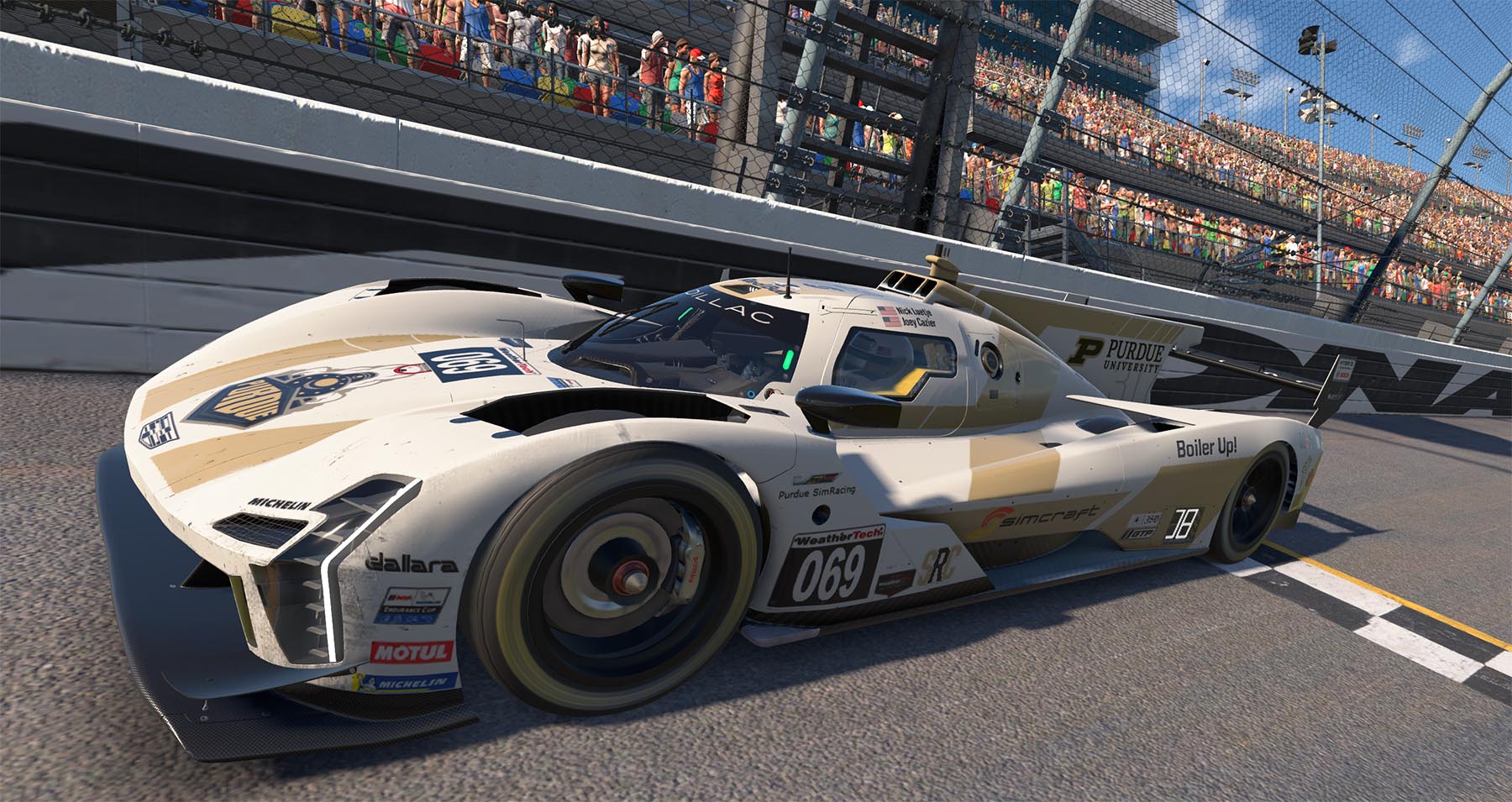
Cody: “I’m a huge NASCAR guy, but I love racing in general. I jumped at the chance to get in on the 24 Hours at Daytona, so I was on the gold Cadillac GTP team, which was super cool.”
24 Hours of Daytona
In addition to everyday races on iRacing’s platform, they occasionally organize special events at iconic virtual tracks such as the Nürburgring (Germany), Le Mans (France), or Suzuka (Japan). In January 2026, they hosted a virtual 24 Hours of Daytona, which echoed the real-life event: an IMSA endurance race held at Daytona International Speedway. Just like the real race, several different classes of vehicles compete at the same time, including GT3 (Grand Touring Daytona) and LMP2 (Le Mans Prototype).
Bryson: “We actually started training for Daytona two or three months out. We did a series of shorter endurance races before the big one, and that really helped us gather telemetry. Daytona recently added some curves to the chicane on the backstretch, and that took some getting used to. I think we tried 15 different setups.”
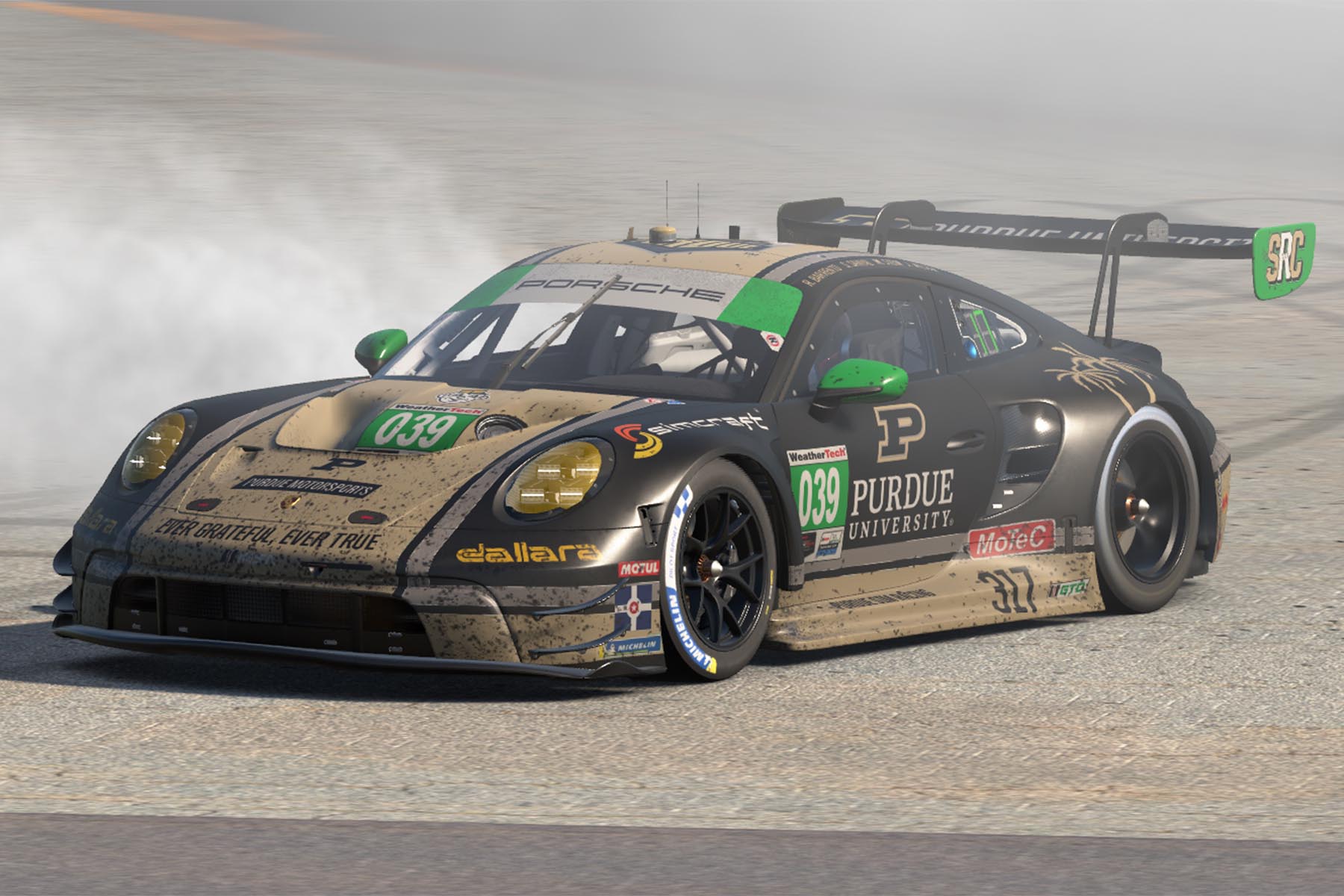
Alex: “We had so many drivers interested in running, that we staffed up three separate teams: two Cadillac prototype class, and one Porsche GT3.”
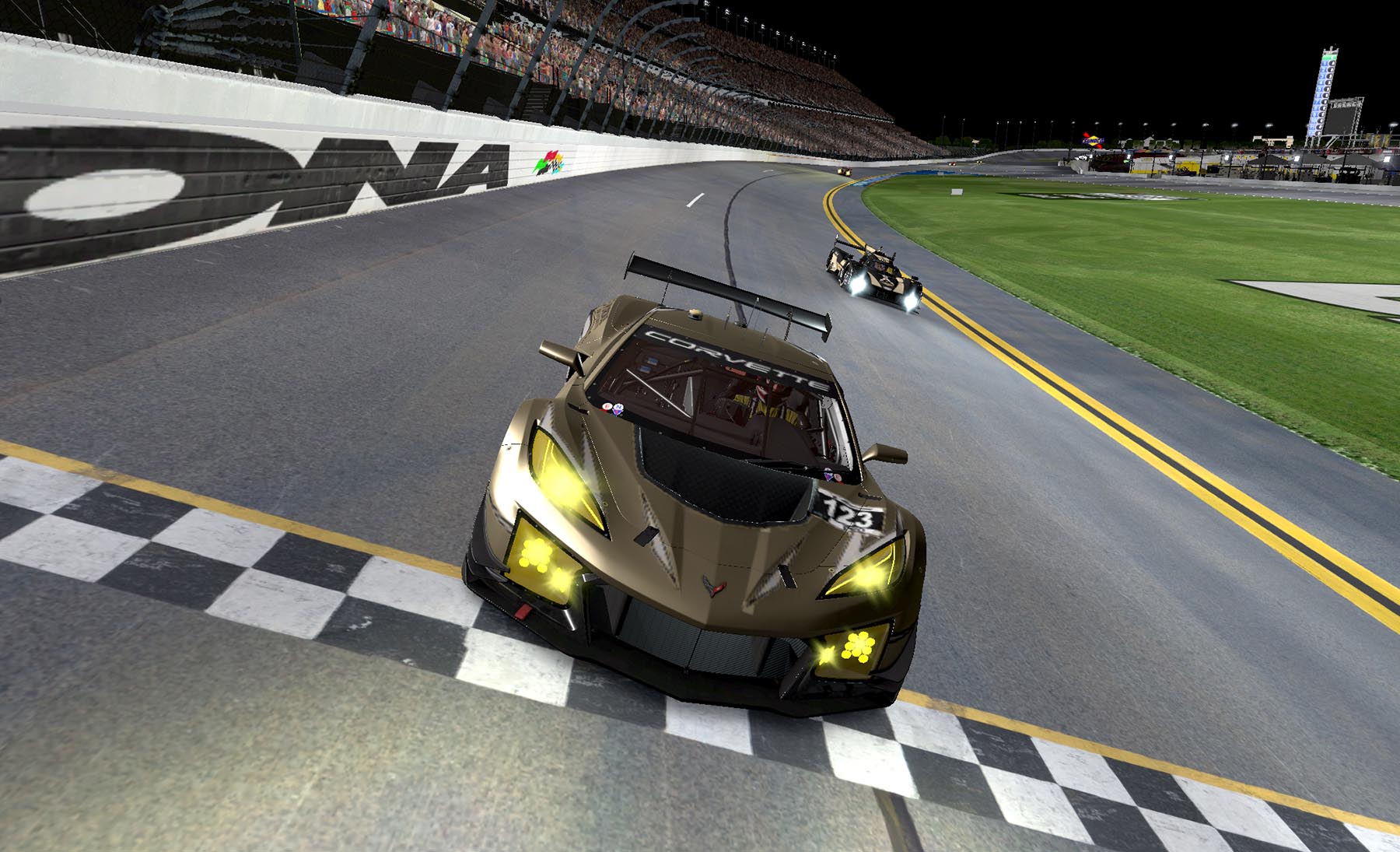
Bryson: “We try to pick the right car based on our guys’ skill levels. But everyone wants to race in the Corvette!”
Joey: “We started at 7:40 in the morning. Stats showed that 15,000 people around the world started that event. They split it up in many different classes, so our split had about 60 vehicles on the track at any given time, which is typically what a real life IMSA race would look like.”
Max: “I drove the second shift, which was a little stressful because my teammate had us leading our class when he pulled into the pits! I’d never been in a race this big, so it was tough to keep up with his pace. GT3 class is somewhat slower than LMP2 and hypercars, so you end up getting passed quite a bit. Doing that safely requires a certain amount of navigation. My job was to just keep it on track and keep from hitting the wall!”
Bryson: “Endurance racing is really hard, because you have to learn to balance your pace. You have to know when to push and when to be conservative — when to pass cars, and when to let cars pass you. Eventually other people will make a mistake, and your consistency will pay off.”
Endurance Racing
Just like in the real 24 Hours of Daytona, iRacing endurance events require a full crew of people who rotate in and out: crew chiefs, mechanics, engineers, and sometimes spotters. There is no autopilot; a human being has to be behind the wheel of the virtual car for all 24 hours.
Alex: “I stayed up the whole 24 hours. There were times near the end where the radio went quiet, so some of my guys might have been napping!”
Bryson: “I told my guys: at any given time, you should either be driving, helping, or sleeping! It helps that most of our setups are in our bedroom right next to our bed.”
Max: “I was up at 7:00 a.m. to watch the start of the race, but I didn’t end up going to bed until about 2:00 in the morning. We consumed plenty of energy drinks, and had other strategies to keep ourselves occupied. Let’s just say we had a lot of great discussions!”
Bryson: “I had two Celsiuses. But Red Bull is too much for me — my hands start to shake!”
Max: “The hardest part is staying motivated, which is tough to do for 24 hours. Especially in the lower splits, there is a lot of carnage on the track. Just to finish the race requires us to keep focus for the whole 24 hours. You’ve got to keep your head on straight; that’s the biggest thing.”
Bryson: “We actually use software to plan our schedule, based on driver performance, fuel mileage, and average lap times.”
Joey: “I qualified and started for our prototype team, and laying down that first lap time to make us competitive was a lot of pressure. The stint was pretty calm, except for one driver who plowed into the back of us, but that stuff happens. I drove a second shift in the evening, and then jumped back in at 5:00 a.m. I was surprisingly more energetic than I thought! Seeing everyone spread out is so much easier than trying to drive through packed traffic.”
Bryson: “We like our more experienced drivers to race at night, because by definition you have less information when it’s dark. So some guys have a better feel for it at night.”
Blake: “I didn’t get into the car for my first shift until almost 8:00 p.m. But I like driving at night because the track temps are more to my liking.”
Cody: “I pulled graveyard shift for the Gold team. So I ended up driving one shift in the afternoon, one at like 3:30 in the morning, and then I ended up finishing the race at 7:00 a.m., with a couple of short naps in between. I crashed the car at 4:30 in the morning, and as I sat in the pits watching the timer go, I really was contemplating my life choices! But Alex was great in giving me a pep talk and refocusing all of us. Then we watched the virtual sun come up — which gave us all a burst of energy!”
Alex: “I remember one of our cars drove past a Corvette with our same black-and-gold colors — it turned out it was our counterparts in West Lafayette!”
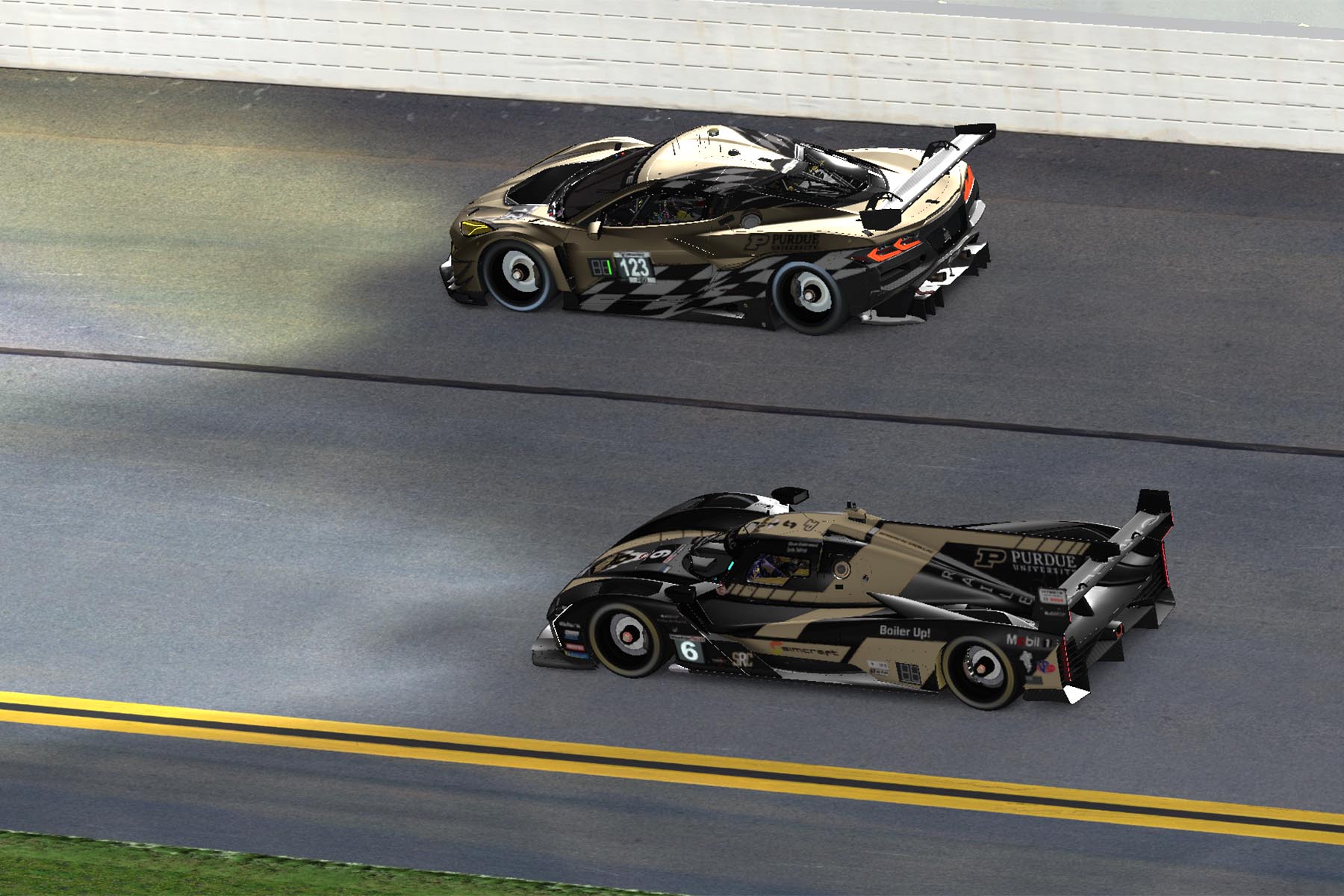
Alex: “One of our guys, due to unfortunate circumstances, actually ended up doing five shifts in a row, which is not recommended at all unless your simulator setup is super comfortable!”
Cody: “There’s that famous quote, ‘No plan survives contact with the enemy.’ Crazy stuff happens during a race, and it’s impossible to avoid damage. Alex does a great job adapting to changing conditions, and keeping us all on task and keeping our heads in the game.”
Alex: “Communication is key. I tried to be there at every driver change, just to tell them what changes we made with the roll bars, brake bias, and even track conditions.”
Cody: “Really just finishing the race was cause for celebration. I was even able to do virtual burnouts on the backstretch!”
Bryson: “Our Corvette team was doing well, in 2nd or 3rd, and we crashed in the bus stop in the middle of the night. But eventually we crawled our way back up and finished 5th, which is a really good result. Our other team crashed a lot in their race; I think they ended up 32nd. But they stuck with it and still finished all 24 hours!”
The Ultimate Goal
While many people participate in sim racing for the fun of it, the ultimate goal for these students is a successful career in motorsports. Purdue University is one of the few places in America that trains students specifically for this goal — and sim racing plays a major role in that.
Alex: “Sim racing is a great way to learn vehicle dynamics, which is a huge class we take here at Purdue. We also have a class in data acquisition, but this is something I had already done for years in iRacing so it really gave me a leg up. It even helps me in job applications, when I tell them that I understand race data.”
Joey: “We can convert the iRacing data into the same format used in our data acquisition class, and be miles ahead before we even start the class.”
Max: “The best part of all this is the connections I make with other people. Learning from the upperclassmen here has really helped me become a better driver and a better engineer.”
Alex: “I definitely want to be more on the data analysis side. I want to call races where I can analyze the data and make changes to improve the vehicle.”
Joey: “Sim racing can be fun, but to succeed at it, you need to be very tenacious. You also need a growth mindset; you should always be willing to learn from others on how to sharpen your skills, both behind the wheel and in the garage. If you are intentional about working on even the smallest things, you’re going to improve.”
Blake: “If I compare myself to when I started, I have learned so much from the Sim Racing Club. I have learned how to read data, how to interpret what the car needs, and how to improve as a driver.”
Alex: “Everyone in this club is very committed. The race could be a disaster, and we have to spend 25 minutes in the pits in the middle of the night. But our guys do not abandon the race; they stick it out. I’m so proud of all the drivers, crew chiefs, engineers, and data analysts for being a part of this team.”
Bryson: “Racing just grabs you by the heart. You pour so much effort into it, it’s great when you have some success. And even when you don’t succeed, it makes you want to come back and work even harder!”
Sim Racing Club (Indy) Instagram: @src.purdue
Sim Racing Club (West Lafayette) Instagram: @purdue.simracing
Writer: Jared Pike, jaredpike@purdue.edu, 765-496-0374