
Purdue Space Program launches in Indianapolis
Something new is launching in Indianapolis — literally! Purdue Space Program, the student group who have been launching rockets in West Lafayette for more than 25 years, have established a chapter in Indianapolis. It took many “small steps” for these intrepid urban rocketeers to reach their “giant leap.”
Proper preparation
It’s a cold and windy April day in Pence, Indiana, a tiny town on the Illinois border. With nothing but unplanted cornfields for miles around, it’s the perfect place to launch rockets. This particular three-day weekend event is jokingly called the Large Dangerous Rocket Ship (LDRS), an annual event hosted by the Tripoli Rocketry Association that draws more than 500 rocket enthusiasts from all around the world.
Amongst the space nerds, weekend enthusiasts, schoolkids, and interested locals in lawn chairs, Purdue Space Program Indianapolis have brought along their entire roadshow: a tent, boxes of rocket parts, laptops, tools, and more than a dozen students. They’ve also brought a beast: Sagittarius, a student-designed-and-built 11-foot-tall carbon fiber rocket that they are planning to launch past the speed of sound in less than three seconds.
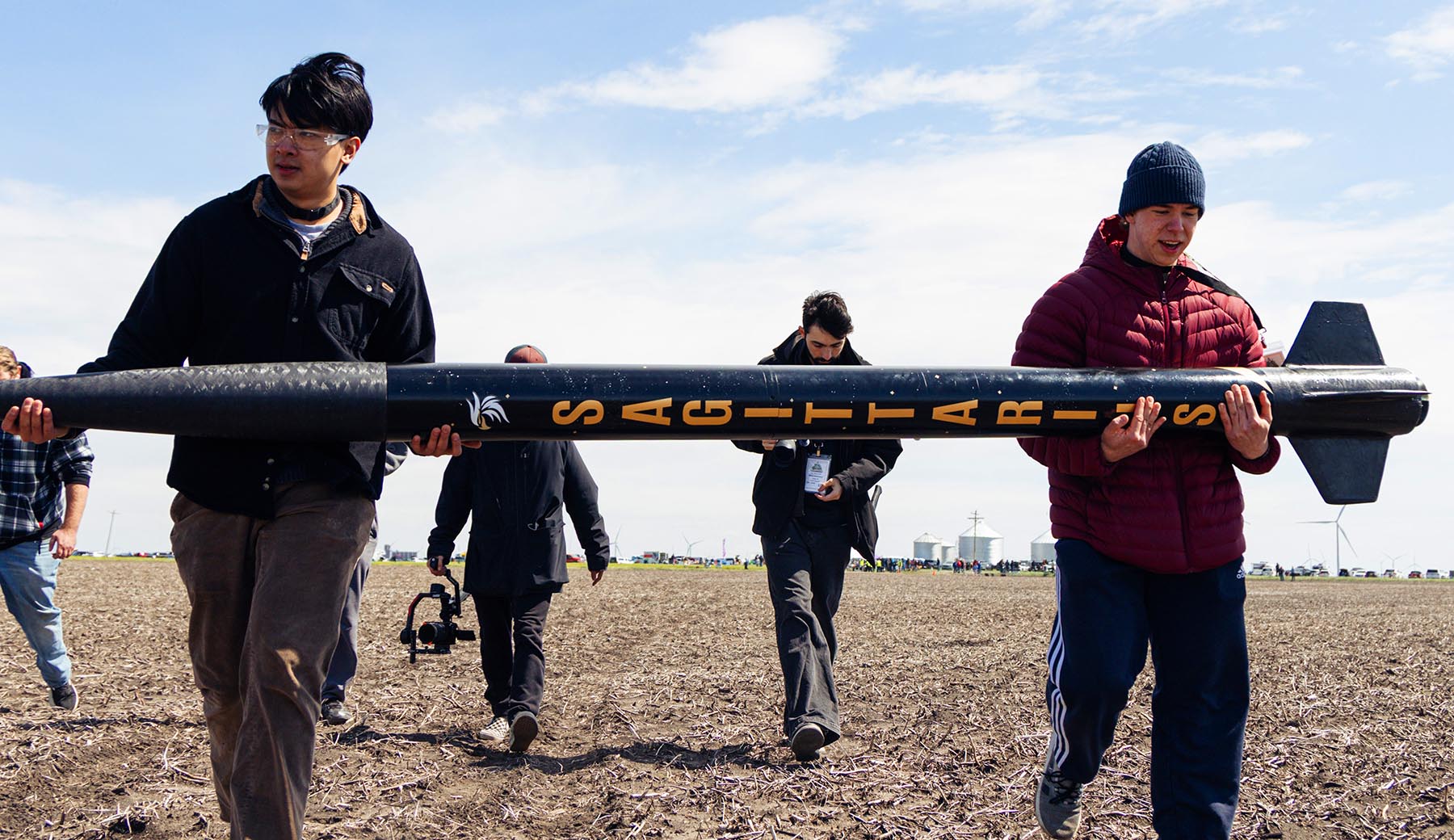
But first, there’s the paperwork.
“They absolutely won’t let anything onto the pad until we’ve met all the requirements,” said Courtland Bailey, sophomore in mechanical engineering, and the team’s director. “It takes a lot of preparation and planning to get to the finish line.”
For Courtland, his preparation started all the way back in his hometown of Southaven, Mississippi. “In my junior year of high school, I went all-in on our student rocket team,” he said. “We spent the whole year attempting to qualify for the American Rocketry Challenge. We didn’t make it, but it taught me so much about persistence.”

When he chose to come to Purdue University in Indianapolis, he found the engineering background he needed. But something was still missing.
“My freshman year, I found out about Purdue Space Program (PSP) in West Lafayette,” he said. “I was really in awe, as they were a serious engineering organization. I started taking the bus up to West Lafayette three days a week just to hang out with them.”
Purdue Space Program is a chapter of SEDS (Students for the Exploration and Development of Space) — in fact, it’s the largest chapter in the world. PSP students have designed, built, and launched hundreds of rockets, setting records along the way.
There was previously a SEDS chapter in Indianapolis (at the former IUPUI), but it had largely gone dormant. If Courtland wanted to build and launch rockets from Indy, he decided he would have to stop chasing the thing he wanted, and start building it in place.
Capital investment
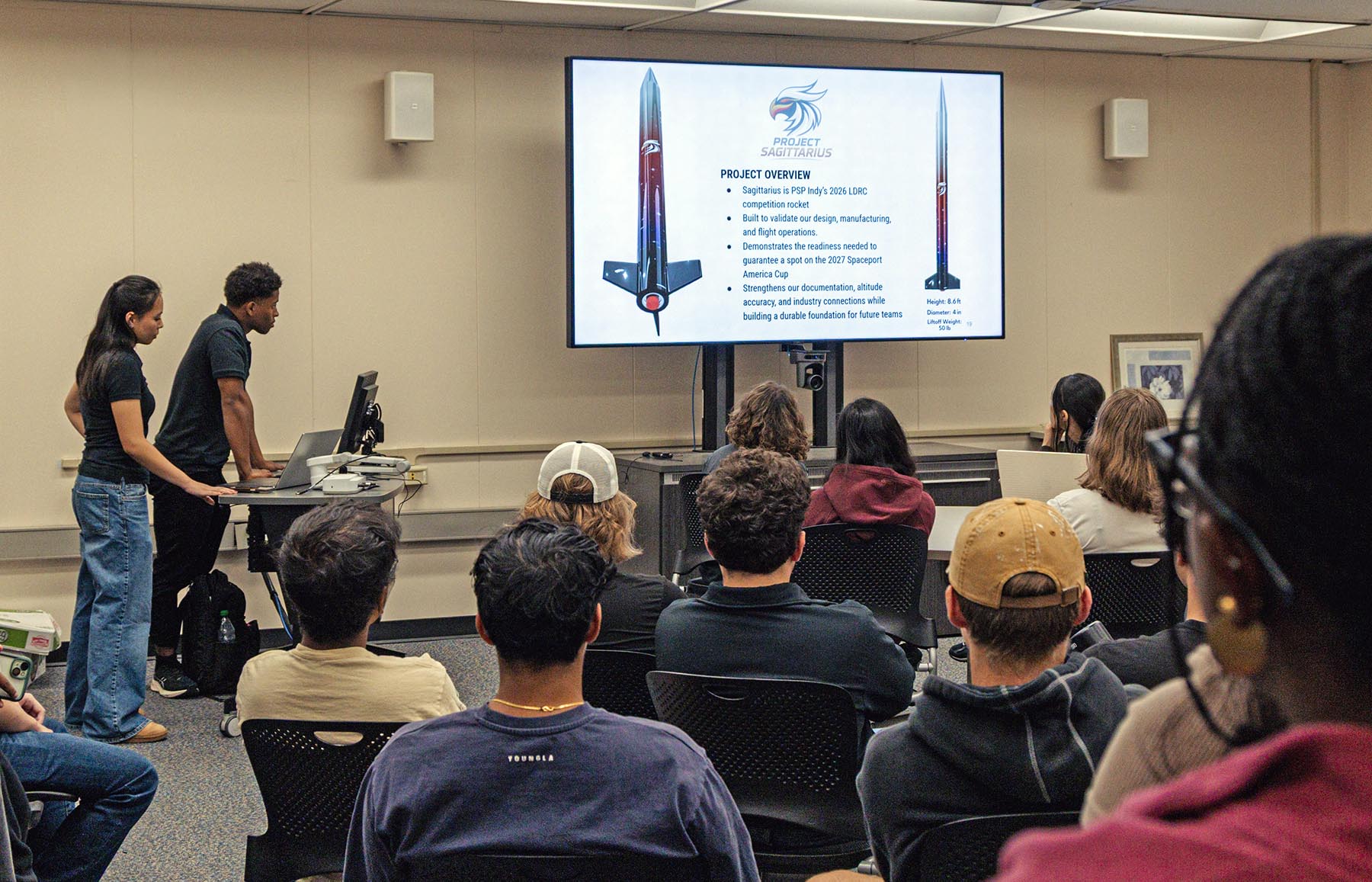
Before they starting building rockets, they would first have to build something else: a new organization.
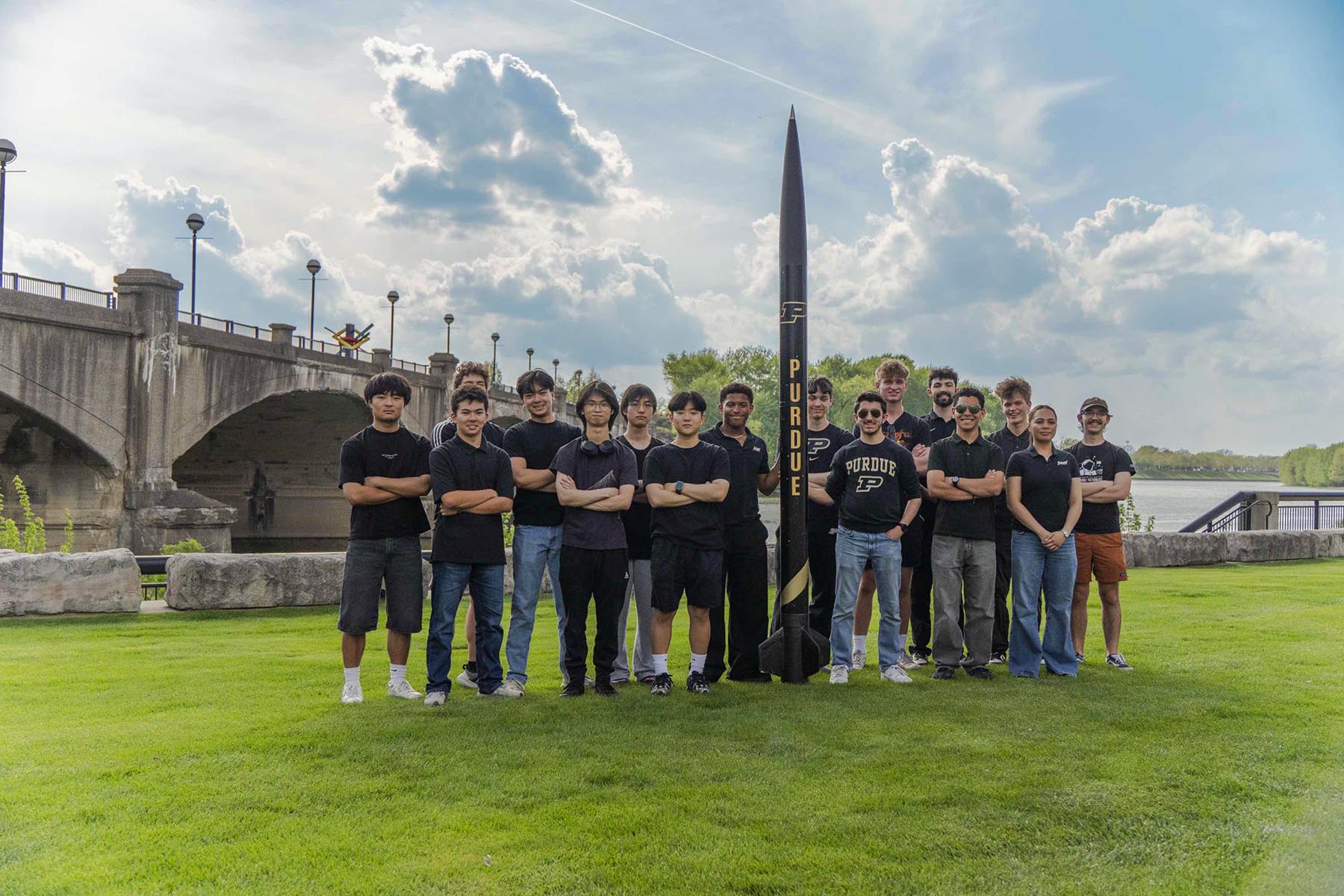
“At our first callout in Fall 2025, 70 students showed up,” Courtland said. “PSP Indy was born that day. Now we’re the largest student organization in Indianapolis.”
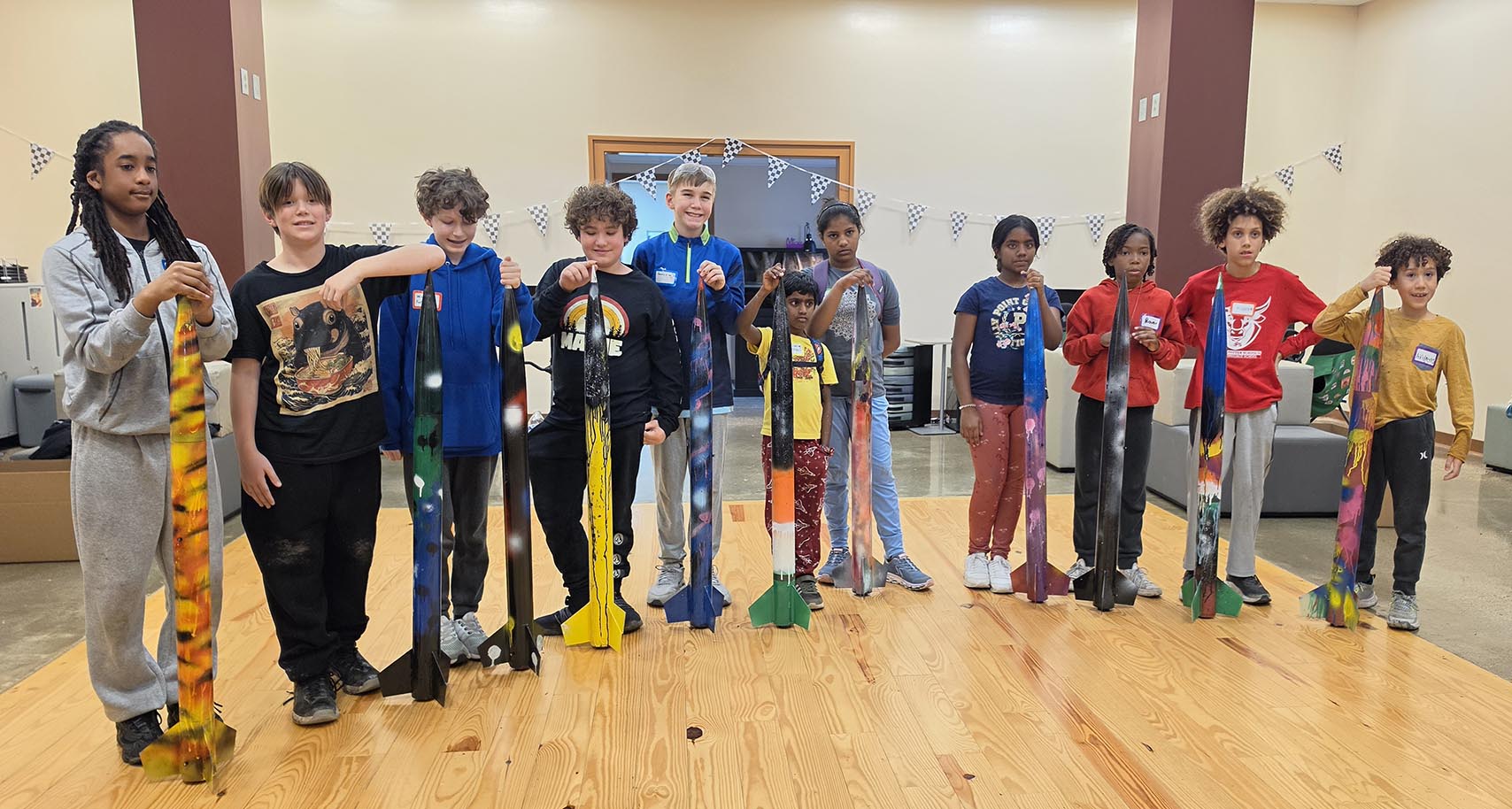
Beyond the basic engineering and science goals, their organization included public outreach from day one. Students began volunteering at Camp Dellwood, helping kids from Minority Engineering Program of Indianapolis pursue their Level 1 high-power rocketry certification. “We want to ignite a love of STEM with these kids, and have them walk away knowing they are capable of something amazing,” Courtland said.
It’s good for an organization to have a goal. For PSP Indy, the goal was seemingly straightforward: launch a high-powered rocket. But getting there required more than just propellant.
“I laid out a roadmap for Sagittarius: a carbon fiber rocket with a custom avionics dashboard that we would build from scratch,” Courtland said. “There is so much that goes into designing and building a rocket, so we divided into sub-teams: avionics, business, aerostructures, manufacturing, payload and recovery. We solicited sponsors and raised money. Everyone worked hard on the design and simulation. By December we had completed Critical Design Review and earned the green light to manufacture.”
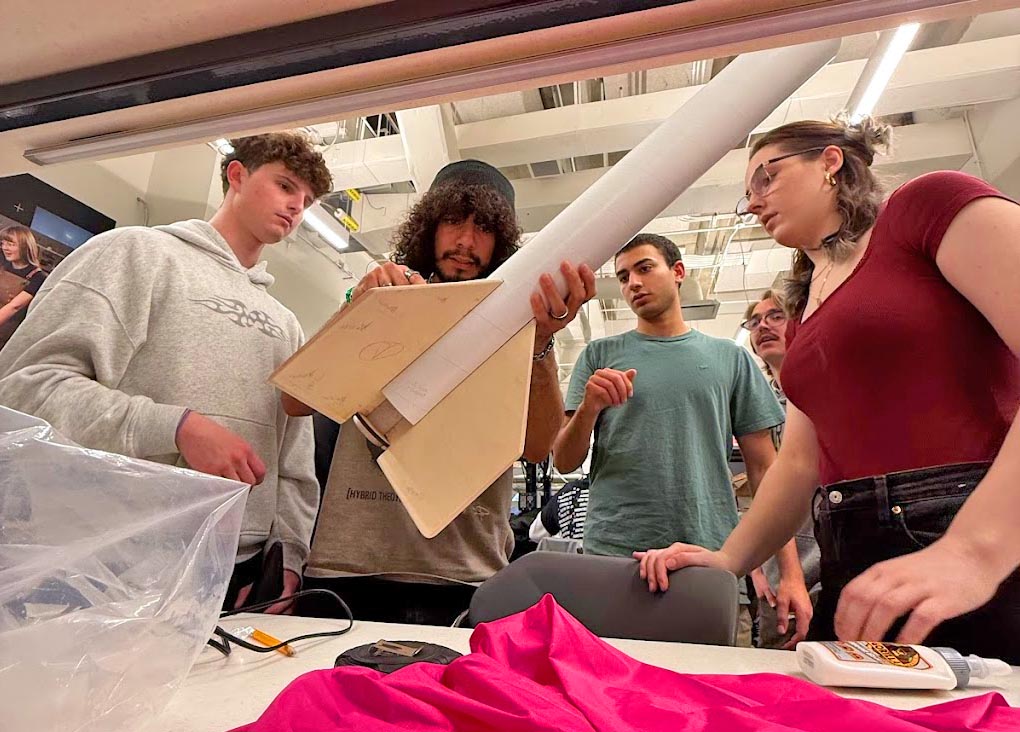
“Let’s be real — Sagittarius is a massive rocket,” said Jacob Johnson, mechanical engineering student and chief engineer of PSP Indy. “It’s 11 feet tall, and weighs about 45 pounds. Most of our members have never launched anything bigger than a cardboard tube. So for a school organization trying something this big for the first time, it’s a massive leap.”
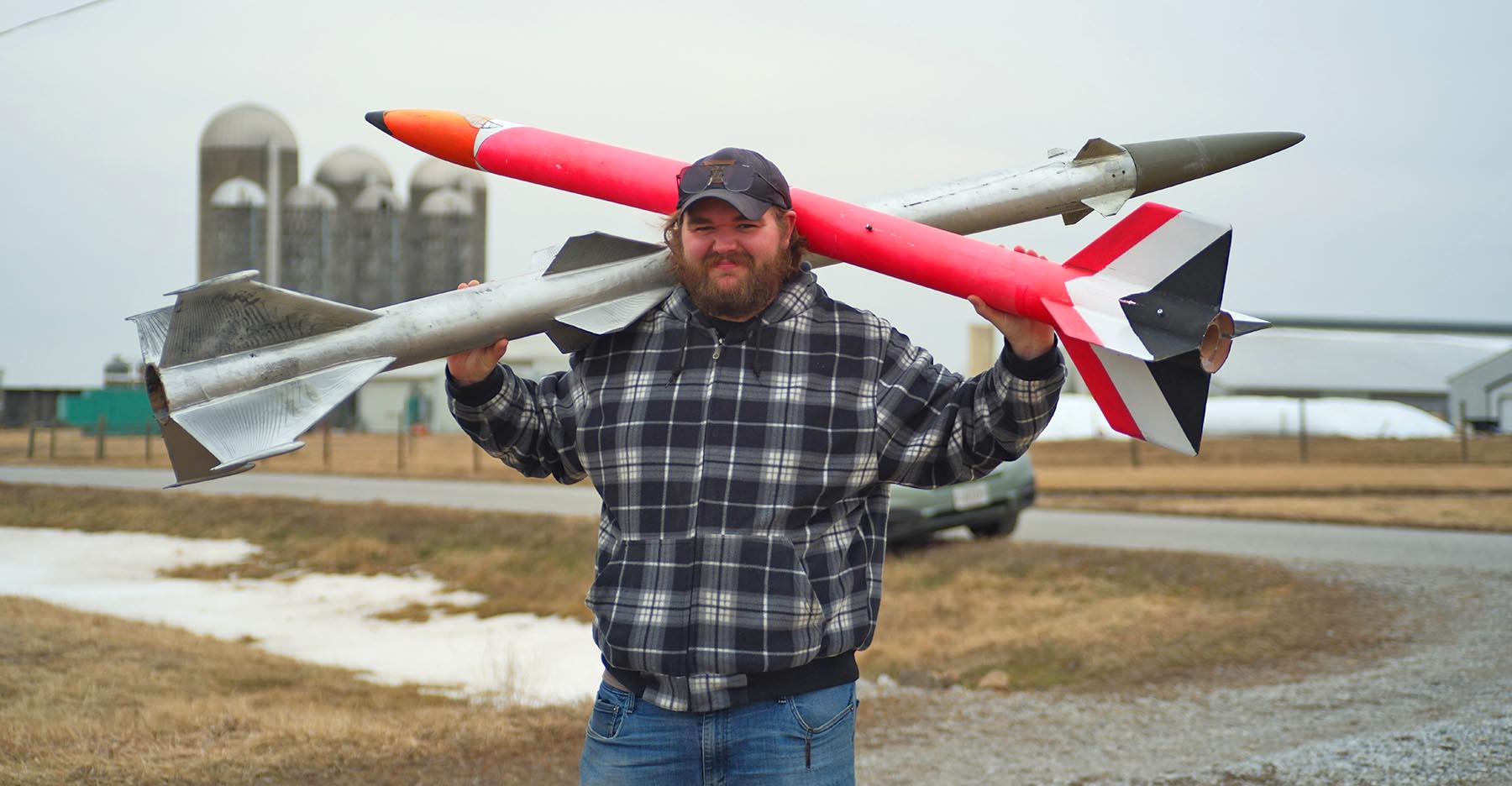
As a proof of concept, the team first built a medium-sized rocket called Flamingo. This was a Level 2, meaning it required slightly more authorization to launch than typical hobby rockets. In February 2026, they successfully launched Flamingo at Purdue’s agricultural fields outside West Lafayette.
“This was the first time that many of our people had actually seen a rocket launch,” Jacob said. “You can feel the power of a rocket motor from hundreds of feet away. My favorite part was seeing the look on people’s faces after it launched.”
To the stars
Flamingo gave them confidence that they could successfully launch a Level 2 rocket. Now it was time for PSP Indy to complete Sagittarius, an even bigger Level 3 rocket. With hundreds of people coming from around the world to attend LDRS, all eyes would be on them.
“It was definitely a learning experience,” said Courtland. “But there is a long checklist to complete before anything gets launched.”
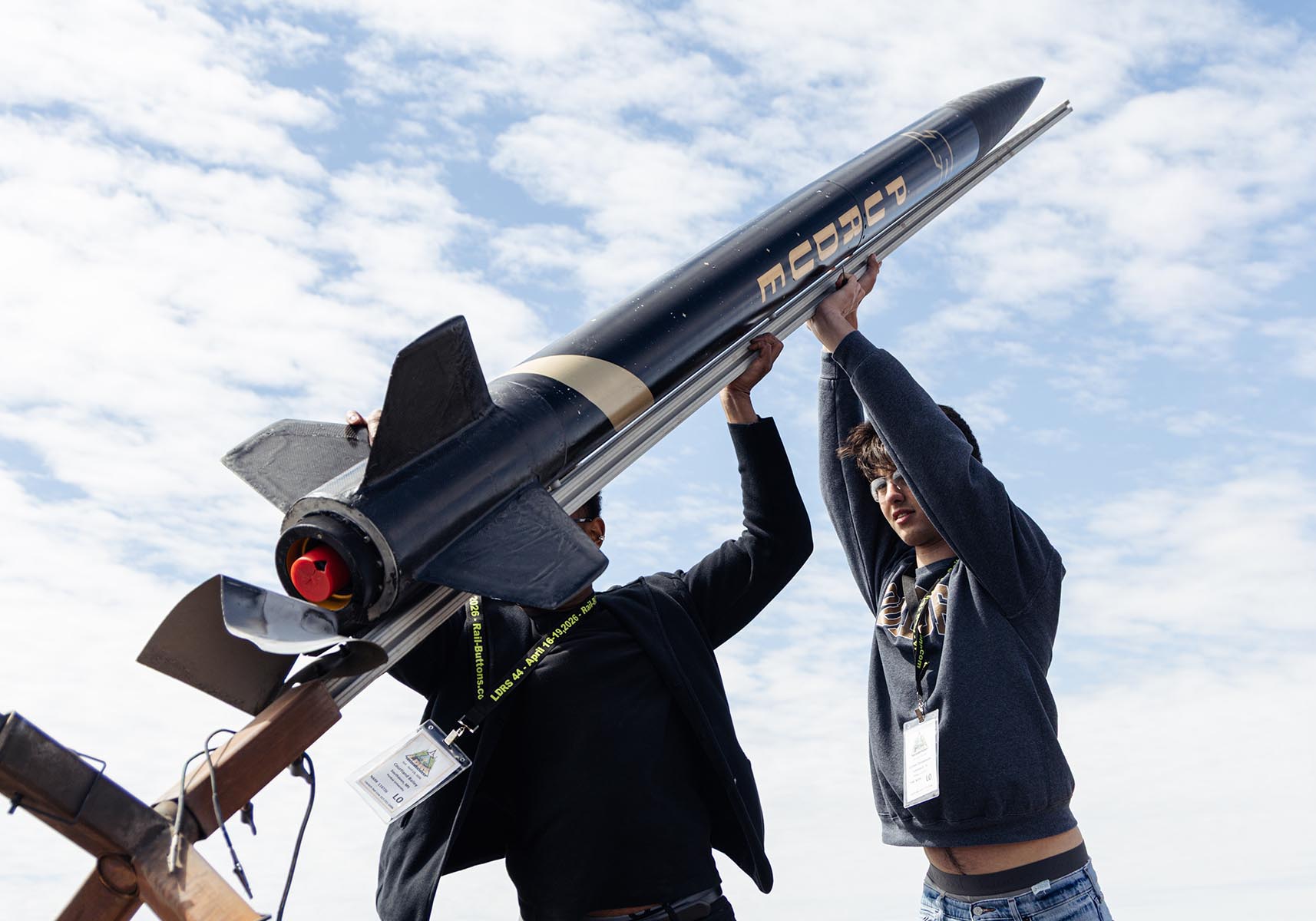
The first snag came when officials reviewed the solid rocket motor PSP had chosen. Guidelines required that specific motor to be epoxied into place — a process that would have taken at least 24 hours. However, they determined that Sagittarius could launch with a different motor, if one could be located. Courtland and Jacob immediately went into action, going door-to-door in the makeshift field to see if anyone was willing to make a trade. They eventually located an appropriately-sized motor that did not require epoxy.
The clock was ticking before the final launch opportunities expired. After some anxious moments, the team successfully assembled the rocket to the satisfaction of officials, who authorized them to carry the 11-foot-tall Sagittarius to the launch pad.
After the field was cleared, the countdown sounded: “5... 4... 3... 2... 1... launch!”
“When it first lifted off the pad, I felt an immense sense of fulfillment,” Courtland said. “It felt like a new path was just built. A year ago, none of us even knew what carbon fiber was. And now, we’ve just launched a carbon fiber rocket that we designed and built together.”
“It was amazing,” Jacob said. “Seeing people work on their own project, and then watching it launch, makes me really proud.”
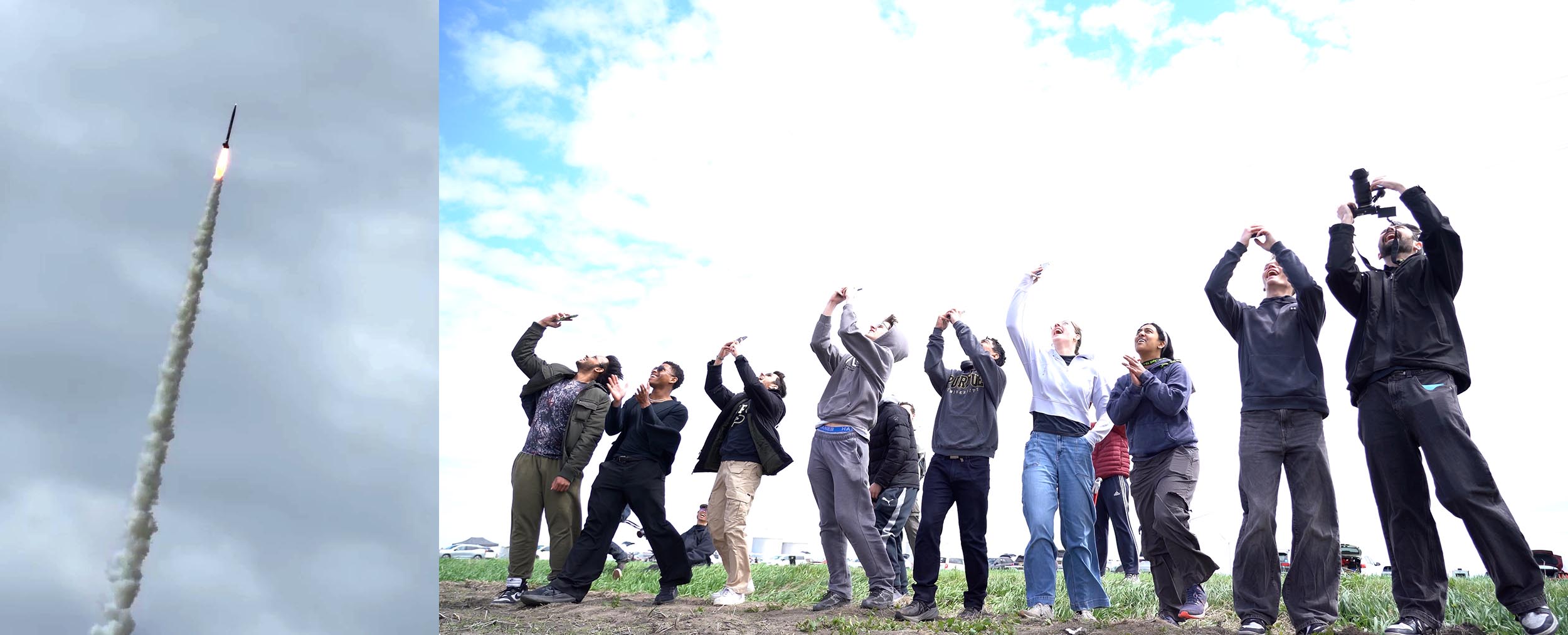
Courtland is especially proud that they were able to do all this in Indianapolis. “We started out as a group of people who had never met before, at a new campus,” he said. “We all came together and just owned this project.”
With this success, the team already has their sights set on more ambitious launches and competitions. But for Courtland, PSP Indy is about more than just building rockets.
“The main thing that we’re trying to build in Indianapolis is community,” he said. “We are looking for people who are open and want to learn, and are looking for a community.”
“Anyone can join,” said Jacob. “We provide new members with an onboarding process, so they feel a little less intimidated. We want to help everyone find their place.”
“Ultimately we want to build something that lives on, even after our time at Purdue,” Courtland said.
Purdue Space Program
Website: https://purdueseds.space
Instagram: @purdue_seds
Source: Courtland Bailey, baile460@purdue.edu
Jacob Johnson, john3436@purdue.edu
Writer: Julia Davis, juliadavis@purdue.edu