
Purdue alumni help Artemis astronauts to a smooth splashdown
For Mark Baldwin (BSME 1997), 15 years of work came down to 15 seconds.
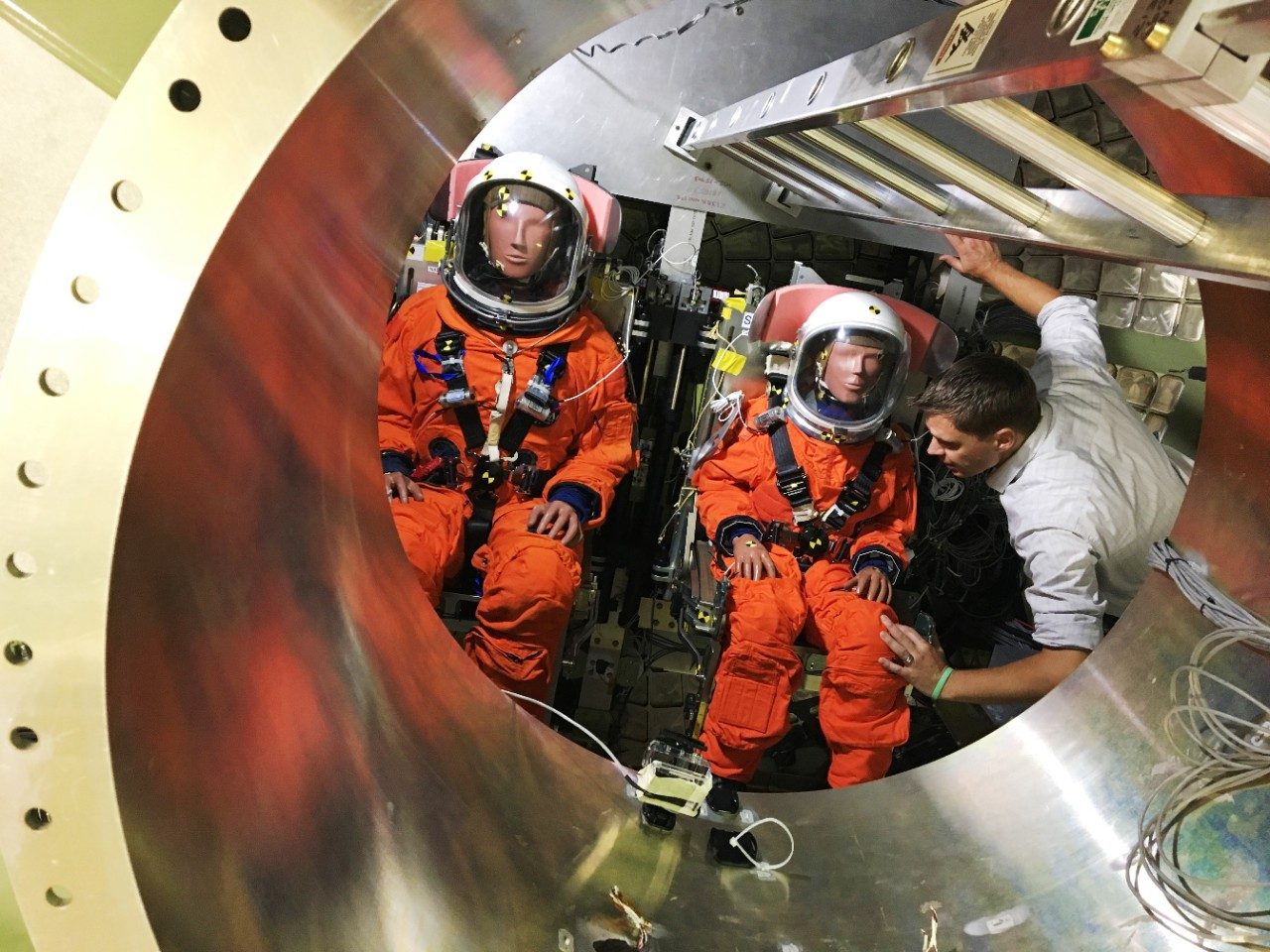
As he watched the launch of Artemis II from NASA’s Kennedy Space Center in April 2026, Baldwin knew better than anyone the stresses and vibrations being experienced by the astronauts — because he had subjected himself to those same vibrations. As Occupant Protection Lead for Lockheed Martin, he had personally tested the seats, the control panels, the spacesuits, and other aspects of the astronaut experience on the Orion capsule.
But there’s testing, and then there’s a real-world launch.
“Everyone else was cheering, but I was busy doing calculations in my head,” Baldwin said. “I knew some phases of ascent were expected to have more severe vibrations than others. But we did the work years ago. We knew the levels. We quantified the risks. When we finally saw the live feed showing our four astronauts working comfortably in their seats, we knew the Artemis II mission was well and truly on.”
Small steps
The Orion capsule is the oldest part of the Artemis infrastructure. Originally designed by Lockheed Martin for a separate program called Constellation, it survived budget cuts and leadership transitions to become the Artemis crew’s flagship vehicle traveling to and from lunar orbit.
When Mark Baldwin joined Lockheed Martin in 2009 as a biomechanical engineer, he had twin roles: determining the dynamics of the vehicle itself (especially during water landing), and confirming the best protection for the astronauts inside.
“We ran dozens of drop tests, plunging Orion into a giant pool from many different angles and heights,” Baldwin said. “We ran dynamic impact sled tests with suited manikins to transmit landing and abort loads to the crew through the seats, restraints, and suits. Alongside my NASA counterparts, we evaluated many landing orientations and magnitudes for small, medium, and large sized crew. I even got onto the shaker myself to see if I could read the control panels during extreme vibration events.”
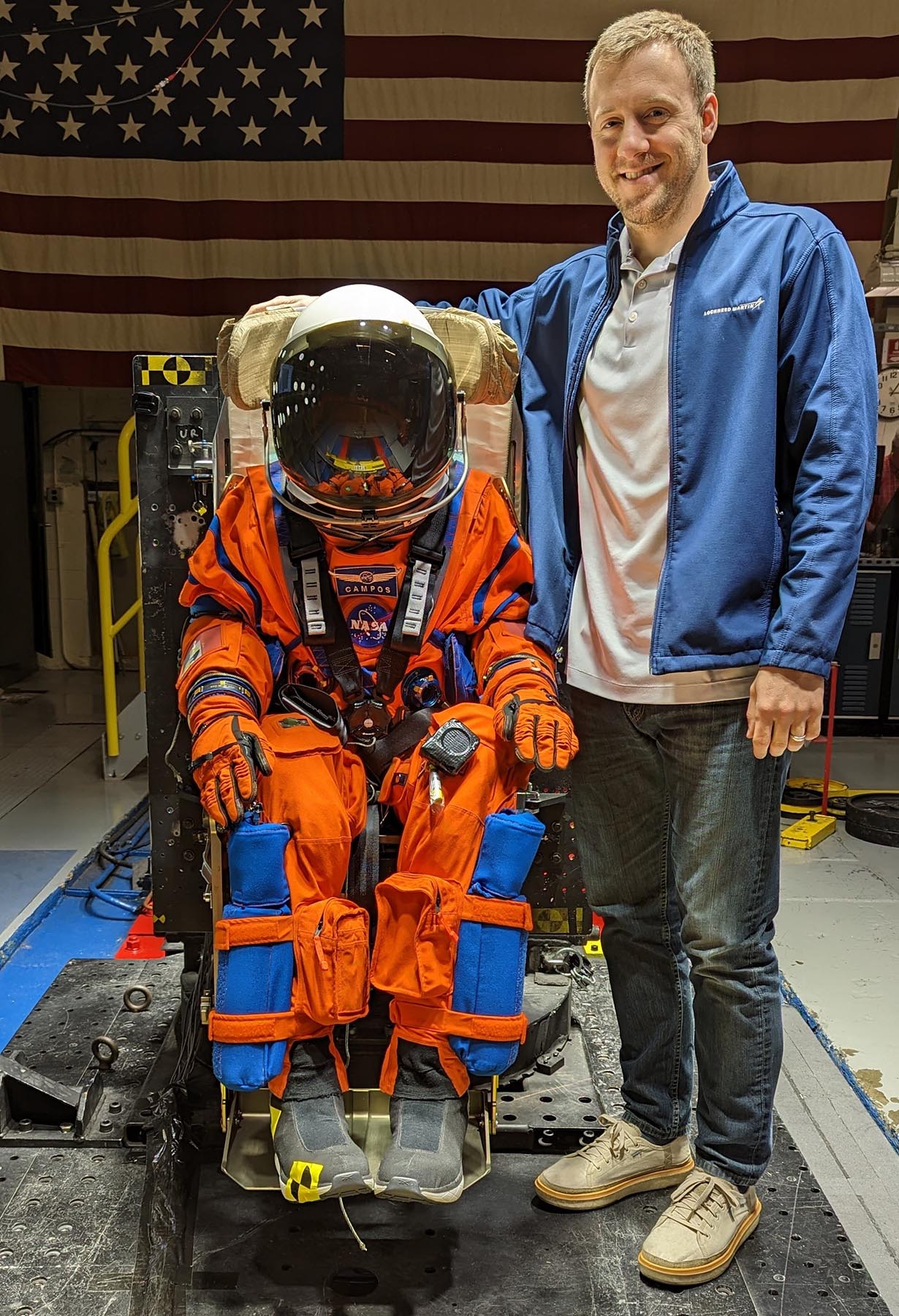
Orion’s first uncrewed mission, Artemis I in 2022, featured human-like vibration manikins as passengers. “Our superstar was named Moonikin Campos,” said C.J. Kennett (MSME 2019), a biomechanical engineer who works with Baldwin at Lockheed Martin. “We subjected him to hours of tests for the seat, suit, restraints, and impact attenuation system. The mountains of data he provided from the Artemis I mission enabled us to perform human subject testing later that year, so we could be prepared for the Artemis II mission.”
Giant leaps
Artemis II had successfully launched, beginning its 10-day mission. Astronauts began broadcasting amazing visuals from the far side of the Moon. By all accounts, the mission had gone smoothly. “While my focus has always been impact biomechanics, I also participated in many studies involving the displays and controls, heatshield, stowage, radiation events, day-in-the-life activities, assembly, and reusability,” said Kennett. “I was thrilled to see everything go just as we had planned.”
But for Mark Baldwin, the stress was just beginning. “The most important parts of the mission are the very beginning and the very end,” he said. “As soon as they were successfully in space, I started thinking about splashdown.”
On April 11, Orion began its re-entry into the Earth’s atmosphere. “I couldn’t sit that day,” Baldwin remembers. “In my head, I went through all the possible outcomes, the likelihoods, the consequences, the expected G-levels. Oddly enough, I thought back to my undergraduate days at the Purdue Mechanical Engineering building where we spent many late nights studying, running labs, and scrambling to finish homework assignments. This was like the ultimate final exam. I wondered, did I miss something? Did we check everything?”
Kennett was also on edge. “That vehicle goes from 25,000 miles an hour to 20 miles an hour in just a few minutes,” he said. “I watched alongside my wife, colleagues, and friends, as did the rest of the world, teary-eyed, nervous, hopeful, relieved, and proud,”
“When those three main parachutes inflated to full open, 15 years of stress and anxiety was released,” Baldwin said. “With family, friends, and co-workers around me, the weight of the event washed over me. I cried.”
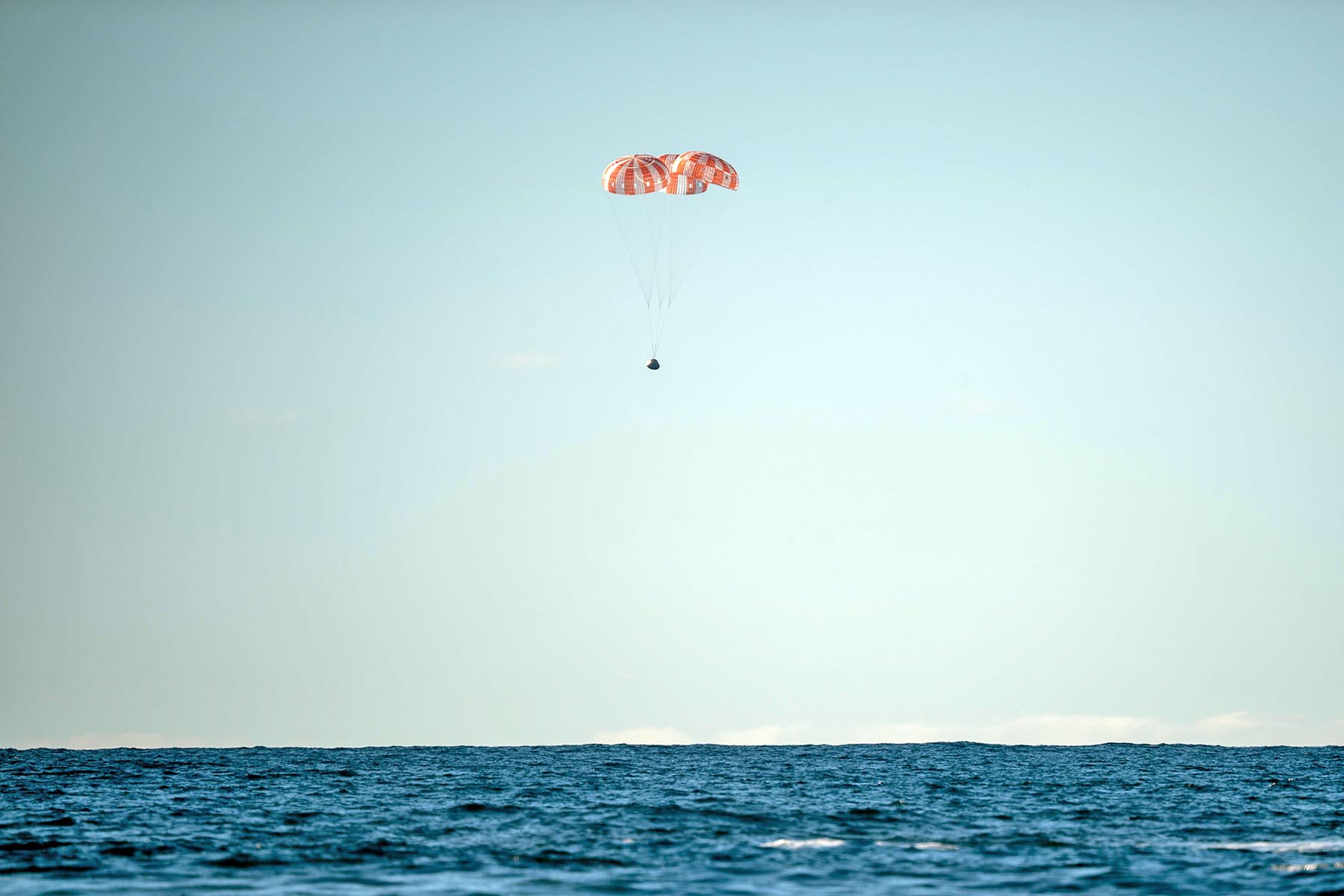
The Artemis II astronauts walked unassisted out of the capsule, safe and sound. Beyond relief for the crew’s safety, Baldwin also felt the satisfaction of years of hard work paying off. “The most challenging and rewarding part of being an engineer and working on human spaceflight is doing the work to know the odds,” Baldwin said. “I had calculated what the crew would be feeling, but there was no way to know what it was really like for them. I knew if we had three good parachutes, the injury and structural risks were very low. The landing was just as we simulated it.”
Kennett put it poetically: “2 drogue parachutes, 3 main parachutes, 4 safe astronauts, 1 textbook landing!”
For the entire NASA and subcontractor teams, Artemis II was a resounding success. Now, the plan is to do it again on Artemis III and beyond. “Success of this mission was built on solid engineering fundamentals, through years of dedication and teamwork,” Baldwin said. “I appreciate all that the Purdue Engineering program did for me personally and many of my colleagues who helped put Artemis II in the history books.”
Writer: Jared Pike, jaredpike@purdue.edu, 765-496-0374