
NASA's Chief of the Astronaut Office Scott Tingle reflects on historic Artemis II mission
When NASA’s Artemis II crew successfully slingshotted around the Moon in April 2026, it marked the first time in more than 50 years that humans made such a journey.
But human spaceflight is about more than just rockets and technology. It's about card games. And coping with frozen toilets. And living with others in a tiny capsule for two weeks, having your actions and conversations broadcast live to the world. The person responsible for that side of the experience is NASA's Chief of the Astronaut Office, Purdue graduate Scott Tingle.
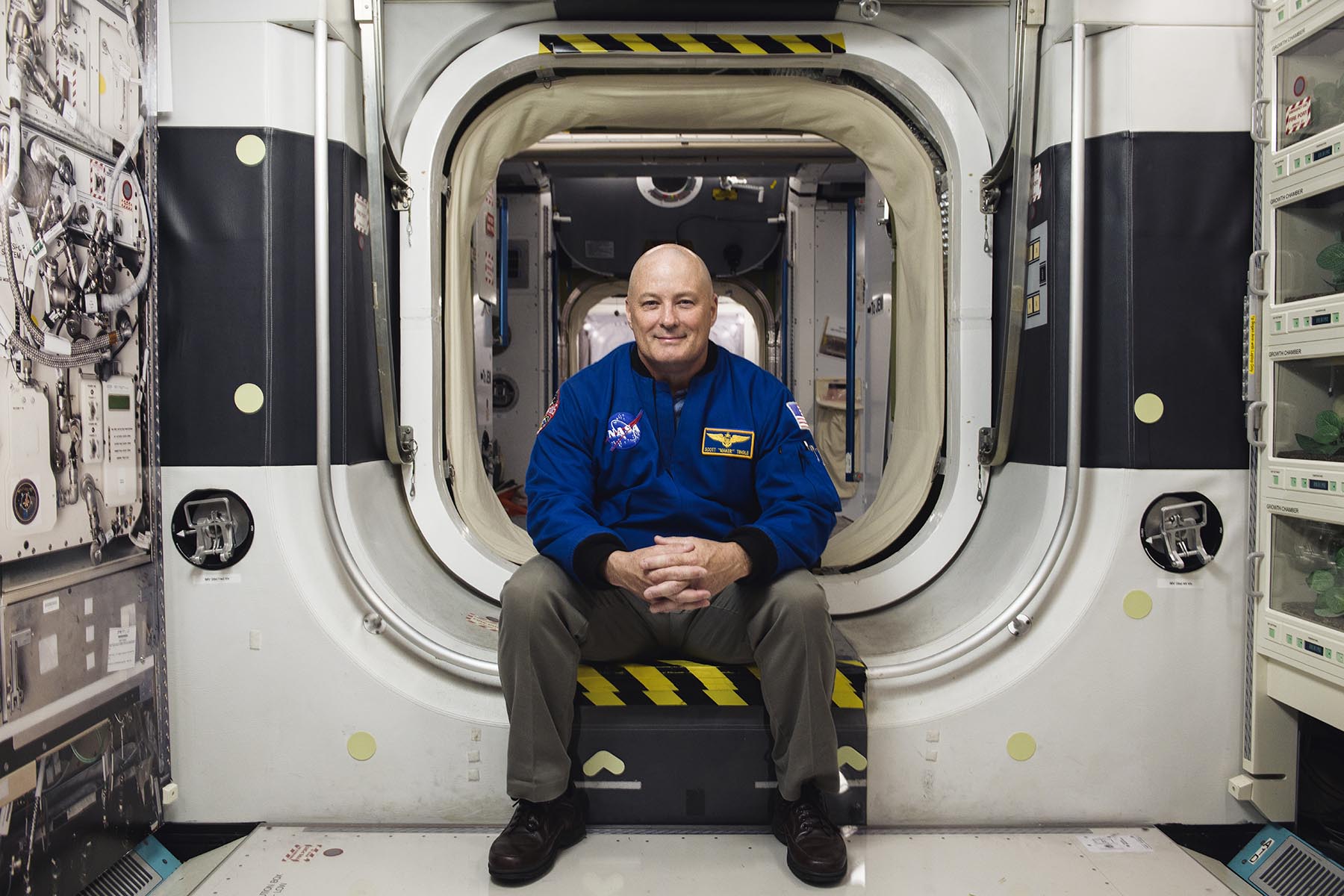
Scott received his Master’s in Mechanical Engineering at Purdue in 1988, before embarking on a career as a Naval aviator. He was selected to become a NASA Astronaut in 2009, and made his first spaceflight to the International Space Station in 2017. He became the 23rd Purdue graduate welcomed into the Cradle of Astronauts, joining such notable names as the first person on the moon, Neil Armstrong, and the most recent person on the Moon, Gene Cernan.
“When I joined NASA, it was a time of transition,” he said. “They were retiring the Space Shuttle, and we didn’t have a replacement method of sending humans into space. So I trained for many years waiting for my slot, and I flew on a Soyuz rocket out of Russia.”
Today is a very similar transitional time. NASA has a new vehicle, Orion, designed to transport humans to the Moon. Its first flight, Artemis I, was an uncrewed shakedown mission in 2022. But Artemis II would feature a crew of four astronauts, adding many layers of complexity to an already high-stakes mission. Who better to manage these astronauts than a fellow astronaut?
That’s when Scott got the call in November 2025 that he had been named Chief of the Astronaut Office. He would be responsible for managing astronaut resources and operations, and also making crew assignments for future human spaceflight missions, including Artemis missions to the Moon.
“It’s a really big job,” Scott said. “We need to make sure we’re taking care of our crew, taking care of their families, and making sure our systems are safe, efficient, and effective to get the job done.”
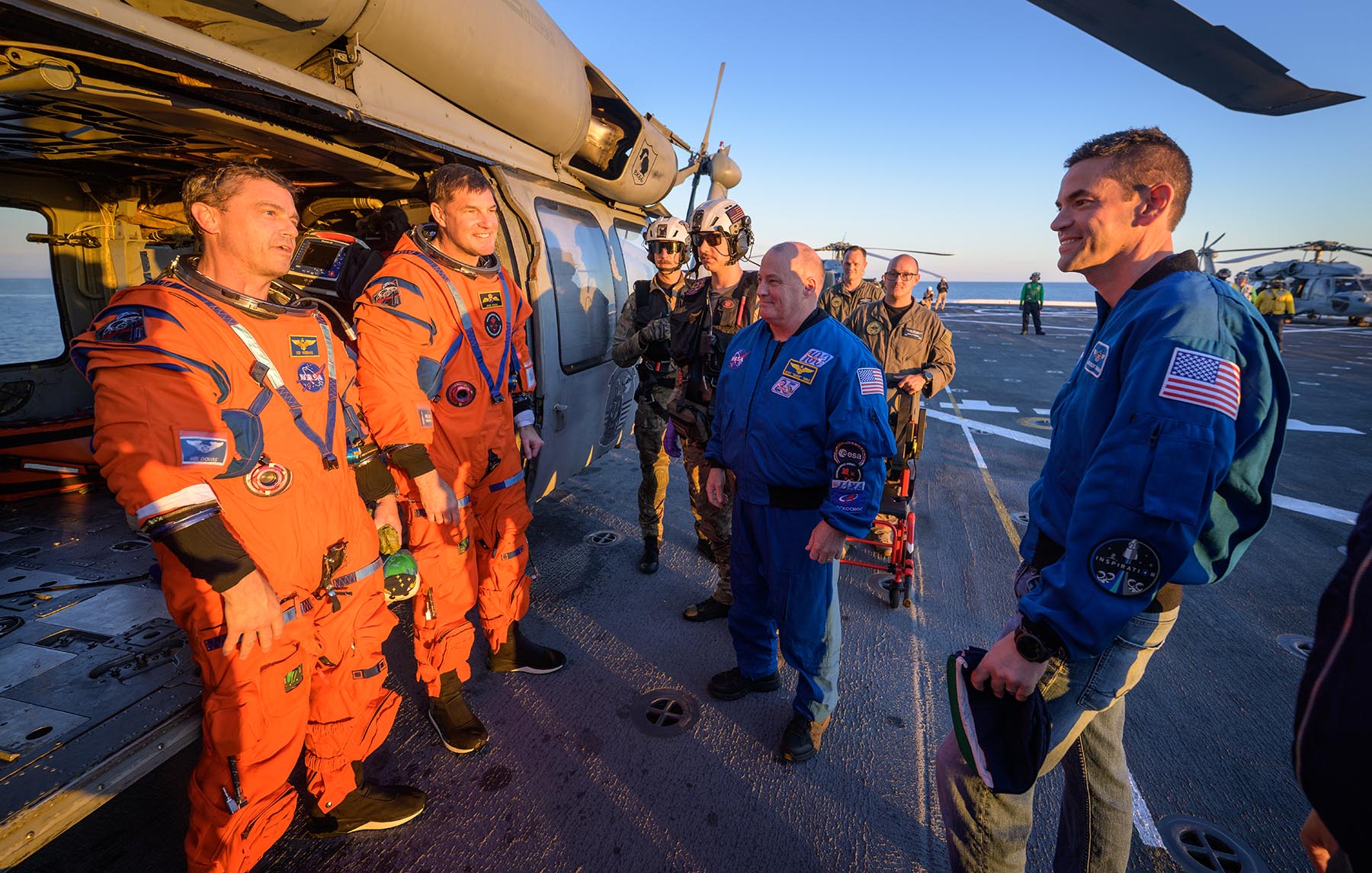
His first big task would be Artemis II, launching in April 2026. Fortunately, Scott knew the four crewmembers closely — especially the commander, Reid Wiseman. “I’ve known Reid for 25 years, from my time at Patuxent River Naval Air Station when he was just coming out of test pilot school,” he said. “It’s pretty cool that years later, the two of us were selected to be part of the same class of NASA astronauts. He actually became my boss in 2020 as Chief of the Astronaut Office, and now it’s the other way around! But we complement each other well, and there’s definitely a lot of mutual respect there.”
Canadian astronaut Jeremy Hansen was also part of that 2009 astronaut class. “Jeremy was especially great in the pool, training for spacewalks,” Scott remembered. “He’s waited so long for his first spaceflight experience, and it’s a well-deserved honor that he got to be part of this historic mission.”
Then there’s fellow Navy pilot Victor Glover — whom Scott refers to by his callsign, Ike. “He’s very experienced, piloting the second ever crewed flight of the Dragon vehicle, and just a great American,” he said. “But more than that, he’s a friend, a fantastic person, and someone who really cares about others.”
Finally, Christina Koch. “She’s very patient, very thoughtful,” he said. “But she also states her mind on spacecraft systems or procedures or mission readiness. She’s a wonderful complement to the crew.”
Cards on the Table
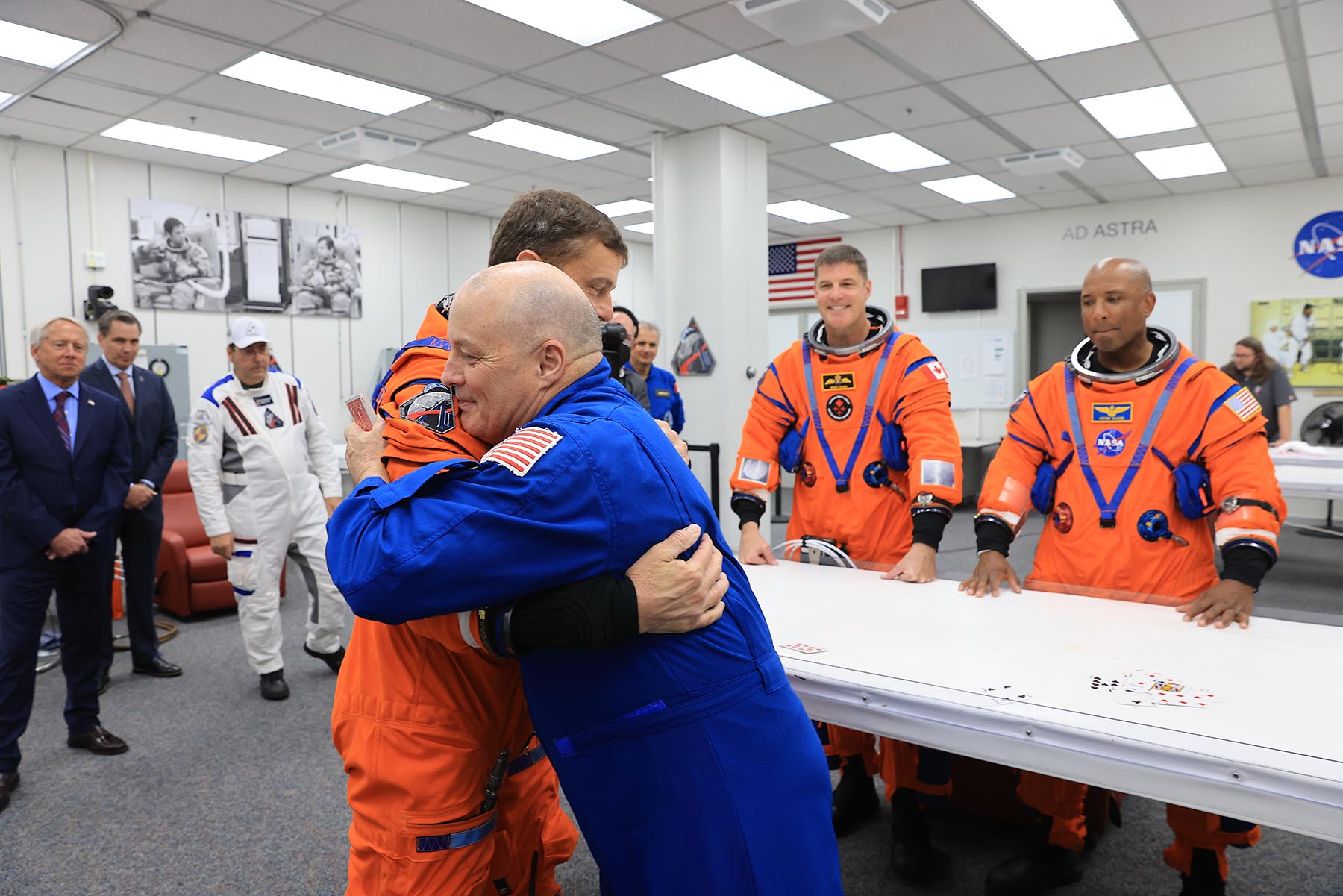
Launch day is obviously a stressful affair, and Scott had a very important job for his crew: playing cards.
“Getting into a spacesuit is really hard and uncomfortable,” Scott said. “Once they zip you up, you know your life is about to change — not just in the long term, but in the near term as well. You can’t go to the bathroom, you can’t eat, you can’t breathe normal air. All the things that make you human are temporarily taken away from you. And you could be in that suit for many hours, waiting for the launch. So the card game is a little tradition that is meant to bring a bit of joy into that process, a bit of humanity.”
Scott served as the dealer for the card game, gathering around a table with the four crew before they are sealed into the spacecraft. “It’s my job as the Chief to absorb all of the crew’s bad luck beforehand, so when they walk out to the launchpad, it’s nothing but good luck from then on,” he said. “It’s funny how this particular game worked out, because as the hands were dealt, I happened to lose to each individual crew member one-by-one. Reid was the last player, and when I lost to him, I had successfully absorbed all the bad luck so they could have a great mission. And they did!”
While launch day has its levity, it also has a particular gravity that only fellow astronauts can understand. “SLS is the most powerful machine we’ve ever put humans on,” Scott said. “We’ve rehearsed the mission so often, we feel like we’ve done it a thousand times. But we haven’t; this is the first time. When those rockets light up...”
He starts to tear up.
“When it leaves the pad, it’s a big reward, but it’s also a big burden. Those are my friends on that vehicle.”
The Mission
While most spectators were focused on the Moon, Scott was excited by a seemingly mundane test operation early in the flight. “While in orbit, Ike performed a handling qualities evaluation, piloting Orion through a simulated docking maneuver,” he said. “We actually worked for years to develop that procedure. As an engineer, it was very satisfying to see that test succeed, because now we know the flight envelope of that vehicle. It’s going to pay huge dividends down the road when we’re preparing Orion to dock for future Moon landings.”
Once they set off on their trans-lunar injection, Scott became a spectator like the rest of us, watching incredible images beamed back from the Moon. “I did get some emails from the crew, which is pretty cool,” Tingle laughed. “My first email from the Moon!”
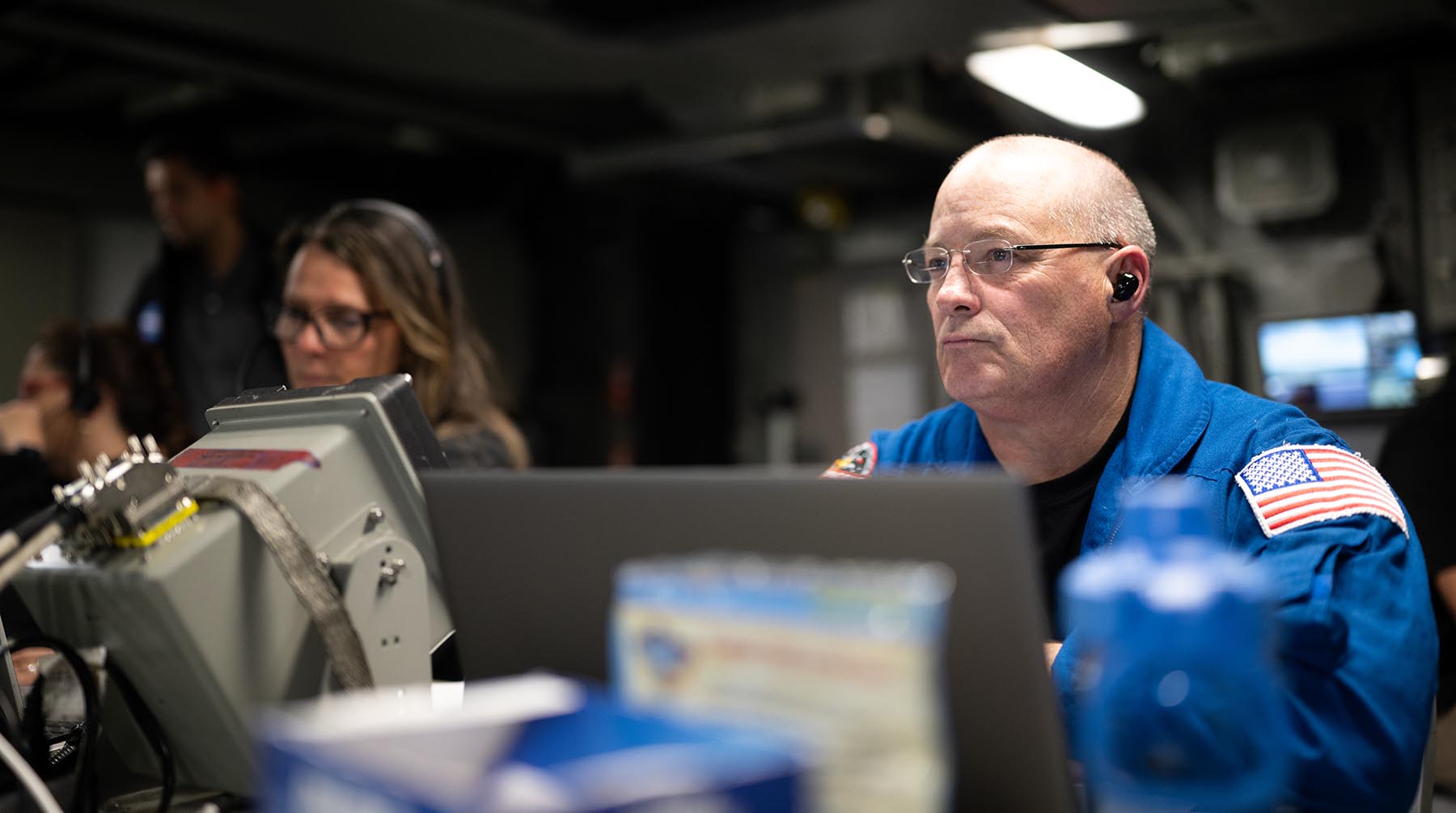
Perhaps the most unexpected aspect of the flight was the one thing that didn’t perform perfectly: the toilet. Valves and vent lines froze up, preventing waste from being expelled, and forcing astronauts to use slightly unsavory backup systems to relieve themselves. To these particular trials and travails of living in space, no one is more sympathetic than Scott. “I don’t think people understand how difficult it is to design systems like these,” he said. “Teams of very smart people worked for years on these systems. But there is only so much testing you can do on the ground; this is the first time these systems have been utilized in the real-world zero-gravity vacuum of space. We learn so much from every test flight, in order to make the next flight better.”
Improving the toilet is part of a broader philosophy that Scott brings to his office. “We always joke that human spaceflight would be so much easier if it weren’t for the humans!” he said. “But we are a tough variable to account for. We have unique biological needs, but we also have emotions that need to be factored in. We need to feel like we have control over certain things. We need to be able to look out a window. It’s my job to ensure that in every step of the process, the humans’ needs are given priority in every decision that is made. And every human is different! So it’s challenging, but also very important if we have the goal of continuing human spaceflight in the future.”
Re-Entry
Second only to launch, re-entry is the most anxious time in human spaceflight. It’s the biggest chance for things to go sideways — but it’s also the chance to experience the most triumphant success. “We learned a lot from Artemis I, especially about the heat shield,” Scott said. “We had enough information to be confident in our choices how they re-entered the atmosphere. When Orion splashed down successfully in the Pacific Ocean, and we looked at the heat shield afterwards, it behaved exactly like the engineers had predicted.”
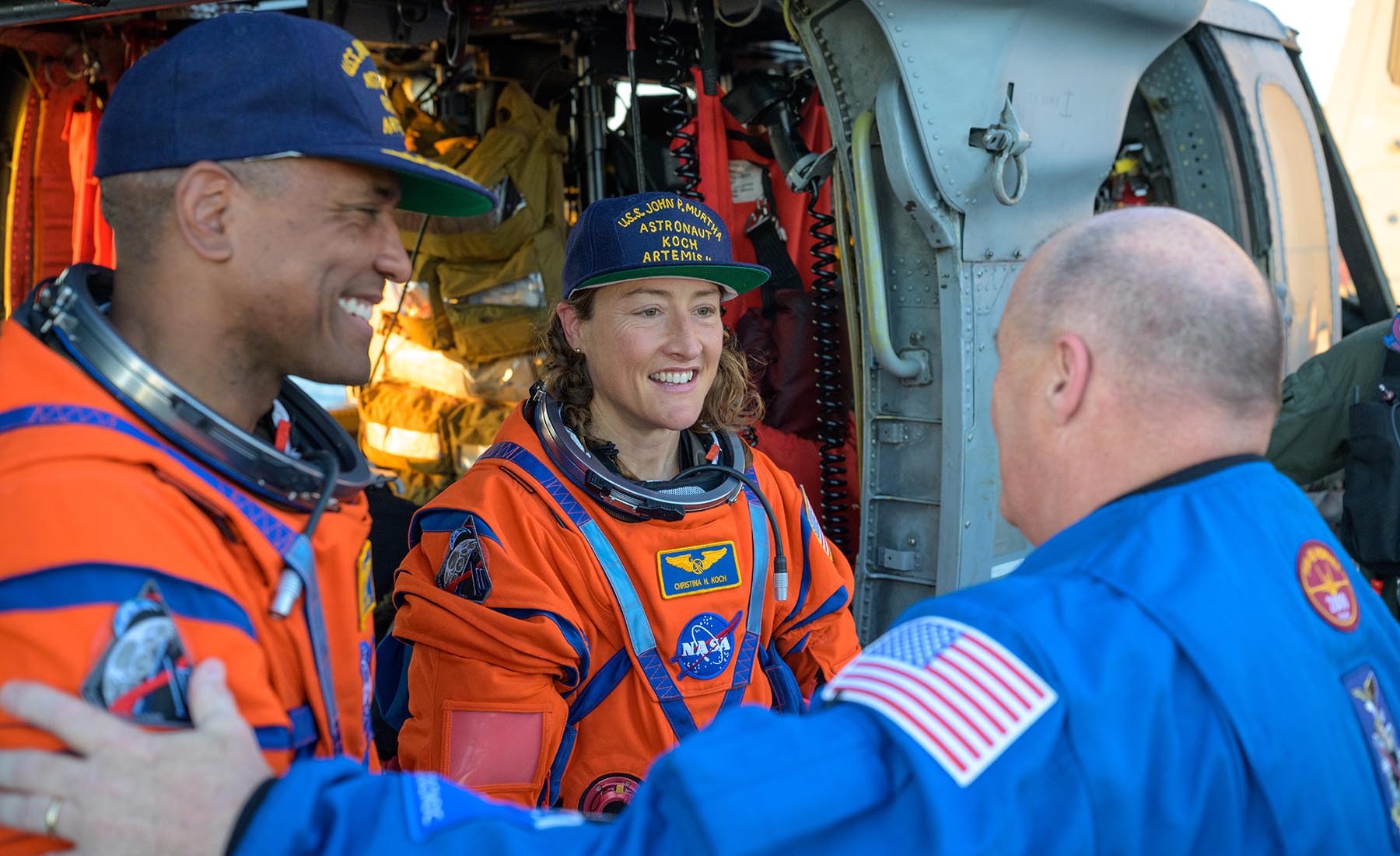
Scott was on the boat to greet the crew when they exited Orion for the first time in nearly two weeks. Next came the hardest part: putting one foot in front of the other. “When I came back to Earth in 2018, I had been weightless for nearly six months,” Scott said. “We had to be lifted out of the capsule, and carried around on lawn chairs. It took a while for our bodies to get accustomed to Earth’s gravity once again. But this crew? They were ready to jump out of that capsule. They did so well in their training.”
He continues to brag on his crew: “What was most outstanding about these guys was how connected they were to us back on Earth. When I was in space, I very much had an engineer’s mindset: here’s the task, and here’s what I need to do to accomplish it. The Artemis II crew did their jobs, but they also kept their microphones open. They shared what they were feeling as they traveled around the moon. You felt like you were sitting right there with them. It takes an incredible person to be able to do both, and it made me especially proud of this crew.”
Boiler Up
For Artemis II’s success, Scott acknowledged the efforts of all his NASA colleagues and partners. “We made it look easy, but it takes thousands of people working thousands of hours to accomplish something like this,” he said. “We have contractors who built the vehicles. We have international partners in Canada, Europe, Japan, and others. To watch Orion work flawlessly on its first crewed mission is an incredible testament to the teams of people who created it, planned it, managed the systems, solved the problems, and of course, completed the mission as crew.”
Scott is thrilled to carry on the tradition of Purdue graduates involved in pioneering spaceflights, and he can’t wait to be involved in the milestones to come. “We’ve been trying to do this for 50 years,” he said. “But now with [NASA Administrator] Jared Isaacman at the helm, we’re finally getting the noise out of the system, and focusing on what it takes to get boots back on the Moon — and eventually, a permanent human presence on the Moon.”
Writer: Jared Pike, jaredpike@purdue.edu, 765-496-0374