
Noah Eisenhower's engineering education put to the test in short-track racing
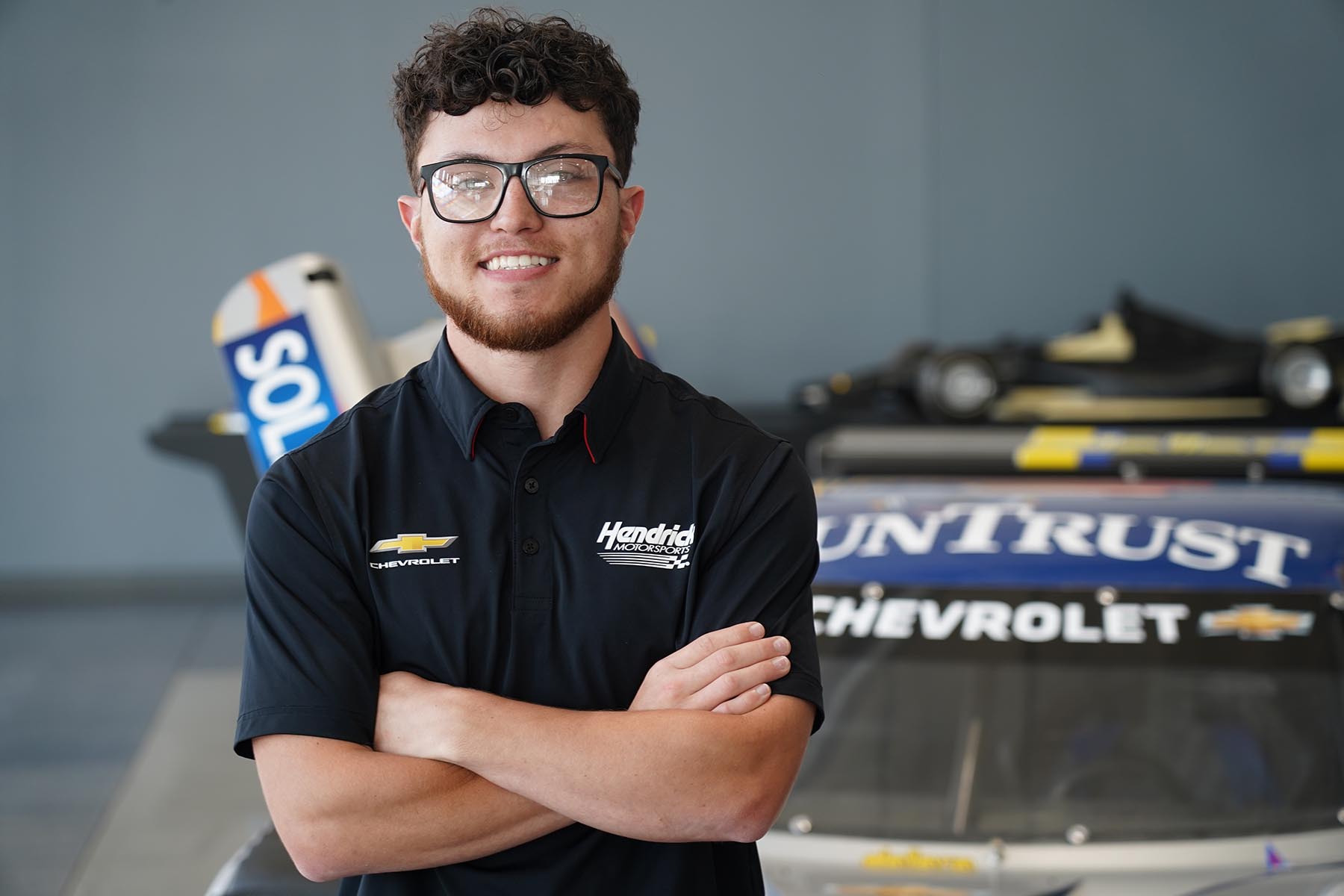
Like many aspiring drivers, racing is a family affair for Noah. “My parents are involved in racing; both sets of grandparents are still involved,” he said. “My dad put me in a go-kart at the age of four. I ran on dirt tracks, asphalt tracks, street tracks, and it just took off from there. Getting involved at a young age is really beneficial to your growth as a driver.”
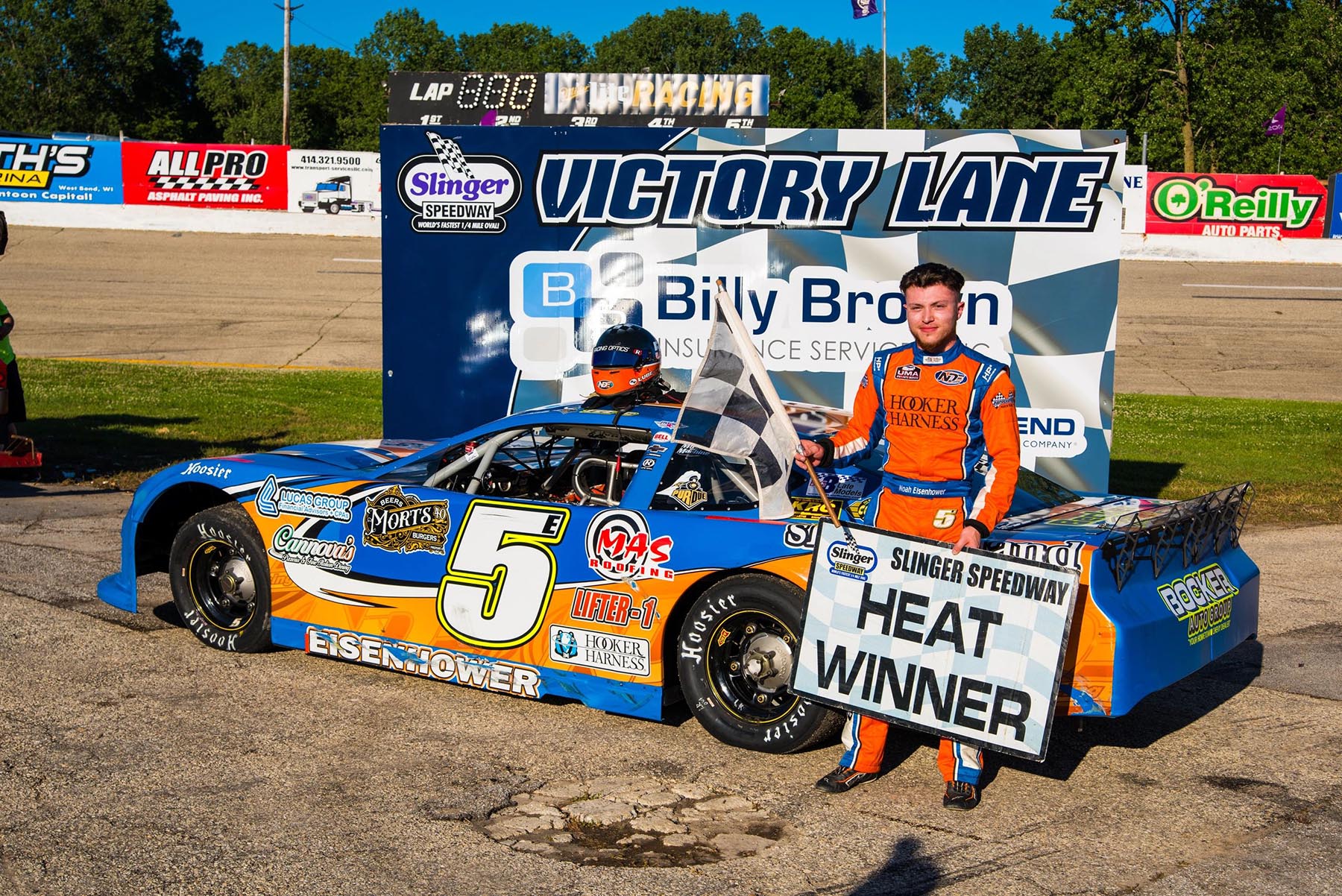
And it worked. Noah raced Legends cars (5/8-scale hot rods) in Illinois, Wisconsin, Michigan, and Indiana. In 2018, he was named Rookie of the Year at Wisconsin Dells, and Illinois State Champion in his age class. He eventually stepped up to Late Model stock cars, racking up wins and top-5 finishes throughout his high school years.
His father also encouraged him to think about his future. “When I was about 11 or 12, my dad talked to me about college, and how that might prepare me for a future career,” he said. “We started researching, and found out about the Purdue Motorsports Engineering program in Indianapolis. So from that point on, I started taking classes that would prepare me for that.”
Not that it was always easy. “Math was my worst subject!” he laughed. “That’s one of the things I’m actually proud of since I’ve been here at Purdue; I actually had to step up my game with math. I put a lot of effort into it, and have come a long way!”
Last year, Noah was chosen for the Kulwicki Driver Development Program, which supports young stock car drivers. He finished 4th in their rankings. Despite running only a partial schedule, his family team also finished top-10 in the two short-track series they competed in throughout the Midwest.
As the only accredited motorsports engineering program in the country, Purdue is turbocharging his efforts. “All of motorsports is math and physics,” Noah said. “When we’re debriefing after a practice session, I want to understand why things are happening with the car, and what we can do to change it. There are a lot of variables involved in racing, and changing inputs here might create different outputs there. My degree helps me to make educated decisions to improve our team.”
Fall Specials
Autumn is racing season in the Midwest, when local short tracks organize their “Fall Specials.” For Noah, that makes life a little complicated.
“Once school starts, let’s just say I really have to plan my schedule,” he said. “I try to take Friday classes early in the morning, so that I have time to head home and get the car ready to travel and spend the weekend at these tracks.”
Noah is part of the Appalachian Sucker Punch ASA Midwest Tour, a super-late model series at asphalt short tracks. He drives a full-body stock car weighing 2,750 pounds, with 10-inch slick tires and 525 horsepower. “It’s like a monster underneath my foot,” he said. “The grip is incredible. But it also means when I’m at the track, I’m 100% focused. We have two or three practice sessions, a qualifier heat race, and then a 200-lap feature. Afterwards we can recover, and then I have to travel back to Indy so I can hit classes hard on Monday morning!”
Regardless of what happens on the track, Noah is still making plans for his future. Through his racing connections, Noah scored an internship with Hendrick Technical Solutions, a spin-off of Hendrick Motorsports that does defense manufacturing. “I am always looking to build my resume to give myself the best opportunity for a job when I graduate,” he said.
As for his future, Noah sees bountiful opportunities, whether they are at the track or elsewhere. “It’s everyone’s dream as a kid to succeed as a race car driver,” he said. “But it’s a 100-to-1 shot of those who really make it. That’s why I chose to complete an engineering degree from Purdue. My horizons are pretty broad — whether that’s race engineering in NASCAR, or IndyCar, or somewhere else. I’m only going to get better by taking the necessary steps to eventually work my way up there.”
Noah Eisenhower Racing: https://nderacing.com
Writer: Jared Pike, jaredpike@purdue.edu, 765-496-0374