
Purdue-led biotech accelerator selected for SBA funding
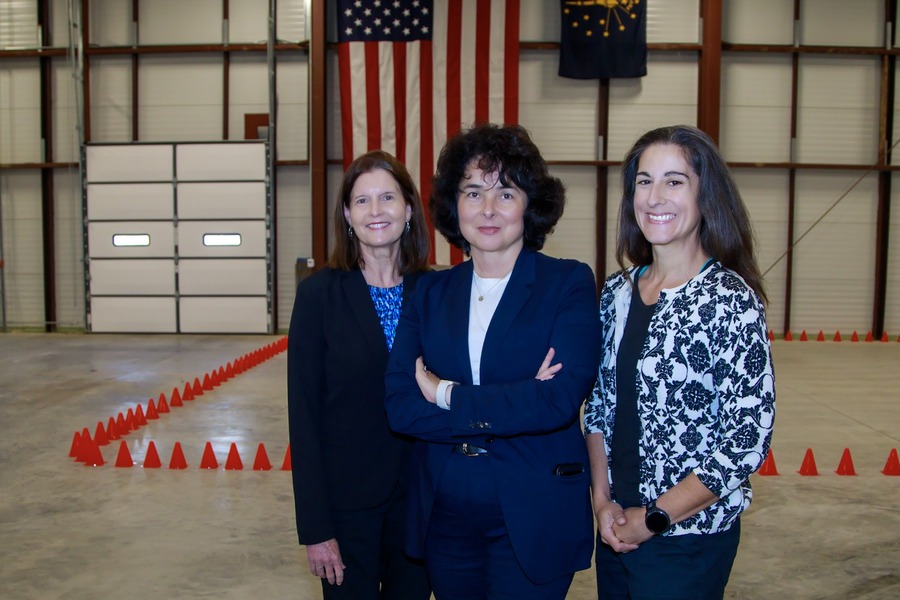
Over a two-year period, the B-PRIME Accelerator will help small manufacturers meet the technical, regulatory and production requirements of the pharmaceutical industry
WEST LAFAYETTE, Ind. — Purdue University has won funding from the U.S. Small Business Administration (SBA) to seed and run a two-year initiative that aims to strengthen the country’s pharma supply chain. The university’s Biotech/Pharma Readiness Initiative for Manufacturing Enterprises (B-PRIME) Accelerator will help small biotechnology and biomanufacturing companies in Indiana become qualified suppliers to the pharmaceutical industry.
The pharma supply chain challenge
Drug shortages continue to plague the United States, but especially striking is the dependency on a small set of suppliers.
The country was facing 227 active drug shortages as of June 2026, according to a report from the American Society of Health-System Pharmacists. Even more sobering, nearly half of all new shortages this year involve sole-source products — products supplied by a single manufacturer.
Loosening such severe chokeholds on the domestic pharmaceutical supply chain is a significant national priority. The Supply Chain Acceleration and Logistics Enablement (SCALE) program from the SBA recognizes the problem and hopes to partially alleviate it through an $8.9 million award. Purdue is one of 18 organizations nationwide which will share the prize, and the only recipient in the Biotechnology category. Grants will run up to $500,000 over two years.
Purdue addresses the national pharma supplier shortage
B-PRIME is a joint initiative from Purdue’s Advanced Lyophilization Technology Hub (LyoHUB), an industry-led consortium of more than 40 companies, and the William D. and Sherry L. Young Institute for the Advanced Manufacturing of Pharmaceuticals, which is dedicated to improving access to medicines through innovative research and education.
The accelerator targets one of the strongest challenges in the pharmaceutical supply chain: too few suppliers in the ecosystem. By addressing the “pilot-to-qualified-supplier gap” it levels the playing field for small companies that might develop promising technologies in the lab but struggle to scale manufacturing.
The problem is especially challenging since compliance with stringent Good Manufacturing Practice (GMP) protocols are critical for success in the industry. Small companies frequently lack the GMP training, complex infrastructure and the quality and regulatory expertise needed to become regular suppliers to larger manufacturers.
“We built B-PRIME to help biotech innovators move beyond a prototype to become a qualified supplier through regulatory readiness assessments, hands-on building of capabilities, to an actual introduction to the customer who needs what they make,” said Alina Alexeenko, the Reilly Professor in Aeronautics and Astronautics and Chemical Engineering at the Purdue College of Engineering. Alexeenko, who serves as the director of LyoHUB and co-director of the Young Institute, is principal investigator on the B-PRIME Accelerator award.
The timing (and geography) could not be better. Indiana is no stranger to biotech. It is home to Heartland BioWorks, a federally designated biomanufacturing Regional and Technology Hub. B-PRIME has its roots in the Young Institute, which has been an integral part of the hub since 2024.
Indiana does not lack prospective pharma suppliers either. Unfortunately, only three of the more than 20 qualified entities identified as prospects to feed the pharma pipeline have committed to opening or expanding in the state, according to a 2025 BioCrossroads report. The hesitation might be understandable. Large pharmaceutical manufacturers need measurable evidence that a supplier can meet stringent requirements for quality compliance and manufacturing at scale.
B-PRIME aims to help small companies fill the gap between where they are and where larger companies expect them to be.
Systematic biotech building blocks
The goal is to work with more than 20 small businesses in Indiana and the Midwest over the 24-month span of the B-PRIME initiative.
Participants will first undergo a readiness assessment across seven domains, including manufacturing maturity and GMP readiness, workforce competency and supply chain resilience. In turn, each company will receive a custom action plan that outlines shortcomings and related fixes.
Experts from Purdue can share technical assistance in fields like aseptic processing, sterile filtration and filling, lyophilization and freeze-thaw cycle development, process analytical technology, and automation and digital manufacturing. In addition, participants can test drive their proposals using Purdue equipment like a 53-foot mobile cleanroom unit, pilot scale lyophilizer, ISO 5 isolator units and more.
“This program gives small manufacturers a realistic, commercially relevant avenue for de-risking and maturing their processes before pursuing their next round of funding or sale,” said Michelle Chutka, visiting professor in the Davidson School of Chemical Engineering and associate director of the project. Chutka will lead co-implementation of the B-PRIME program. Introduction to prospective buyers is also something the program will help with, through supplier showcases and buyers’ needs roundtables.
A larger ecosystem supports the B-PRIME initiative. Purdue’s Indiana Manufacturing Institute will host the programming, while Purdue Research Park, with its roster of 250 companies, will serve as a robust source of additional expertise, when needed.
“The funding of B-PRIME kicks the work we have been doing at the Young Institute into higher gear,” said Elizabeth Topp, Young Institute director, professor of Industrial and Molecular Pharmaceutics and Maxine Spencer Nichols Professor in Chemical Engineering. “We hope to accelerate the adoption of manufacturing innovations across the U.S. pharmaceutical value chain by creating a direct pathway for small companies to scale beyond prototypes and become established suppliers.”
That diversified base, in turn, will deliver a much-needed dose of resilience to the national supply chain.
Note: The B-PRIME Accelerator is funded through the U.S. Small Business Administration’s SCALE Award, grant No. SBAOIIGA260004-01-00.