
Energy-sector power players join Purdue Engineering's Grid of Tomorrow Consortium
Tesla, PG&E, MISO, and Schneider Electric partner with Purdue to accelerate grid readiness, AI at the edge, and faster interconnections for large new loads
A historic surge in electricity demand — from data centers to transportation electrification — is putting new pressure on an already aging grid. Utilities and grid operators face the challenge of meeting this growth while maintaining reliability and avoiding unnecessary costs for customers. Purdue Engineering’s Grid of Tomorrow (GoT) Consortium is built for this moment: bringing together utilities, system operators, and technology leaders to modernize the grid, cut through interconnection bottlenecks, and advance tools that keep energy reliable and affordable. Purdue invites additional partners to join this effort.
The GoT aims to catalyze research and bolster workforce development to address these and other challenges caused by a rapidly changing landscape. This new paradigm will employ targeted high-impact problem solving alongside leading grid operators, technology companies, and energy innovators.
Recently, three companies have joined the GoT and support the consortium’s aspiration to be at the forefront of grid modernization.
Tesla, Pacific Gas & Electric Company (PG&E), Midcontinent Independent System Operator (MISO) and Schneider Electric will offer practical expertise to Purdue Engineering’s focus on several high-impact areas in which the electric grid is experiencing rapid change: data centers and large electrified loads; accelerating interconnection and grid readiness; AI and advanced analytics at the grid edge; and cross-sector collaboration and solution co-development around the electric grid ecosystem.
“Our strength comes from bringing together both academic and industry perspectives to solve problems that no single organization can address alone,” said Andrew Liu, associate professor in the Edwardson School of Industrial Engineering and director of the Consortium. “Data centers are becoming one of the fastest-growing types of electricity demand.”
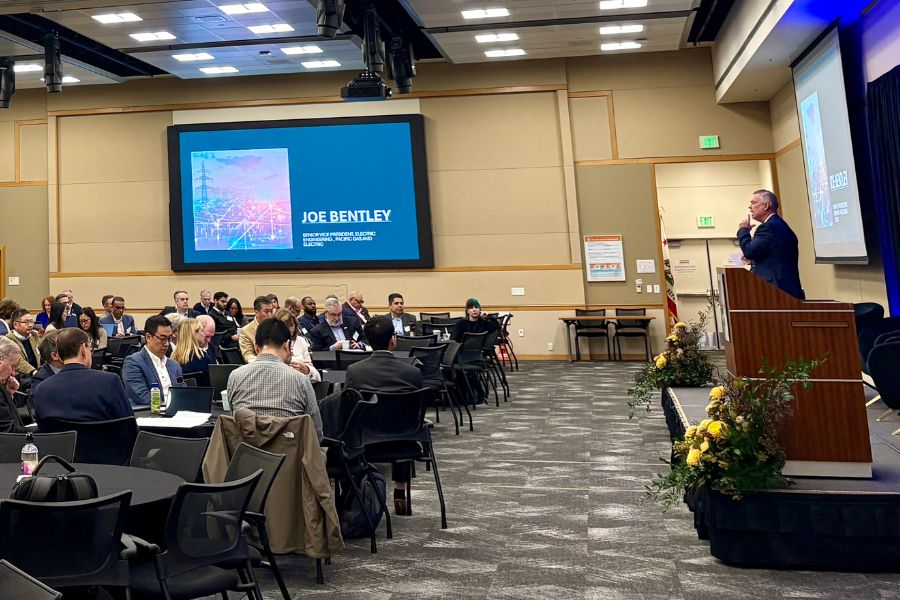
“PG&E is ready to seize the multi-generational opportunity that GoT provides,” said Joe Bentley, the company’s senior vice president of electric engineering.
“PG&E is focused on optimizing grid capacity, accelerating interconnections, and deploying AI'driven edge analytics to strengthen forecasting and situational awareness. By partnering with Purdue’s Grid of Tomorrow Consortium with powerhouse stakeholders like MISO and Schneider Electric, we’re surrounding ourselves with the best minds in the industry to find innovative ways to energize large'load customers faster while keeping reliability and affordability front and center,” Bentley said.
As a chief producer of sought-after graduates, Purdue’s College of Engineering is an attractive collaborator for utility industry leaders, and the GoT further sweetens the pot.
“The challenges facing our grid — from rapid electrification to integrating large new loads—require fresh thinking and bold innovation,” said Todd Ramey, senior vice president of markets and digital strategy at MISO. “Partnering with Purdue’s Grid of Tomorrow Consortium offers a unique opportunity to tap Purdue’s engineering talent and research leadership to help tackle some of the most pressing challenges facing our industry. We look forward to working collaboratively in the months ahead to develop practical solutions that enhance reliability, streamline interconnections, and support a resilient energy future.”
“The energy transition and rapid growth in electrified and digital loads demand deeper collaboration across the grid ecosystem,” said Ruben Llanes, CEO, Digital Grid and President, NAM Power & Grid at Schneider Electric. “By joining Purdue’s Grid of Tomorrow Consortium, we gain the opportunity to work alongside leading researchers and industry peers to advance new approaches to grid modernization, predictive analytics, and interconnection acceleration. Purdue’s strength in power systems research and AI-driven innovation, combined with real-world operational insight from consortium partners, creates a powerful foundation to develop practical, scalable solutions for a more resilient and efficient grid.”
Purdue is developing new models and tools to understand how data facilities interact with the grid, accelerate system integration capabilities and how they might eventually provide meaningful flexibility and support system reliability.
“What we hope to do through the Grid of Tomorrow is to become a hub for creating talent, jobs and innovation together with our industry partners,” Arvind Raman, the John A. Edwardson Dean of the College of Engineering, said at the outset of the initiative. “Through the Grid of Tomorrow Consortium, like-minded industry partners will identify pre-competitive space for research and have access to a wonderful talent pool here at Purdue.
Current and future GoT partners will have access to Purdue Engineering’s diverse research strengths that include nuclear engineering, power system dynamics with inverter-based resources, energy markets design, grid situation awareness and integration of distributed energy resources.
“Our GoT team is also leveraging AI and machine learning to improve forecasting, situational awareness and optimization of distributed energy resources. The goal is to support utilities and industry partners as they navigate through the challenges and opportunities in an increasingly complex grid environment,” said Vassilis Kekatos, associate professor in the Elmore Family School of Electrical and Computer Engineering and co-director of the Consortium.
In addition, cross-sector participation and solution co-development are part of the GoT plan.
“A defining strength of the consortium is that our partners are not just advisors, but active collaborators. They shape our research questions, share real-world challenges and help ensure that the solutions we develop are practical and actionable,” Liu said.
The GoT convened two workshops in 2025, and a third one took place on Feb. 26 in San Ramon, California. Building on the first two workshops, the 2026 workshop includes Purdue-led lightning research presentations, industry panel discussions and plenary talks that address key consortium challenges. Organizers have planned strategic discussions about opportunities for innovation in data center modeling, expediting interconnections, and AI at the grid edge.
About the Grid of Tomorrow and Purdue’s Institute for Energy Innovation
GoT is a flagship initiative of Purdue’s Institute for Energy Innovation (IEI), a university-wide hub uniting more than 130 faculty to advance technologies that create abundant, affordable, and reliable energy; strengthen U.S. energy systems; expand industrial capabilities; and train the next generation of innovators. Working with utilities, operators, OEMs, and policymakers, IEI and GoT convert research into deployable solutions that scale.