All features

June 10, 2024

Spintronics Pioneer - Supriyo Datta

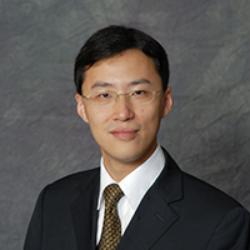
The introduction of quantum elements into classical computing is revolutionizing semiconductor technology, as researchers push the boundaries of knowledge at the convergence of physics, chemistry, and electrical engineering. Quantum transport of electrons might sound like something from Star Trek, but the flow and spin of electrons at an atomic scale is what makes possible modern semiconductor technology advances, like the billion-plus transistors in the smartphone. Supriyo Datta was recently elected to the prestigious National Academy of Sciences, and has been called "one of the most original thinkers in the field of nanoscale electronics." Here he explains his ideas about quantum physics in an engineering context and the role of quantum and electron spin — "spintronics" — in delivering the compute horsepower for today's advances in AI, Internet of Things, edge computing, autonomy, and optimization.
April 4, 2024

Building a Semiconductor Ecosystem - Mark Lundstrom

Semiconductors and chips are at the heart of everything we do. They are some of the most fiendishly complex engineered devices ever built, and are getting even more complex as we race to develop chips with mind-boggling power to fuel artificial intelligence. Chips are also a national security priority, which is why the CHIPS Act aims to onshore, or near shore, semiconductor manufacturing. This is all in Purdue's wheelhouse, as America's "Semiconductor University." Mark Lundstrom, Purdue's chief semiconductor officer, draws upon his 50 years in the field to discuss technologies like advanced packaging that are driving sector innovation forward; the challenges to building out an enduring semiconductor ecosystem in the United States; and how Purdue is tackling the No. 1 industry challenge — workforce development — by leading an urgent, ambitious effort to educate engineers and skilled technicians for the most sophisticated and foundational technology we humans manufacture.
March 27, 2024

Breathing new life into U.S. infrastructure - Luna Lu

It's widely agreed by all that United States infrastructure is in dire need of improvement, getting low grades like C- and D- in various studies. Luna Lu wants to make our aging infrastructure "smarter." She’s leveraging the Internet of Things via her smart, materials-based sensor technology and novel, interpretive data-processing methods, enabling infrastructure to monitor and wirelessly communicate its condition with current and actionable information so we can detect problems earlier and mitigate them. This can vastly improve infrastructure maintenance and modernization, so our roads and bridges can keep commerce and people moving safely and efficiently and the American economy humming. And Lu isn’t done with her innovation journey – her sensor-based testing technology is gaining wider use across other sectors, and next on her agenda is investigating the manufacture of plant-based cement to provide not only carbon neutrality but a carbon-negative construction material that can absorb CO2 in permanent storage.
< Previous 10 | Viewing 121 to 130 of 197 | Next 10 >