
PEDLS Jenna Jambeck — Lecture
Hosted by the College of Engineering and the School of Sustainability Engineering and Environmental Engineering
Abstract
Plastic debris and its impacts on the environment have been widely documented, but the quantity entering the ocean from land was previously unknown. By linking worldwide data on solid waste, population density, and economic status, Jenna Jambeck made the first estimate of plastics entering our ocean globally. Cumulative global plastic production reached 8 billion metric tons in 2017. Of that, 6.4 billion metric tons became waste, overwhelming some waste management systems around the world unable to keep infrastructure in step with economic growth. In addition, the global trade of plastic waste intended for recycling has influenced what countries can do with plastic as a recycled material, with economic impacts worldwide. Shifting to where the burden of plastics is carried, at the community level, Jambeck and her team created the Circularity Assessment Protocol (CAP). CAP is a rigorous, cost-effective toolkit for assessing materials management systems at the community level, which has been used in 51 cities across 14 countries. Jambeck will not only discuss the methods and results of her research but the impacts and related policies around the world. She will present an intervention framework to reduce plastic in our environment while sharing stories of integrating technology and citizen science, science communication and community-level efforts to address plastic pollution around the globe.
Biography
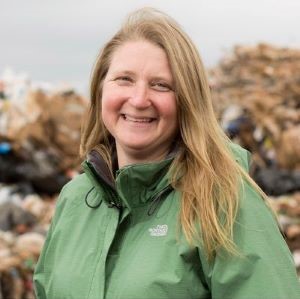
Jenna Jambeck is the Georgia Athletic Association Distinguished Professor in Environmental Engineering at the University of Georgia, a 2022 MacArthur Fellow, founder of the Circularity Informatics Lab in the New Materials Institute and a 2018-2021 National Geographic Explorer. She has been conducting research on solid waste issues and marine debris and plastic pollution for two decades. Her work has been translated into policy by the High-Level Panel for the Ocean, testimony to Congress, in G7 and G20 Declarations, and the United Nations Environment program. She has conducted public environmental diplomacy as an International Informational Speaker for the US Department of State since 2017. She has won awards for teaching and research in the College of Engineering, the UGA Creative Research Medal and a Public Service and Outreach Fellowship. In 2024 she was named the SEC Professor of the Year. In 2014 she sailed across the Atlantic Ocean with 13 other women in eXXpedition to sample land and open ocean plastic and to encourage women to enter STEM disciplines. In 2019 she co-led the first ever women-led expedition team for National Geographic, conducting research on plastic pollution in the Ganga River Basin. She and her research team lead the science component of the Mississippi River Plastic Pollution Initiative. She is the co-developer of the mobile app Marine Debris Tracker, a tool that facilitates global citizen science. The app and citizen science program has documented the location of over 8 million litter and marine debris items throughout the world. She is the host of a podcast called Aquathread on WUGA NPR station and co-author of Plastics, from the MIT Press Essential Knowledge Series.