
Designing cartilage that can stand its ground

Purdue chemical engineer Julie Liu earns NIH funding to develop materials that help the body regenerate cartilage, even in an inflamed joint
WEST LAFAYETTE, Ind. — For many people with arthritis, the path is familiar: manage the pain and swelling for as long as possible, then face a joint replacement. Cartilage, the smooth tissue that cushions our joints, has a limited ability to heal, and neither drugs nor surgery can restore it.
Julie Liu, a professor in Purdue University's Davidson School of Chemical Engineering, wants to change that. With a new five-year R01 grant from the National Institutes of Health's (NIH) National Institute of Arthritis and Musculoskeletal and Skin Diseases, her team will develop materials that support cartilage regeneration in the harsh environment of a damaged joint.
A vicious cycle
The need is large. The Centers for Disease Control and Prevention estimates that more than 50 million U.S. adults have doctor-diagnosed arthritis, and osteoarthritis, in which cartilage gradually breaks down, is the most common form. Worn cartilage can no longer protect the ends of the bones during movement, leading to lost mobility and damage to the bone itself.
Inflammation makes matters worse. Liu calls it "a vicious cycle": fragments of degraded cartilage increase the inflammatory signals that cells release, and those signals prompt the release of enzymes that break down still more cartilage. The result, she said, is "a self-reinforcing cycle of inflammation and degradation."
That cycle has frustrated tissue engineers for decades. Replacement cartilage placed in an inflamed joint meets the same destructive conditions that damaged the original tissue.
Building resilience into the material
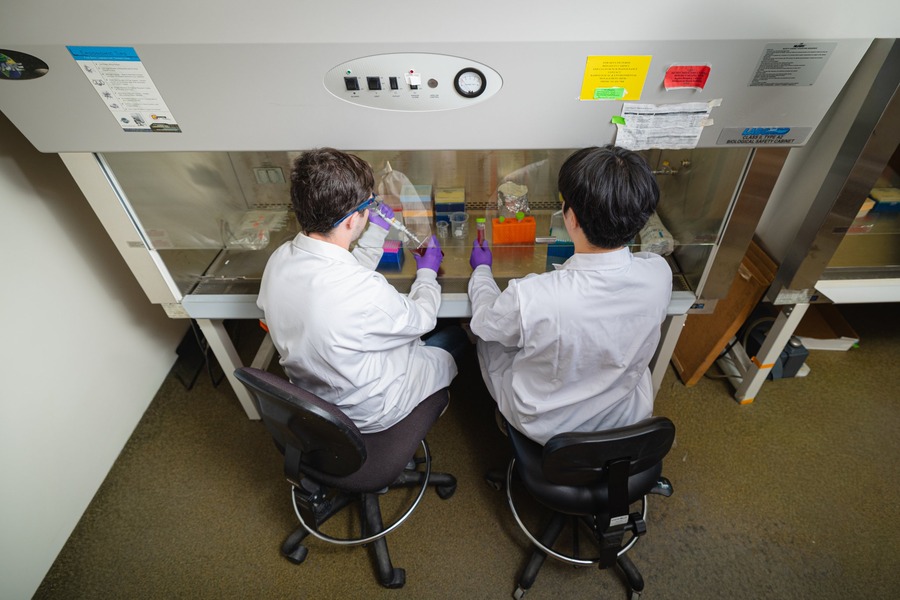
Liu's project, "Designing Cartilage Scaffolds that Resist Pro-Inflammatory Environments," focuses on biomaterial strategies that reduce the breakdown of existing cartilage and limit the inflammatory signals cells receive. The goal is to give cells a protective environment so they can develop into cartilage and regenerate tissue.
The approach builds on earlier work by Liu's longtime collaborator, Alyssa Panitch, who has shown that specially designed molecules can reduce the degradation of existing cartilage. Liu's team is now applying that technology to tissue engineering, through both laboratory studies and preclinical testing.
Success, Liu said, would be showing that these strategies can reduce inflammation's harmful effects on cells and let them form new cartilage. She is realistic about the timeline: A relatively simple medical device takes "ten years to go from the initial idea to a clinical reality," she tells her tissue engineering students, and this approach is more complex.
A team effort
Liu stresses that the project is a collaboration. She and Alyssa Panitch, a former Purdue colleague who now chairs the Wallace H. Coulter Department of Biomedical Engineering at Georgia Tech and Emory University, began working together more than a decade ago on an NIH-funded cartilage engineering project. Panitch brings expertise in biomolecule design and osteoarthritis treatments, while Liu's focus is how cells interact with biomaterials.
At Purdue, Liu works with two colleagues in the College of Veterinary Medicine. Dianne Little, associate professor in the Department of Basic Medical Sciences, will help analyze gene-expression data. Abigail Cox, assistant head and William Iverson Associate Professor in the Department of Comparative Pathobiology, will help analyze tissue samples. Steve Trippel, an emeritus professor at the Indiana University School of Medicine who treated patients with osteoarthritis, will provide clinical insight.
"My collaborators in the College of Veterinary Medicine have been invaluable in all of our cartilage engineering work," Liu said.
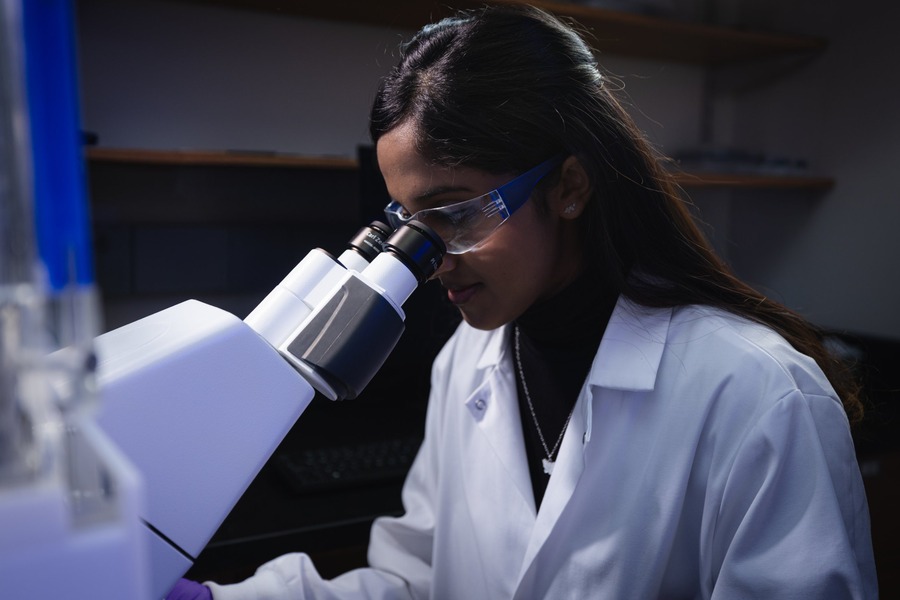
Graduate student Sameera Vellore examines a sample under a microscope in Liu's lab. The NIH-funded project brings together researchers from Purdue's Colleges of Engineering and Veterinary Medicine, Georgia Tech, Emory University and the Indiana University School of Medicine. (Purdue University photo/Kevin Crisp)
Students at the center
Zachary Beickman, a fifth-year PhD student in chemical engineering, has spent his time at Purdue on cartilage tissue engineering. His undergraduate research advisor, who had met Liu, recommended he apply.
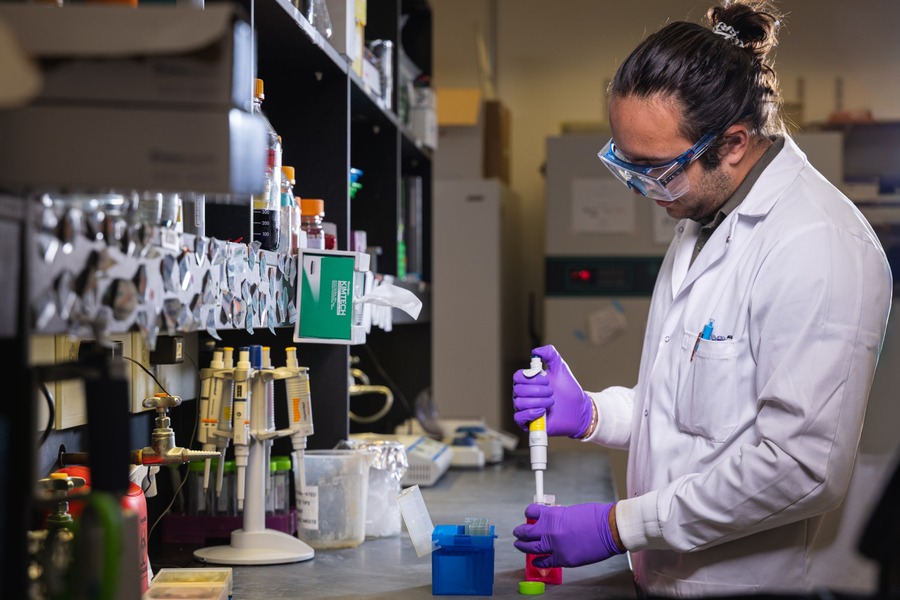
Today, Beickman develops and tests materials ahead of cell experiments planned for early next year. He also helped shape one of the ideas in the proposal. "I found papers that used somewhat similar systems for applications other than cartilage and thought this was a really good opportunity to try to translate these ideas into another relevant environment," he said.
His focus has been designing better materials "to help resist this inflammation and provide a protective environment to promote tissue regeneration."
Looking ahead
The grant runs through July 2031, and Beickman plans to graduate before the work is complete. "I am excited to see how the students who work on this project after me will continue the work that I started," he said.
For Liu, the award means the chance to keep building. "We are excited for the support this grant provides so that we can develop and engineer strategies that support the regeneration of cartilage," she said.
Liu’s work aligns with Purdue's One Health initiative, which involves research at the intersection of human, animal and plant health and well-being.
Research reported in this story was supported by the National Institute of Arthritis and Musculoskeletal and Skin Diseases of the National Institutes of Health under Award Number R01AR087365. The content is solely the responsibility of the authors and does not necessarily represent the official views of the National Institutes of Health.
Author: Tasmiha Khan
