
Fabio Ribeiro named recipient of American Chemical Society's 2027 George A. Olah Award
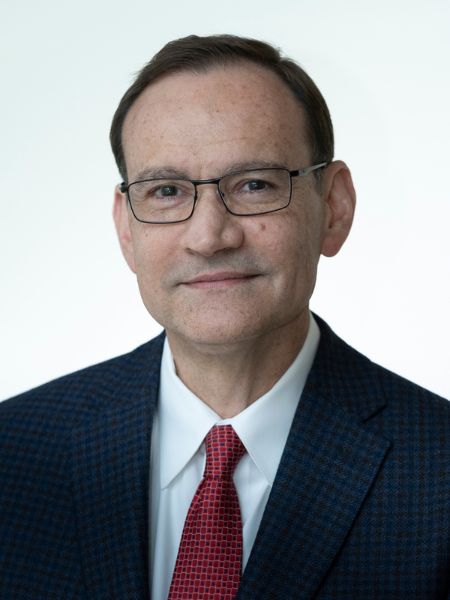
Hydrocarbon chemistry honor prompts reflections on research and collaborations behind CISTAR and Institute for Energy Innovation
WEST LAFAYETTE, Ind. — Fabio Ribeiro, the William Nicholas and Elizabeth Holstein Delgass Distinguished Professor of Chemical Engineering, has been named the recipient of the American Chemical Society’s (ACS) 2027 George A. Olah Award in Hydrocarbon or Petroleum Chemistry.
The national award recognizes outstanding research in the field, with particular emphasis on original, independent thinking.
Ribeiro studies how catalysts speed up and control reactions involving hydrocarbons, seeking insights that can make the production of fuels and chemicals more efficient.
For Ribeiro, who directs the Center for Innovative and Strategic Transformation of Alkane Resources (CISTAR) and is executive director of Purdue’s Institute for Energy Innovation (IEI), the honor carries special meaning after more than four decades of research.
“I began studying catalytic reactions involving hydrocarbons during my master’s degree in chemistry in Brazil, and that fascination has stayed with me throughout my career,” Ribeiro said. “I was fortunate to learn from extraordinary people in academia and industry, including George Olah himself, whom I met before he received the Nobel Prize. To receive an award bearing his name is deeply meaningful to me.”
Established in 1948 as the ACS Award in Petroleum Chemistry, the George A. Olah Award is supported by an endowment created by The Morris S Smith Foundation and Dow. Its namesake received the 1994 Nobel Prize in Chemistry for his work on carbocations, organic ions with a positively charged carbon atom.
Ribeiro will be recognized March 23, 2027, during ACS Spring 2027 in New Orleans.
“I am deeply grateful to the students, postdoctoral researchers and collaborators whose ideas, persistence and care made the work I have led possible,” Ribeiro said. “Purdue has given us an environment in which we can pursue fundamental questions, build lasting partnerships, and prepare the next generation. I share the honor with everyone who has been part of that effort.”
Boon for CISTAR and IEI
“This award is an opportunity to draw attention to the excellent work of Purdue’s faculty and students, as well as the collaborations and internal support that make it possible,” Ribeiro said. “I hope additional visibility will encourage talented people to study and work here and will bring new research partners and alumni support to CISTAR and IEI.”
Ribeiro’s interest in hydrocarbon chemistry helped shape CISTAR, established in 2017 as a National Science Foundation (NSF) Engineering Research Center (ERC). CISTAR connects five universities with national laboratory and industry collaborators.
CISTAR develops catalysts, separation technologies and integrated processes to convert light hydrocarbons from shale resources into useful chemicals and fuels. Its work addresses the efficient, responsible use of domestic resources critical to the U.S. economy. The U.S. Energy Information Administration projects that oil and natural gas will remain the largest U.S. energy sources through 2050, with natural gas supplying nearly half of total U.S. energy consumption in 2050 in its High Oil and Gas Supply scenario.
By its April 2026 review, CISTAR reported more than 200 peer-reviewed publications, 33 invention disclosures and eight granted patents, with two consortium members licensing intellectual property. Thirty-eight companies had joined the consortium since its inception. Students supported by the center had earned 148 degrees, including 77 doctorates, and 51 doctoral graduates had entered industry.
As CISTAR enters its final year of core NSF ERC support in October 2026, industry-sponsored faculty projects at partner universities are central to its future. Membership, philanthropy and other grants will also sustain collaborations.
Part of CISTAR’s legacy is recruitment of 16 faculty members across its five participating universities – among them, eight Purdue faculty – in catalysis, separations and process engineering. Research moving toward application includes zeolite catalysts that convert small hydrocarbon molecules into larger molecules useful for liquid fuels, as well as membranes that separate gases to reduce the energy needed for chemical processing.
Extending the work through IEI
The broader energy questions encountered through CISTAR informed Ribeiro’s vision for IEI, which he began leading in November 2025 as the inaugural executive director. The institute works to connect Purdue’s engineering strengths with economics and finance so energy innovations are assessed for technical performance and prospects for practical, affordable deployment.
“Our goal is for IEI to make Purdue the nation’s most trusted engine for generating, evaluating, incubating and accelerating innovations that are both technologically and economically sound,” Ribeiro said. “We want to help industry and government determine which ideas merit investment and to help promising technologies reach the people who need them.”
IEI focuses on the grid of tomorrow, nuclear energy, geothermal and natural gas, batteries and storage, and critical materials. Industrial efficiency, including heat pumps, and workforce education span those areas. Collaboration with the Mitch Daniels School of Business is intended to strengthen evaluation of costs, investment risks and market conditions along with engineering feasibility.
Ribeiro sees Purdue’s willingness to examine difficult energy choices as an important foundation for IEI’s work. He said President Mitch Daniels’ support for the university’s 2022 collaboration with Duke Energy to explore advanced nuclear power for campus energy needs exemplifies committing to careful evaluation of emerging technology.
A shared honor and lasting mentorship
Ribeiro shares the George A. Olah Award distinction with Purdue colleague Enrique Iglesia, the Michel Boudart Distinguished Professor of Chemical Engineering, who received the award in 2005 and has been a mentor and collaborator since Ribeiro’s doctoral studies at Stanford University.
“Fabio tackles important problems, breaks them into the critical questions and creates knowledge that remains useful well beyond the original problem,” Iglesia said. “His work has changed how we understand hydrocarbon reactions on catalyst surfaces and has provided the mechanistic foundations needed to improve important industrial processes.”
In turn, Ribeiro said: “Enrique’s guidance has been a constant in my life, from my graduate research to CISTAR and IEI. Seeing him join our faculty has been a source of great pride and joy for me.”
About Purdue University
Purdue University is a research institution ranked among the top 10 public universities in the United States. More than 106,000 students study at Purdue across multiple campuses, including more than 57,000 at our main campus locations in West Lafayette and Indianapolis. As a land-grant university committed to affordability and accessibility, Purdue’s main campus has frozen tuition 14 years in a row, enabling more students than ever to graduate debt-free.