
Three Purdue Engineering faculty named to 2025 Highly Cited Researchers list
Distinction places researchers among the top 1% of scientists worldwide based on significant influence in their fields.
Three Purdue Engineering faculty have been named to Clarivate's 2025 Highly Cited Researchers list, a prestigious recognition that places them among the world's most influential scientific minds. The annual list, compiled by the Institute for Scientific Information at Clarivate, identifies researchers who have demonstrated exceptional impact through their publications, ranking in the top 1% by citations in their respective fields.
The designation is based on rigorous analysis combining quantitative citation data from Clarivate’s Web of Science with expert qualitative assessment.
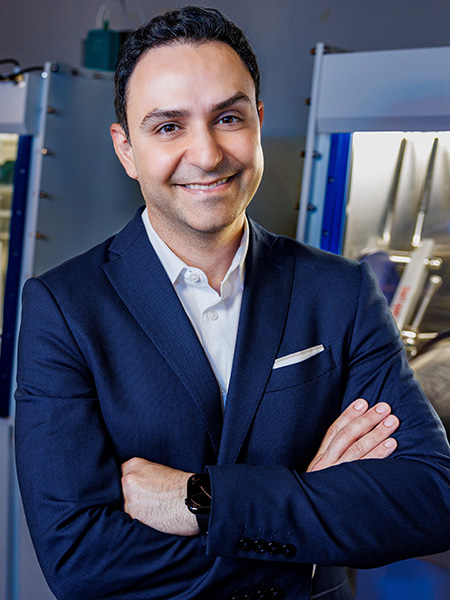
Babak Anasori
Babak Anasori, the Reilly Rising Star Associate Professor in the Schools of Materials Engineering and Mechanical Engineering, has been recognized in the Materials Science category for the seventh consecutive year. His research focuses on MXenes, a family of two-dimensional nanomaterials discovered in 2011 that have applications ranging from energy storage to aerospace technologies.
"It is an honor to be recognized for seven consecutive years," Anasori said. "High-quality research and publication are truly a team effort, made possible by my students, postdocs, collaborators, and the outstanding research capabilities we have at Purdue University. This recognition indicates that our work and discoveries are resonating with the research community, and I am excited that our breakthroughs in novel nanomaterials are moving forward at an even faster pace."
In September 2025, Anasori and his team published a major study in Science reporting the discovery of over 40 novel nanomaterials. The research team successfully synthesized two-dimensional materials containing up to nine different metals in a single atomic sheet, a significant advancement in creating materials that can withstand extreme conditions in technology and industry.
Kinam Park
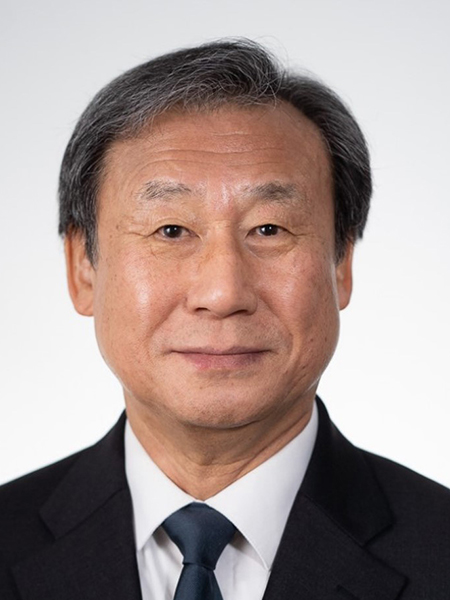
Kinam Park, Showalter Distinguished Professor in the Weldon School of Biomedical Engineering, has been recognized in the Pharmacology and Toxicology category for ten consecutive years, beginning in 2016.
Park's research spans multiple areas of pharmaceutical sciences and biomedical engineering, ranging from once-a-day oral formulations to once-a-year long-acting injectable therapies using various polymers and hydrogels. His current research focuses on biodegradable polymer formulations aimed at treating and preventing opioid use disorder, addressing critical challenges within this pressing public health crisis.
His consistent presence on the Highly Cited Researchers list reflects the enduring influence and significant impact of his contributions to the global research community. Park said, "My accomplishments have been possible because of the steadfast support I've received from Purdue University and its unwavering commitment to advancing biomedical science. I am a proud Boilermaker!"
Jeffrey T. Miller
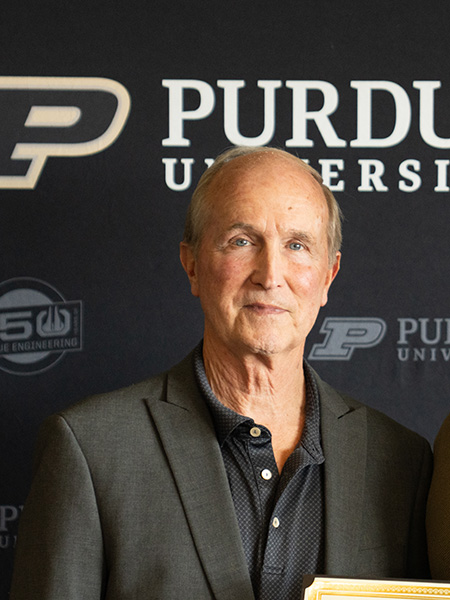
Jeffrey T. Miller, professor in the Davidson School of Chemical Engineering, has been named to the Cross-Field category, recognizing researchers whose highly cited work spans multiple disciplines. Miller's research interests include the heterogeneous catalysis synthesis for production of energy and environmental protection.
The Cross-Field designation is awarded to researchers who have made substantial contributions across different areas of study, reflecting the increasingly interdisciplinary nature of modern scientific research. Miller's recognition in this category highlights the breadth and versatility of his research contributions.
The 2025 Highly Cited Researchers list includes 6,868 researchers who received 7,131 awards from more than 1,300 institutions in 60 countries and regions. This represents approximately 1 in 1,000 of the world's researchers, or about 0.1% of the global research community. The recognition underscores Purdue Engineering's commitment to advancing research that addresses critical challenges and pushes the boundaries of scientific knowledge.