$7.5 million grant to probe innermost circuits of the brain, the building blocks of cognition
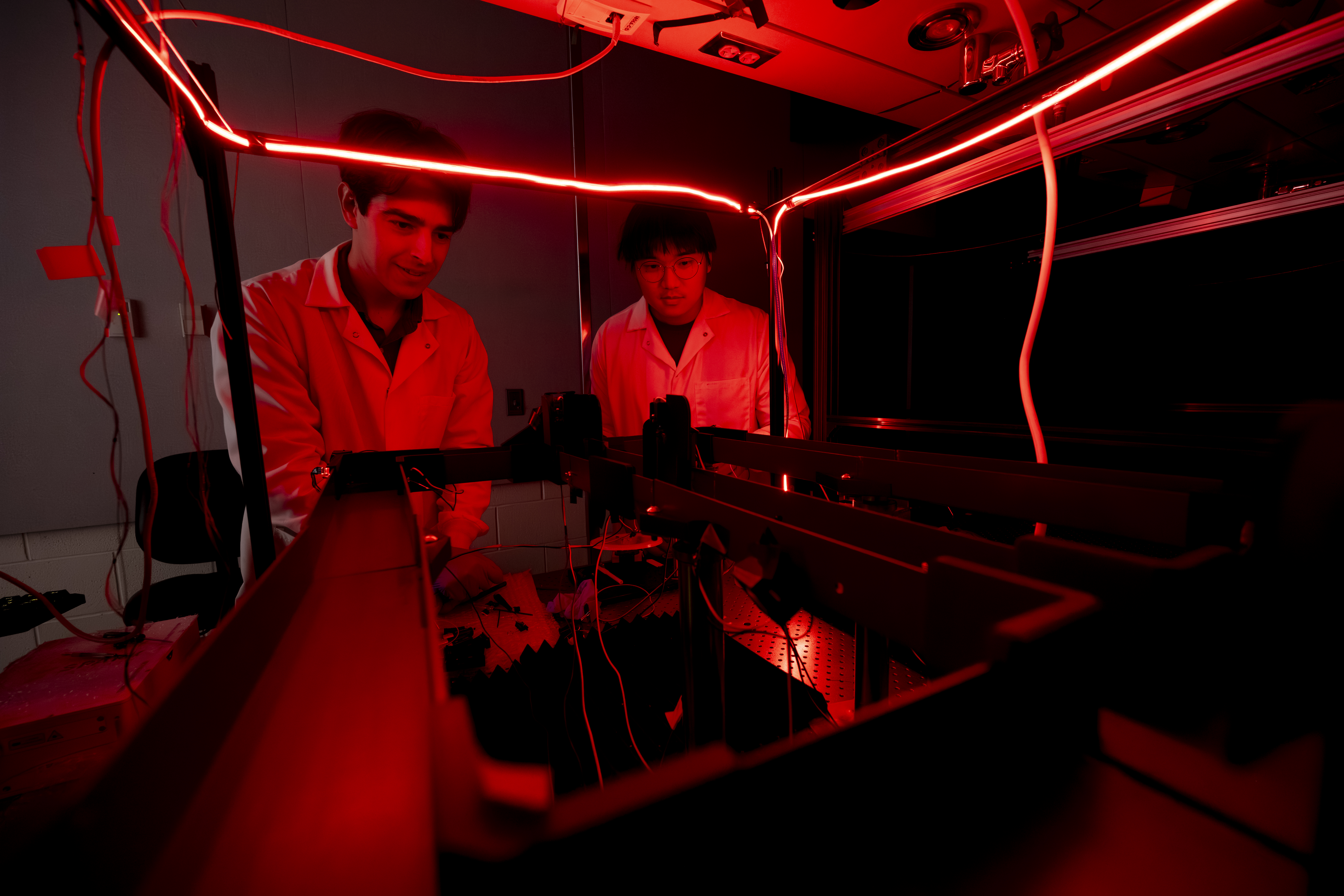
The human brain houses some 80 billion neurons and a trillion supporting cells, weaving together nanoscale synapses and global circuits that orchestrate thought, memory and adaptability. Yet what sustains this vast network is not only its wiring but also its metabolism: every act of remembering, attending or deciding is powered by an intricate balance of energy. Unlocking how neuronal computations flex under shifting metabolic conditions could illuminate the hidden bioenergetic demands of cognition, bridging the microscopic mechanisms of circuits with the higher-order intelligence they enable.
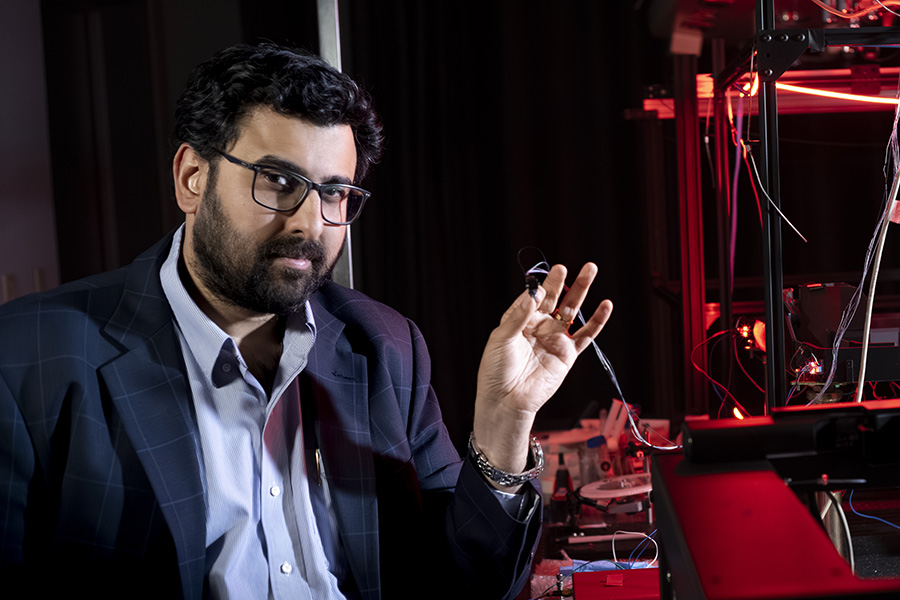
“Our goal is to characterize how computation and intelligent behavior vary under metabolic and bioenergetic challenges,” said Krishna Jayant, Leslie A. Geddes Assistant Professor in the Weldon School of Biomedical Engineering. “Imagine unlocking the secret fuel gauge inside your own mind. Our mission is to discover how the brain powers smart thinking and quick actions, even when you’re running low on reserves, like a phone on 5%. Just as a car’s performance changes when it’s running out of gas, your brain’s circuits must adapt to tough conditions, working with whatever resources are left.”
The Department of Defense (DoD) and Air Force Office of Scientific Research think Jayant and his team of multidisciplinary researchers across six universities have a great notion for how to crack this mystery, and they have received a $7.5 million Multidisciplinary Research Program of the University Research Initiative (MURI) grant (Title: "Multiscale Neural Mechanisms Balancing Cognitive Costs Under Energy Constraints") to probe using cutting-edge methods and advanced machine-learning models, the circuit mechanisms in the brain that govern metabolically optimal information flow.
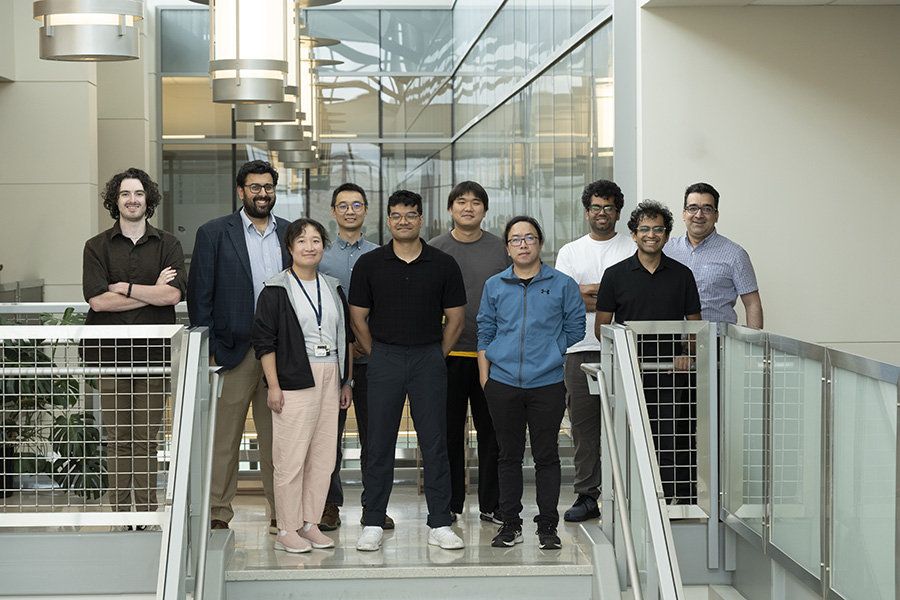
Jayant is the principal investigator and Purdue’s Kimberly Kinzig, professor and head of the Department of Psychological Sciences, is one of six co-PIs. Purdue is the lead institution, joined by collaborators, including Xaq Pitkow from Carnegie Mellon, Paul Schrater from the University of Minnesota, Aaron Milstein from Rutgers, Robert Rosenbaum from Notre Dame and Annalisa Scimemi from SUNY-Albany.
“We're launching cutting-edge neuroscience experiments that zoom in from the tiniest spark at a single brain cell to the big-picture decisions that shape behavior,” he said. “We'll use the latest tech to watch the brain in action — tracking how information zips around when reserves are scarce. Finally, like putting together the pieces of a giant puzzle, we’ll connect all our brain-power measurements to reveal how metabolic energy shortages truly change the way our minds operate.
“We want to reveal how the brain manages its limited ‘fuel,’ and how that affects thinking, reacting, and staying alert. It’s all about understanding what happens when the brain is pushed to its limits — and how we can make it smarter, faster, and tougher, even on empty.”
Use Cases Galore
The applications are legion. In the military sphere, operations require quick decision-making, situational awareness, and complex problem-solving. Demanding cognitive processes, like remembering and weighing evidence and comparing movement options, are less likely to be performed with limited metabolic capacity, leading to inaccurate decisions. Understanding how reserve constraints affect neural processing can help the DoD develop strategies and technologies to optimize cognitive performance in these high-stress environments or extended missions.
“Warfighters often need to perform specific tasks quickly and with high precision despite being metabolic energy-deprived,” Jayant said. “Understanding how the brain prioritizes tasks and recruits neuronal circuits is critical to unraveling decision-making mechanisms under energetic challenges.”
Discoveries about how brains preserve critical functions consuming low-power can also guide the design of low-power brain-machine interfaces for prosthetics, communication, and control. “By translating circuit-level brain insights into neuromorphic hardware, the DoD (and the larger tech and AI field) can produce next-gen computing chips that are both powerful and sustainable — critical for AI in real-world, resource-constrained environments,” Jayant said.
That includes robotic and autonomous systems that must prioritize tasks, adapt to stressors, and conserve power during extended missions. Embedding neuro-inspired principles helps these systems continue making safe, effective decisions when hardware or power is limited.
“These computational principles could be engineered into artificial learning machines that adaptively reprioritize conflicting cognitive demands optimally when reserves are depleted, leading to smarter, more resilient machines,” Jayant said. “This paradigm shift will lead to an unprecedented boom in new power-efficient hardware, based around understanding how metabolic costs influence the rate and structure of information flow in the brain.”
It can also advance neuroAI systems that draw inspiration from the structure, principles and computational strategies of the brain and biological neural networks. Traditional AI — including most deep learning models — often only mimics the concept of neurons connected in layers.
“Neuro-inspired AI goes further by emulating the brain’s adaptive, metabolically energy-efficient, parallel, and distributed computing approaches,” said Jayant. “This can lead to AI systems that optimize resource allocation in real-time, just like the brain.”
How Biology Shapes Decisions
The team's research will help provide a mechanistic model of how different cells and microcircuits across brain regions respond to metabolic depletion and influence decision-making and motor control during complex tasks. Neural recordings will be benchmarked and modeled using a novel synthesis of theoretical concepts, resource theory and computational models.
It will probe structural trade-offs between effort, cognitive ability, and reward reinforcement, and investigate the underlying neural basis of information processing during decision-making by merging system, cellular, and synaptic-level experimental recordings with normative and biophysical computational models. “This high-risk, high-reward, convergent work will provide fundamental insights into information flow across neuronal communication channels can operate under low power, which we will quantify as bit rate per channel,” Jayant said.
This research investigates how reduced metabolic energy availability impacts brain function by studying changes in neuronal activity, network stability, and information'processing capacity. Using state'of'the'art experimental measurements alongside advanced theoretical modeling, the work will assess the resilience of specific neural circuits under energy'limited conditions.
“Analyses of neural dynamics will be combined with multiscale graph'based network models to examine how metabolic reserves shape circuit computations and influence motivational priorities across different physiological states,” the Jayant noted. “We will also identify the biophysical signatures of these changes, evaluate their relationship to metabolic status, and determine their sensitivity to targeted perturbations. Building on these results, advanced computational frameworks will be created to simulate how information processing and plasticity are altered in low'energy neural systems.”
This integrated approach aims to uncover the adaptive strategies the brain employs when its processing capacity and drive are reduced. “These strategies will inform methods to improve performance and inspire the development of energy'efficient artificial systems with enhanced cognitive capabilities,” Jayant said.
Getting to the Bottom of the Mind
The groundbreaking research will add another dimension to Jayant’s Nano Neurotechnology Lab’s neural circuit dynamics research and Kinzig’s behavioral neuroscience lab’s metabolism and behavior research, each directly supporting DoD-funded work. Both this MURI grant and the Purdue scientists’ overall research are integral components of Purdue's presidential One Health initiative, which involves research at the intersection of human, animal, and plant health and well-being. Purdue One Health research extends from agriculture to veterinary medicine, drug discovery, and cancer research to population health and mental health. Jayant and Kinzig’s work also form a key focus area of the Purdue Institute for Integrative Neuroscience (PIIN), a Discovery Park Institute.
Jayant’s inquiries into the cellular corridors of the brain are both aligned with the One Health initiative and indispensable on their own merit, as he explores the cornerstones of cognition. Jayant and his multidisciplinary team — bringing their hefty expertise in machine learning, AI, neuroscience, physiology, mathematics, health sciences, and electrical and biomedical engineering — aim to add another chapter to that ongoing study.