
Indianapolis profiles: The crossroads of engineering and medicine with Carl Russell III
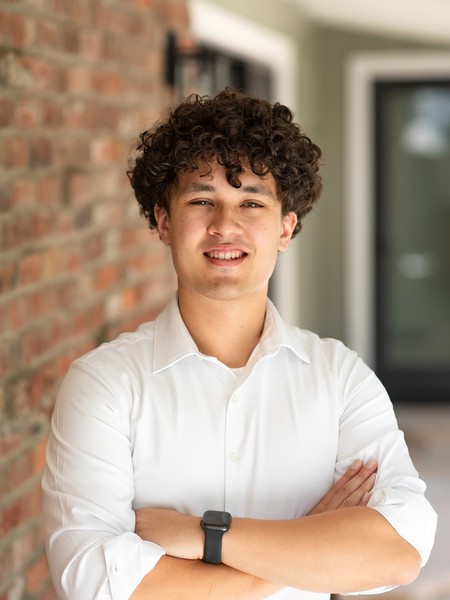
When you talk about bone health and structural integrity, you’re at the meeting place of the clinical and biomechanical consequences of disease. Carl Russell III is honing his skills across both engineering and medicine to tackle that nexus as a PhD student at Purdue University in the Weldon School of Biomedical Engineering in Indianapolis (under the mentorship of Drs. Joseph Wallace and Sharon Moe) and an MD/PhD student in the Indiana University School of Medicine–Purdue University Medical Scientist Training Program (MSTP). His goal is to become a nephrologist, engineer, and physician-scientist devoted to improving patient care through a mix of clinical practice, translational research, and device innovation. He’s already received numerous accolades for his efforts, including the Purdue University in Indianapolis Premier 10 Award, the National Kidney Foundation of Indiana Volunteer Award, and induction into the Senior Engineering Fellows at Purdue.
What is your research focus, what investigative avenues are you pursuing?
My research centers on characterizing bone in Chronic Kidney Disease and Mineral Bone Disorders (CKD-MBD). My goal is to elucidate how CKD alters bone quality and contributes to fracture risk, with the broader goal of raising awareness about the systemic nature of bone pathology in chronic disease. I also have a strong interest in pediatric device development and am involved in translational innovation through the Crossroads Pediatric Device Consortium (CPDC) under advisement from Drs. Danielle Soranno and Hyowon Lee and Aaron Lottes, working to advance solutions for neonates requiring dialysis.
What spurred your interest in this particular topic and line of research?
My interest in this field began when my mother was diagnosed with chronic kidney disease. At the time, I didn’t fully understand what that meant. Unlike organs such as the heart or brain, the kidneys often don’t receive the same level of attention. That experience opened my eyes to how critical — and underappreciated — the kidneys are, and it inspired me to pursue solutions that could help people facing similar diagnoses.
Motivated by a desire to make a difference, I began developing skills across both medicine and engineering. My first research experience was in biomechanics, where I learned to see the human body through the lens of mathematical and mechanical principles. I later gained exposure to diagnostic technologies through work in bioelectronics, which broadened my understanding of how engineering can drive medical innovation.
A pivotal moment came when I reached out to work with Dr. Allon Friedman at IUSM. I worked at the intersection of nephrology and technology through our research and gained insight into the lives of people affected by kidney disease through shadowing on his service. I saw the challenges clinicians face, the resilience of patients, and the complexity of advancing research in the field. That experience solidified my commitment, and I’ve been focused on kidney-related research ever since.
My current work represents a natural extension of those interests. By studying how CKD impacts bone health and structural integrity, I’m able to explore both the clinical and biomechanical consequences of a disease that affects millions of Americans. It's a meaningful intersection of disciplines and a direction I feel deeply connected to.
Why did you choose Purdue to continue your studies as a graduate student?
I chose Purdue’s Weldon School of Biomedical Engineering because of the School’s passionate, collaborative, and hardworking research culture at the University. Whether it was the graduate students or the professors, everyone was sparked by the pursuit of knowledge. During my second look, I could hear it in their voices and their demeanor. There was such a diversity of research; every single professor had grand visions of the future and every graduate student strived to achieve. I saw myself working amongst that group of people. That’s when I knew that this was the right place to continue my studies.
Besides Purdue BME, the opportunities afforded me through the IU-Purdue Medical Scientist Training Program were incredible. Based on my undergraduate studies at Purdue, I knew of the strong connections that Purdue BME had with the IU School of Medicine. When I looked further into that connection, I saw nothing but possibilities. Nothing personifies the relationship more than the program I work with called the Crossroads Pediatric Device Consortium. It’s a collaboration between IUSM, Purdue BME, and medical device companies like Cook Medical and OrthoPediatrics. To be able to work at the intersection of all the fields that I have dipped my toes into at some point in my career was an opportunity I could not pass up. I have thoroughly enjoyed working with our team within the CPDC to advance our innovation — a novel, low-cost, peritoneal dialysis catheter for neonates.
When did you first get interested in engineering and science?
In high school, I originally planned to study film editing. To prepare for that path, I enrolled in more advanced courses, which led me to Ms. Minu Basu’s AP Biology class. That course sparked an unexpected passion for science and opened my eyes to the possibility of a career in medicine. Until then, I had never considered that path, but after taking the class I realized how much I enjoyed learning about biology and how the body works.
After my sophomore year, I decided to shift my focus and began preparing to apply to programs in biotechnology. The following year, I took an introductory engineering course and found that I really enjoyed computer-aided design. Creating and visualizing complex shapes and dimensions was surprisingly fun. From there, Biomedical Engineering felt like a natural fit because it combined my interests in the biological sciences, problem-solving, and creativity.
Although I no longer pursue film editing professionally, I still enjoy video editing. These days, I use those skills for school projects and research presentations, which gives me a chance to stay connected to my creative side.
What’s it like studying at Purdue?
Studying at Purdue is nothing short of inspiring. I’m constantly learning from brilliant professors, postdocs, and graduate students who are generous with their time and knowledge. The culture of research at Purdue BME fosters curiosity, collaboration, and continuous improvement. Whether at Purdue or IUSM, I’ve experienced a strong willingness to work together across disciplines. My peers are not only hardworking and ambitious, they’re also supportive and kind. Faculty push us to think critically and reach for the next innovation. It’s a place where big ideas are welcomed, and mentorship is a daily practice.
What else have you learned at Purdue, beyond subject matter and field?
One of the many lessons I’ve learned is that expertise comes in many forms. Lab managers, machinists, technicians, and staff all contribute vital knowledge. Respecting and learning from everyone, regardless of title, has been key to my growth. I’ve also gained a deeper appreciation for the research process: how to iterate on an idea, embrace feedback, and cultivate resilience. Research isn’t linear; it’s a team sport that thrives on open communication, humility, and shared curiosity.
What is the Purdue research environment like?
Purdue’s research culture is vibrant and collegial. People love talking about their work and their lives. It’s easy to strike up conversations and spark ideas that lead to new collaborations. I’ve had the chance to work with Purdue’s Office of Technology Commercialization on a patent-pending interchangeable retractable cable system for use in clinical environments, developed during my time as project manager for the BME EPICS (Engineering Projects in Community Service) team. I’ve also published work through the CPDC alongside my research partner Sergio Ruiz on a novel neonatal peritoneal dialysis catheter.
What advice might you give to other students deciding where to attend graduate school?
Opportunities are everywhere. Don’t be afraid to ask, explore, and connect. Purdue in Indianapolis is a fantastic environment to study at the interface of engineering and medicine with its proximity to the major state hospitals and research centers. The collaborative culture, resources, and partnerships make it a fertile ground for impact and innovation.
What about the future? What are your goals; what are you looking to accomplish?
I aspire to become a nephrologist, engineer, and physician-scientist. My goal is to improve patient care through a blend of clinical practice, translational research, and device innovation. I want to create meaningful solutions for people living with chronic disease and to train the next generation of leaders at the crossroads of disciplines.
Might you share with us a little window into your personality: some distinctive trait, habit of mind, hobby/pursuit outside work…?
Outside of work, I enjoy spending time with my MD/PhD cohort. We cook, eat, and unwind together. I also brew mead, tend to my vegetable garden, and share my life with my incredibly talented fiancée, Anna Pyo. These moments keep me grounded and inspired to pursue my passions while keeping a work/life balance.