
My victory: Leading 16,000 students to their future
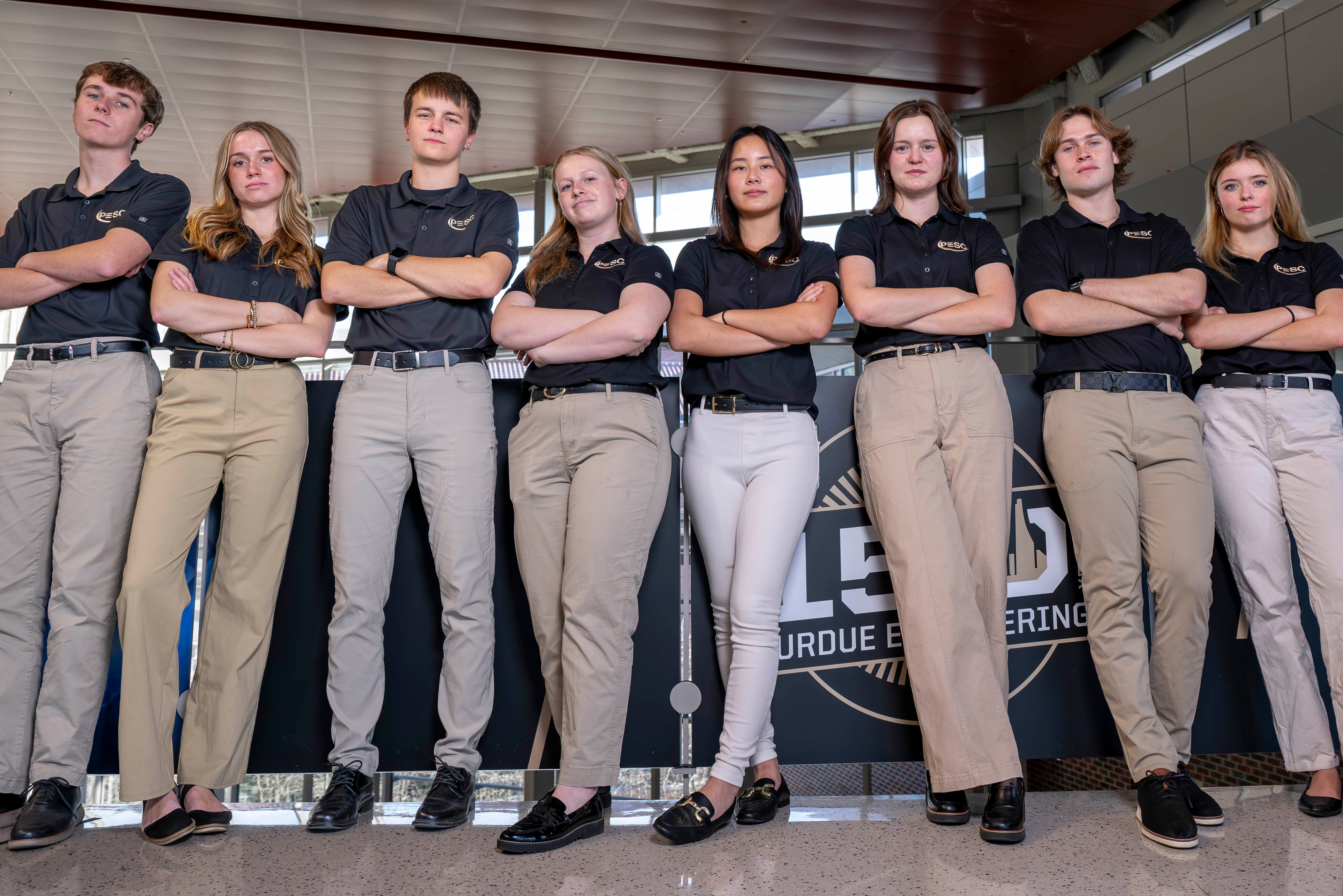
Back in December 2024, Cathy Love Kuo stood outside an interview room, nervously practicing her ideas one more time. She had dreamed about this opportunity for so long, and the day had finally come. When she walked into that room to interview for Industrial Roundtable (IR) director, she felt both nervous and excited, confident in her ideas but fully aware of the weight of what she was pursuing.
One question really stood out: "What are you most looking forward to if you're chosen as IR director?"
Her answer became the foundation for everything that followed. "I answered that I was excited to lead a group of people, to understand their strengths and weaknesses, and help them realize their full potential. That's something I truly believed then, and it became the foundation for how I approached the entire year."
When she got the call that she'd been selected as director, she was ecstatic. "I remember feeling this rush of excitement and pride, knowing I'd get the chance to lead one of Purdue's most impactful student organizations." But more than that, she felt a deep sense of responsibility to lead a passionate team, uphold decades of tradition and continue making a meaningful impact on Purdue's campus.
Nine months later, on Sept. 9-10, 2025, Kuo would watch her vision come to life as more than 450 companies and 16,000 students filled Memorial Mall for Industrial Roundtable, one of the largest student-run career fairs in the country.
Building the team
For Sydney Lin, the journey began much earlier, as a freshman who had just joined Purdue Engineering Student Council (PESC). "I was only a few days into joining the organization, still learning everyone's name when I was put on the team with six other freshman, working with one of the best mentors and directors we could ask for, Cathy," Lin recalls. "I didn't know it at the time, but over the next few months, some late nights and long weekends prepping for the fair made us better friends than I ever could have imagined."
Lin served on the registration subcommittee, working to recruit, register and confirm companies for the fair. "It was an incredible way to see more behind-the-scenes of how companies actually work with us as students to attend the fair. From reading every single registration entry for hundreds of companies, to coordinating details with recruiters, to making sure students are able to get the most out of the fair, registration and the other sub-committees work hard to make sure the fair is as enjoyable as possible for everyone involved."
Tim Tkach, who served as facilities coordinator, saw his role as foundational. "Working on the facilities team for the Industrial Roundtable has been an amazing opportunity to contribute to something much larger than myself," Tkach says. "Our role goes far beyond logistics. We build the foundation for one of Purdue's most important traditions."
For Ethan Williamson, the programming director who oversees seminar sessions, the motivation was personal. "Every year, the Industrial Roundtable reminds me why I love being at Purdue," Williamson says. "After months of planning, seeing everything come together makes it all worth it."
A year in the making
Organizing an event of Industrial Roundtable's magnitude is truly a year-long process that takes detailed planning and coordination. Kuo led an eight-person team across six roles: director, registration (two people), facilities (two people), hospitality, programming and public relations. Each position has specific responsibilities, but everything overlaps when it comes to making sure the event runs smoothly.
The official planning begins in winter. In January, each team member reads through their "binder," a document written by the previous year's team that outlines everything needed to run that role, from step-by-step processes to lessons learned and tips. They also meet with the previous role holders to get firsthand insights.
By February, planning ramps up. The team starts confirming logistics and solidifying contracts with external vendors for recruiter meals, tents, tables and Wi-Fi. "These partnerships are critical," Kuo explains. "Any delay or miscommunication can have ripple effects across the event."
During spring and summer, focus shifts to registration. Lin and her teammate opened company sign-ups, responded to recruiter emails and troubleshot to make the registration process as smooth as possible. This period involves close coordination between roles. Registration needs facilities updates to plan layouts, while public relations manages outreach and branding.
Once the school year starts, it's crunch time. The team handles last-minute logistics, confirms deliveries, prepares recruiter gift bags and sends out all final communications.
The week of the fair, the real work begins. "From pre-dawn setup to late-night teardowns, every challenge we face brings our team closer together and teaches us the value of planning, adaptability and teamwork," Tkach says. His facilities team works in constant motion, setting up tents, checking in recruiters, solving problems on the spot, and coordinating volunteers.
"It's a massive effort that requires communication, adaptability and teamwork," Kuo says. "The most critical moving pieces are vendor coordination, company communication and on-site logistics, all of which have to come together perfectly for the fair to be successful."
Breaking 40 years of tradition
The biggest challenge Kuo faced while organizing IR 2025 was launching a completely new initiative: Amazon Day. When she first stepped into the director role, she wanted to make a meaningful change to IR, which has been run in a similar format for nearly 40 years. Her goal was to introduce "company days," where they could host an individual company on a separate day from the main fair.
"Planning Amazon Day was both exciting and daunting," she recalls. "Because it had never been done before, there wasn't a roadmap or prior example to follow. I had to rely heavily on creativity, communication and problem-solving to bring the event to life."
The logistics were complex: coordinating schedules, securing spaces, aligning with Amazon's recruiting team, marketing the event to students and ensuring student engagement. At times, there was uncertainty about whether it would all come together. Meeting Amazon's expectations while maintaining high student participation required constant adaptability.
"But through collaboration, attention to detail and leaning on my team for support, we made it happen," Kuo says.
Williamson's seminars played a crucial role in Amazon Day's success. "As programming director, I help create seminar sessions that go beyond the elevator pitch so students can see what the recruiters' work is really like and ask real questions," he explains. "Many of the recruiters are Purdue alumni, which makes the experience feel even more personal."
Seeing the event come to life was incredibly rewarding. Recruiters told them how much they enjoyed the experience and appreciated the focused engagement with students. Attendees gave positive feedback as well. "Turning a new idea into a successful, large-scale event reminded me how innovation often comes with challenges, but those challenges are exactly what make leadership experiences meaningful,” Kuo said.
The moment that mattered most
For all the planning, logistics and late nights, the most rewarding moment of IR 2025 came during the actual days of the event. Kuo watched the people she had led and mentored step up and perform. Seeing her team members confidently handle unexpected challenges and make quick decisions on their own was incredibly fulfilling.
"What meant the most to me was realizing they didn't need my direction anymore; they knew exactly what to do and executed it flawlessly," she reflects. "That moment really captured what leadership means to me. I've always believed that great leadership isn't about being the person everyone relies on; it's about empowering others so they can lead themselves."
Williamson experienced his own meaningful moment during the seminars. "My favorite part is sitting in the back of a full room and watching students stay after to talk with recruiters and ask questions. In those moments, I just feel grateful to play a small part in something that helps so many people."
For Lin, attending IR as an organizer rather than just a nervous attendee transformed her perspective. "I still remember my first IR: the hot sun, shaky hands, stacks of resumes and quite a bit of nerves. And while a lot of that still is true a year later, there's something so special about coming back to help organize the fair. Seeing students having good conversations, getting offers, smiling with the new friends they met in line: that's what IR is all about."
Tkach saw the bigger picture come together. "What makes the Industrial Roundtable so special is how it brings the entire Purdue community together: students, faculty, alumni and companies all in one space, celebrating the innovation and collaboration that defines Purdue Engineering."
Why IR works
Industrial Roundtable has been running since 1980, consistently attracting top companies like Amazon, Boeing, Caterpillar, Eli Lilly, Lockheed Martin and many others. From Kuo's perspective, what makes IR so attractive to companies is straightforward: the caliber of Purdue students.
"Recruiters know that Purdue students are hardworking, intelligent and technically skilled, but also have the communication and teamwork abilities that make them stand out in the workplace," she explains. "Companies come back year after year because they trust the quality of Purdue talent, students who are eager to learn, take initiative and contribute from day one."
From the student perspective, IR is equally special. "It's one of the largest student-run career fairs in the nation, and there's truly nothing else like it," Kuo says. Students have access to hundreds of top companies all in one place, right on campus. It's a unique opportunity to network, explore different industries and make personal connections that can directly lead to internships or full-time roles.
What really sets IR apart is the energy and ownership behind it. The entire event is organized and executed by students, which means it's built by people who deeply understand what both recruiters and students need. "That peer-to-peer effort creates an atmosphere of passion, professionalism and community that you don't often find at other career fairs,” Kuo said.
Lin emphasizes this unique perspective. "Being able to be a student and help plan these events offers such an incredible perspective; we have been and will be at the fair in the shoes of the students attending. We truly are committed to 'Serving Students, Serving Industry, Serving Community.'"
Building Purdue's industry partnerships
From Kuo's perspective as IR director, these large-scale career fairs play a huge role in connecting Purdue students with industry and shaping their professional paths. IR gives students the chance to have genuine, one-on-one conversations with recruiters from their dream companies, the kinds of interactions that can directly lead to internships, full-time offers or long-term mentorship.
"It bridges the gap between the classroom and the real world by giving students a clear sense of what industries are looking for and how their Purdue education applies in practice," she says.
For Purdue, IR strengthens the university's partnerships with industry in a tangible way. Each year, they build and maintain relationships with hundreds of top-tier companies, many of which return annually because of the high-quality interactions they have with Purdue students. The collaboration with Amazon this year, which led to the first-ever Amazon Day, further deepened the connection between Purdue and Amazon.
"Those kinds of partnerships create lasting value, opening the door for more company engagement, sponsorships and future opportunities for students," Kuo notes. "Ultimately, IR doesn't just help students find jobs; it reinforces Purdue's reputation as a top engineering school that develops industry-ready talent and maintains strong, mutually beneficial relationships with the companies that drive innovation."
Lessons in leadership
Organizing IR taught Kuo that at its core, leadership is about people. "To be an effective leader, you need to invest in your team, listen, communicate clearly and treat everyone with respect. At the end of the day, being kind and supportive goes a long way. When people feel valued and trusted, they naturally perform at their best."
The experience also taught her about project management and delegation. IR is a massive event with countless moving pieces. "I learned that you can't do everything yourself. I had to trust my team, give them ownership of their areas and focus on empowering them to make decisions. That shift from doing everything myself to enabling others made me a better leader."
On a personal level, the role changed how she approaches challenges. She became more patient, adaptable and confident under pressure. "There were times when things didn't go perfectly, but learning to stay calm, solve problems quickly and keep morale high taught me what real leadership looks like."
The path to PESC
Before becoming Industrial Roundtable director, Kuo served on the IR committee as facilities coordinator. In that role, she worked closely with vendors and Purdue faculty to manage logistics such as tents, tables, Wi-Fi, electricity and recruiter parking. "It was a very hands-on position that gave me a deep understanding of how the fair operates behind the scenes," she says. That experience helped her learn how every detail contributes to the larger event and prepared her to take on the director role with a more holistic perspective.
Outside of IR, she's also been involved in the campus relations committee, which partners with the College of Engineering to host events that support and engage students. One of her favorite initiatives was Merit Fund, a scholarship-style event where student organizations present to PESC about how they would use funding to grow their clubs. "Seeing how these funds directly impact student involvement was really meaningful."
Kuo first got involved with PESC by attending a callout event during her first week at Purdue. "I was just looking to make friends and get involved, but I quickly realized it was an organization where I could grow as a leader and make a real impact," she says. "Joining PESC has easily been one of the best decisions I've made at Purdue."
Looking Ahead to EXPO
PESC's spring career fair, EXPO, is scheduled for February 2026, attracting more than 200 companies and 6,000 students. While it shares the same mission as Industrial Roundtable, connecting students with employers, EXPO has a slightly different focus and atmosphere.
One of the biggest differences is the audience. EXPO tends to attract more underclassmen, especially freshmen and sophomores, who are beginning to explore internship opportunities or want to start building relationships with recruiters early on. Because of that, many of the companies that attend are specifically open to hiring for early-career or exploratory roles, such as freshman and sophomore internships or co-ops.
Another key difference is the timing and format. Since EXPO is held indoors during the spring semester, it has a more structured setup compared to IR's outdoor format. It's a great chance for students who didn't attend IR, or who want another opportunity to connect with employers, to engage in a more intimate environment.
Lin will be leading that effort as EXPO 2026 director. "I cannot wait to begin implementing some ideas we have been developing over the past few weeks to make this fair one of our best yet," she says. "EXPO is a great opportunity for all students, especially those who are in STEM and engineering-related majors to recruit for full-time, co-op or internship positions.”
Lin's perspective on what makes these fairs meaningful reflects the broader PESC mission. "The connections we are able to make last more than just the couple of hours at the fair; there's more familiar faces around campus, even recruiters who will recognize you, and that is what makes IR and EXPO so special to me."
EXPO 2026 will take place on Feb. 3 from 8 a.m. to 3 p.m. in the CoRec black and gold gyms. For more information, click here.
What Comes Next
After graduation, Kuo hopes to build a career in the finance industry, specifically in a role that allows her to combine analytical problem-solving with teamwork and client interaction. This upcoming summer, she'll be interning at Lincoln International, an investment bank.
"I'm really excited to gain hands-on experience and deepen my understanding of finance," she says. "I see it as the next step toward building a career that challenges me intellectually while keeping that same energy and collaboration I found through PESC."
Her experiences with PESC and Industrial Roundtable have been a huge influence on that goal. "Through IR, I learned how much I value working in fast-paced, collaborative environments where everyone is passionate about what they do. I loved the feeling of bringing big ideas to life with a dedicated team and seeing the tangible results of our work. That's something I want to carry into my career."
From a nervous first-year student attending a PESC callout to directing one of the nation's largest student-run career fairs, Kuo's journey embodies the power of taking that first step. She learned to lead by empowering others, to innovate by challenging tradition and to create lasting impact by investing in people.
"IR taught me that I thrive when I'm surrounded by driven, motivated people who care about making an impact," she says. "And that's exactly the kind of environment I want to be in after graduation."
This story was developed as part of "Victories & Heroes: Your Campaign for Purdue." Join us in elevating Purdue Engineering education and excellence. Click here to be a part of Purdue history.