News

February 25, 2020

First responders “suit up” with social media and AI

The most critical information that first-response agencies need during large events, disasters and emergencies is a clear understanding of the current situation — what is happening where, where their team is, and where their resources are. This is part of what is known as situational awareness. First responders typically rely on reports from personnel and media accounts for the information, but this is often sparse coverage that doesn’t provide a complete picture.
February 25, 2020

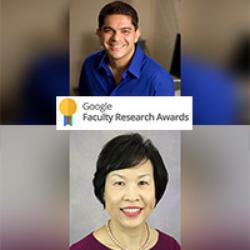
Professors Bhave, Tan receive Google Faculty Research Awards

ECE professors Sunil Bhave and Hong Z. Tan are among the recipients of the 2019 Google Faculty Research Awards. These annual awards are structured as unrestricted gifts to recognize and support the research of world-class faculty members at top universities around the world.
February 24, 2020

Prof. Timothy Rogers receives NSF CAREER Award

A project from Timothy Rogers, assistant professor of electrical and computer engineering, aims to increase the number of individuals and problems that can benefit from energy-efficient, accelerated computing. The research is being funded through the National Science Foundation (NSF) Faculty Early Career Development Program (CAREER) Award.
February 18, 2020

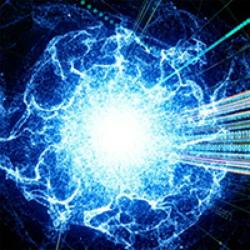
A 'gateway' into quantum information processing

Quantum computing is all the rage, and for good reason. This emerging technology promises three things. First, there are “quantitative” advances in numerous applications, from fully secure, unhackable quantum communications through which two parties can generate a code between each other that no eavesdropper can penetrate. Second, the technology can potentially simulate the behavior of a drug in a human body down to the atom level, which results in correctly predicting the therapeutic treatment’s effect on a patient. And third, a large-scale quantum computer can solve some crucial algorithms dramatically faster than even the largest existing supercomputers.
February 13, 2020

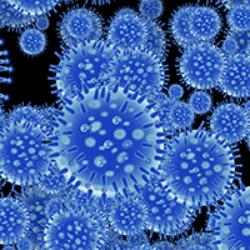
Self-disinfecting 'supersurface' fights superbugs

Infectious disease is one of the many hazards of life on a planet with more than 7 billion people. It can’t be avoided, but one of the great advances in medicine has been the development of the antibiotic to treat infection. Now, overuse and misuse of this "supercure" has led to the superbugs - so-called "multi-resistive" germs that, under constant attack by antibiotics, have figured out ways to resist the drugs. At Purdue University, we think we've figured out a way to beat back antibiotic resistance in bugs.
February 10, 2020

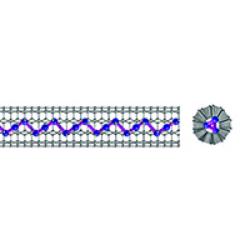
DNA-like material could bring even smaller transistors

Computer chips use billions of tiny switches, called transistors, to process information. The more transistors on a chip, the faster the computer. A material shaped like a one-dimensional DNA helix might further push the limits on a transistor’s size. The material comes from a rare earth element called tellurium.
February 7, 2020

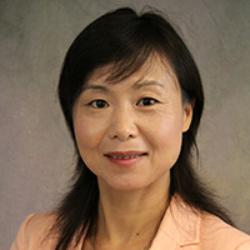
Prof. Dan Jiao selected as Intel Outstanding Research Award winner

Prof. Dan Jiao has been selected as one of Intel’s 2019 Outstanding Research Award winners. Annually, Intel recognizes the exceptional contributions made through Intel university-sponsored research with Outstanding Researcher Awards. Jiao is being recognized for her research on “Advanced Study of Nonlinear Signaling Analysis and Gen-2 Tool Development."
< Previous 10 | Viewing 841 to 850 of 1985 | Next 10 >