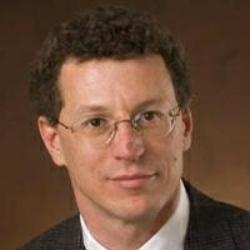
The Purdue University Teaching Academy welcomed Assistant Professor David Umulis, along with 12 additional new members, in an induction and recognition ceremony. The Academy recognizes outstanding Purdue faculty and staff who contribute to the learning environment.
Researchers are developing a system that uses tiny magnetic beads to quickly detect rare types of cancer cells circulating in a patient's blood, an advance that could help medical doctors diagnose cancer earlier than now possible and monitor how well a patient is responding to therapy.
"RoboDesk," a motorized wheelchair tray, could provide people with disabilities with an efficient and easy-to-use method to more easily position and remove an iPad or other mobile devices without being limited by a table or moving in and out of the chair.
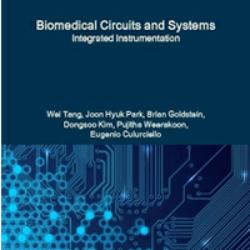
Eugenio Culurciello, an associate professor of biomedical engineering at Purdue University, has authored a book entitled "Biomedical Circuits and Systems," a field that requires an interdisciplinary background ranging from electrical engineering to biology and neuroscience.
Congratulations to Max Hammond for receiving the 2013 Fearnot-Laufman-Greatbatch Award for best Summer Seminar presentation. Max is beginning his third year of Ph.D. study with Professor Joey Wallace. The award is presented to the graduate student whose presentation receives the highest evaluation scores from the faculty, students, and staff attending Summer Seminars.
Cells from one's own blood could be converted into a treatment for autoimmune diseases, like rheumatoid arthritis and Crohn's disease, based on the discovery of a Purdue University researcher, Dr. Chang Kim, a professor of biomedical engineering and comparative pathobiology.
Professors Sherry Voytik-Harbin and Corey Neu have been selected to receive funding from the Office of the Vice President for Research for a new program, the Emerging Research Incentive Grant program.