
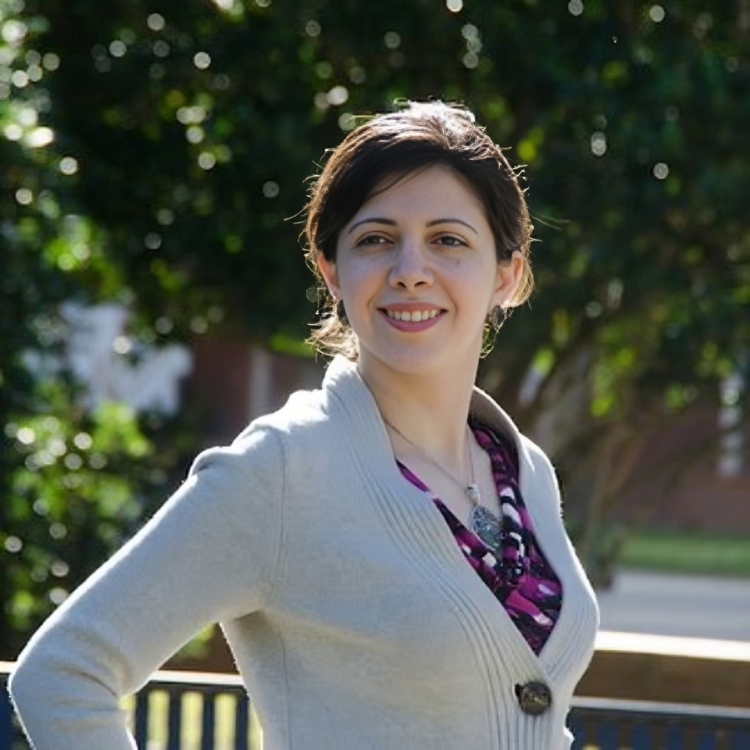
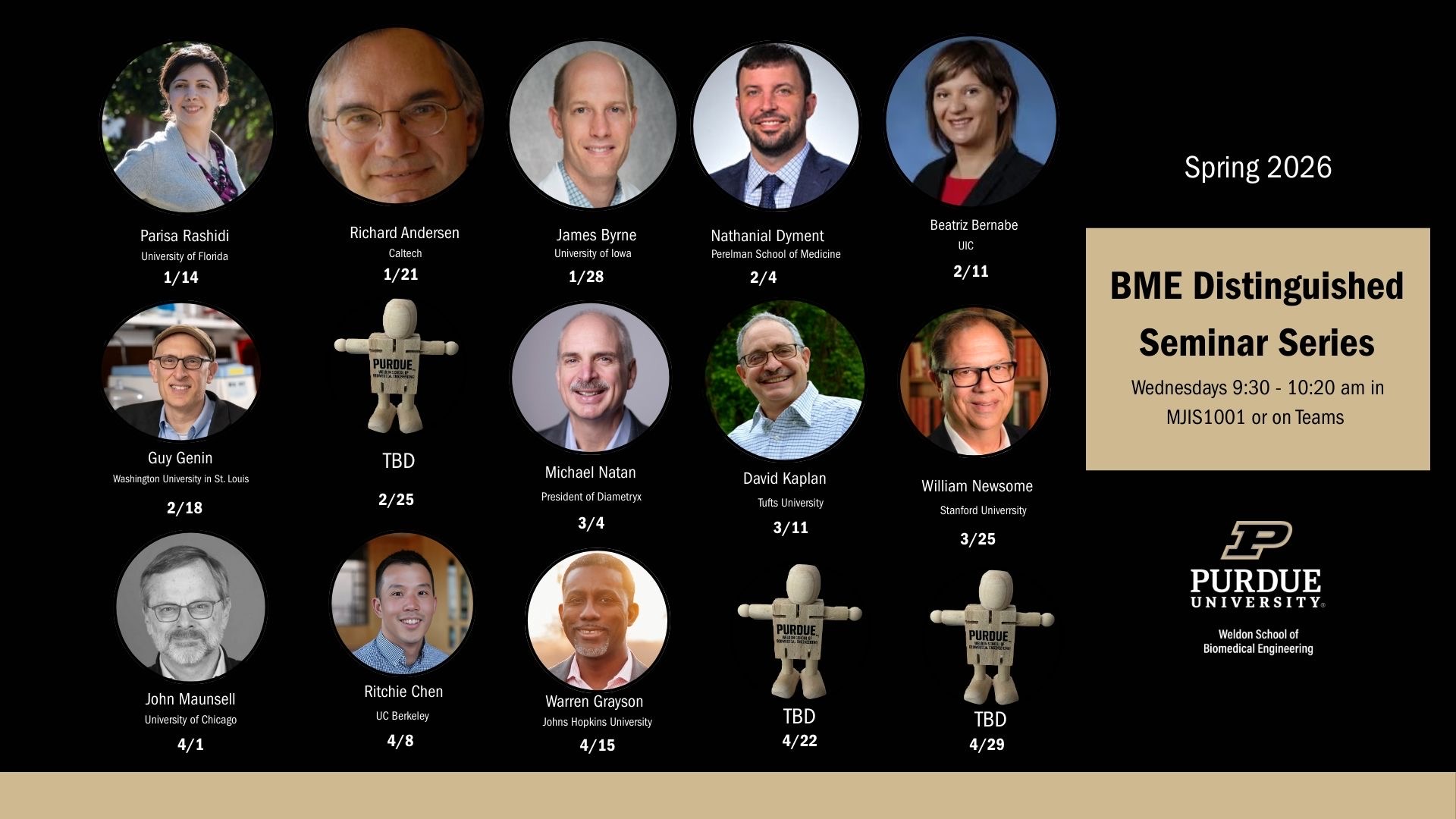
Seeing the Unseen: Continuous Patient Assessment in Modern Hospitals with Parisa Rashidi, University of Florida
Event Date: January 14, 2026
Hosted By: The Weldon School of Biomedical Engineering
Time: 9:30 - 10:20 am
Location: MJIS 1001 and via Teams
Priority: No
School or Program: Biomedical Engineering
College Calendar: Show
Physical Address: 206 S Martin Jishke Drive
Dr. Parisa Rashidi is the founding co-director of the Intelligent Clinical Care Center (IC3) at the University of Florida (UF) and a professor at the J. Crayton Pruitt Family Department of Biomedical Engineering (BME). She is also affiliated with the Electrical & Computer Engineering (ECE) and Computer and Information Science and Engineering (CISE) departments. Her

Abstract: 

Advances in sensing, computation, and machine learning are creating an opportunity to fundamentally rethink how patient state is assessed in acute care environments. Despite decades of technological progress, many critical aspects of patient health—such as functional status, cognition, sleep quality, and environmental stressors—are still evaluated intermittently, subjectively, or not at all. These gaps limit the ability to deliver timely, personalized, and proactive care, particularly in high-acuity settings like the ICU.

In this seminar, we discuss how pervasive sensing combined with interpretable artificial intelligence can enable continuous, fine-grained characterization of patient physiology, behavior, and environment. By fusing multimodal sensor data with clinical and physiological streams, we move beyond episodic measurements toward dynamic representations of patient state that evolve in real time. We highlight recent progress in translating these approaches into clinically meaningful indices, along with the technical, ethical, and workflow challenges that arise when deploying intelligent systems at the bedside.

More broadly, this work points toward a future in which hospitals function as adaptive, data-driven environments—supporting clinicians with richer situational awareness while preserving interpretability and trust. We conclude by outlining open research questions and design principles for building AI-enabled health technologies that meaningfully augment, rather than replace, clinical expertise.

Biography:

Dr. Parisa Rashidi is the founding co-director of the Intelligent Clinical Care Center (IC3) at the University of Florida (UF) and a professor at the J. Crayton Pruitt Family Department of Biomedical Engineering (BME). She is also affiliated with the Electrical & Computer Engineering (ECE) and Computer and Information Science and Engineering (CISE) departments. Her research aims to bridge the gap between machine learning and patient care.
Dr. Rashidi has been recognized with the White House Presidential Early Career Award for Scientists and Engineers (PECASE), the highest U.S. government distinction for early-career researchers in science and engineering. She is a fellow of the American Institute for Medical and Biological Engineering (AIMBE), the National Science Foundation (NSF) CAREER awardee, the National Institute of Health (NIH) Trailblazer Awardee, Herbert Wertheim College of Engineering Leadership Excellence Awardee, and a recipient of the UF Term Professorship and the prestigious UF Foundation Professorship. To date, she has authored 190+ peer-reviewed publications. She has chaired several workshops and symposiums on intelligent health systems and has served on the program committee of 30+ conferences. Dr. Rashidi’s research has been supported by > $47M in local, state, and federal grants,
including awards from the National Institutes of Health (NIBIB, NCI, NINDS, and NIGMS) and the National Science Foundation (NSF).
 
Expertise: Medical AI, Smart and Connected Health
 
Hosted by Rachel Suroweic
 

Students registered for the seminar are expected to attend in person.

Teams ID and Passcode:

Meeting ID: 211 123 896 292 8

Passcode: Uh9qs2pf

MARK YOUR CALENDARS
2026-01-14 09:30:00 2026-01-14 10:20:00 America/Indiana/Indianapolis Seeing the Unseen: Continuous Patient Assessment in Modern Hospitals with Parisa Rashidi, University of Florida MJIS 1001 and via Teams