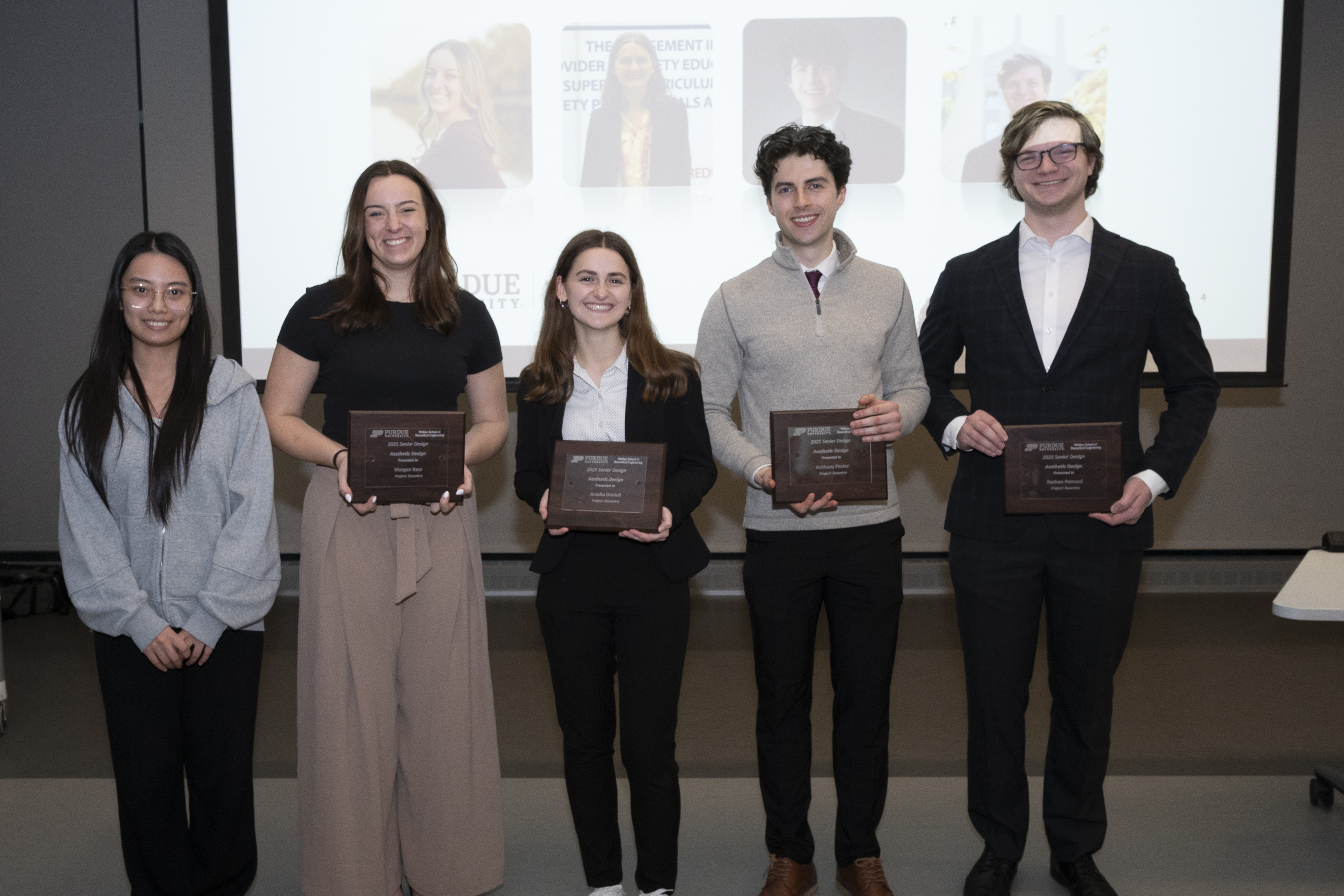
Senior Design: A Capstone of Innovation and Collaboration

The Senior Design Process
The journey to Senior Design begins in the third year, where students gather project ideas through clinical immersion and professional interviews. Faculty and external mentors guide them in developing a Product Development Proposal (PDP). As seniors, interdisciplinary student teams turn these proposals into functional prototypes.
Throughout the semester, students develop comprehensive design history files (DHFs) and rigorously test their solutions. Many projects extend beyond the classroom, with teams pursuing intellectual property protection, national design competitions or even commercialization in the optional spring translation course.
By the Numbers
- 136 students participated in 29 teams across 4 sections.
- 60 mentors supported these teams, including faculty, clinicians, industry professionals and graduate researchers.
“It was wonderful to see the growth in the scope of our senior design projects as well as the expansion in the senior design support network, including friends and family,” shared Asem Aboelzahab, Lead Instructional Labs and Senior Design Projects Coordinator.
Partnerships Fuel Success
Our program thrives on collaborations with clinicians, industry leaders and academic experts. These partnerships provide real-world mentorship, access to facilities and material support, enabling our students to tackle complex challenges effectively.
Outstanding Project Mentor Awards
Among the more than 60 mentors who supported Senior Design teams this year, three were recognized for exceptional dedication and impact.
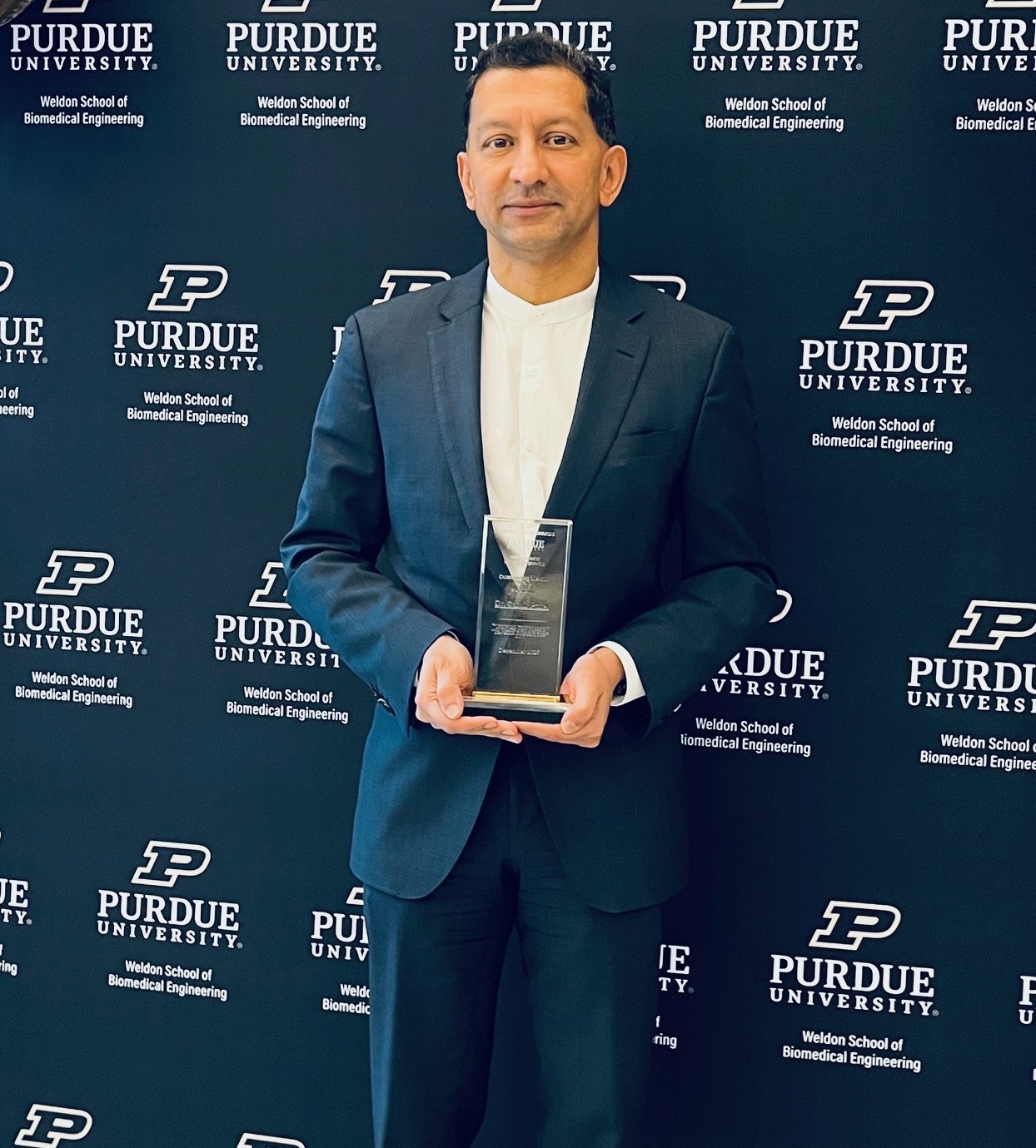
Samir Patel, MD
Radiology, Inc.
Nominated by the OneShot team
Samir Patel was recognized for his extraordinary enthusiasm, responsiveness and generosity as a project mentor. He provided rapid feedback, welcomed students into clinical settings for shadowing, and helped them gain firsthand insight into physician workflow and patient care. Patel also equipped the team with extensive resources—including biopsy and clip placement needles, ultrasound footage and multiple phantom models—enabling rigorous testing and refinement of their image-guided biopsy device.
Jason Kabo
Purdue Men’s Basketball
Nominated by BoilerPulse
Jason Kabo was honored for providing exceptional access, resources and industry connections that propelled his team’s project forward. He supplied baseline testing equipment, facilitated interviews with student-athletes to gather user insights, and connected the team with industry partners. Kabo also secured practice access and a filming location at Mackey Arena, consistently making time for the team and supporting their progress throughout the semester.
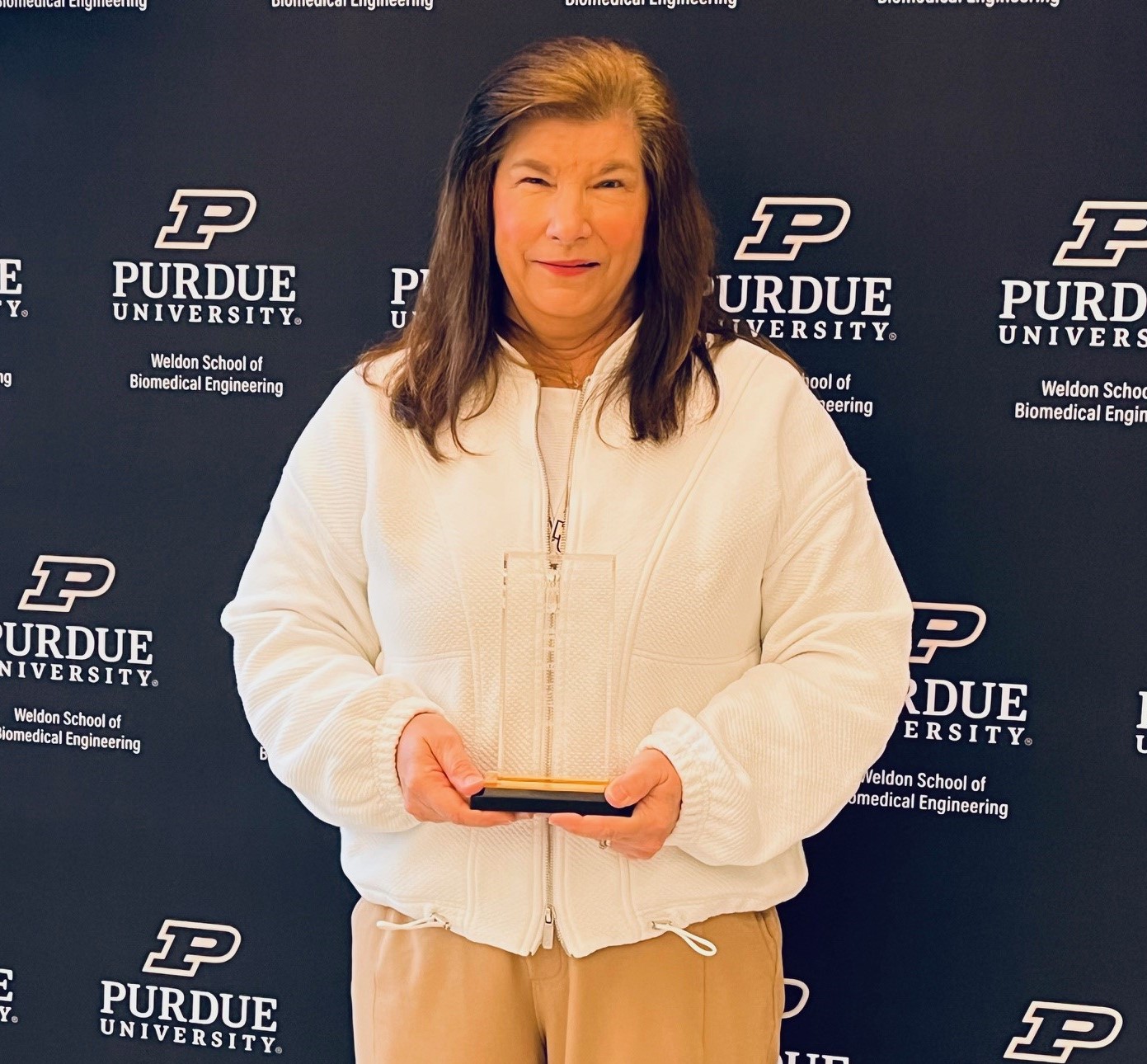
Sherry Harbin, PhD
Professor of Biomedical Engineering and Basic Medical Science
Nominated by SurgiGlow
Sherry Harbin was recognized for her hands-on mentorship and ability to inspire confidence and innovation. Through consistent feedback and encouragement, she pushed her team to expand their design beyond initial expectations—leading to advanced features such as voice control, surgical tool recognition and pursuit of a patent. Her guidance played a critical role in shaping both the technical success of the project and the growth of the students themselves.
Award Highlights
A panel of alumni judges reviewed each team’s final submissions, recognizing projects that demonstrated exceptional innovation, rigor and real-world impact. This semester’s award-winning teams include:
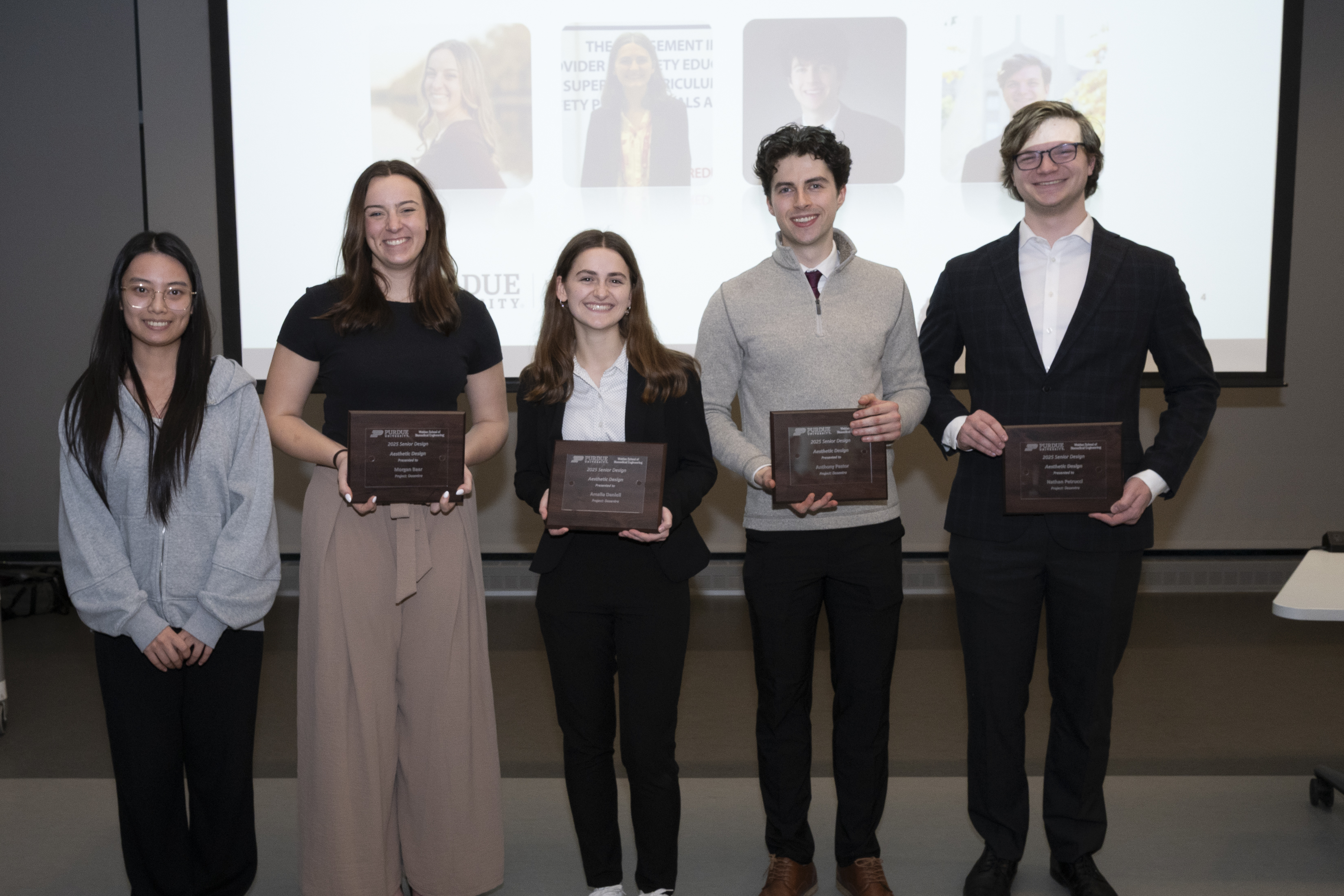
· Aesthetic Design
Recognizes thoughtful, creative design and a polished final prototype.
Winner: Dosentra — developed a device that securely restricts access outside scheduled dosing windows and records every dispense event for patients with Parkinson’s disease.
· Translational Design
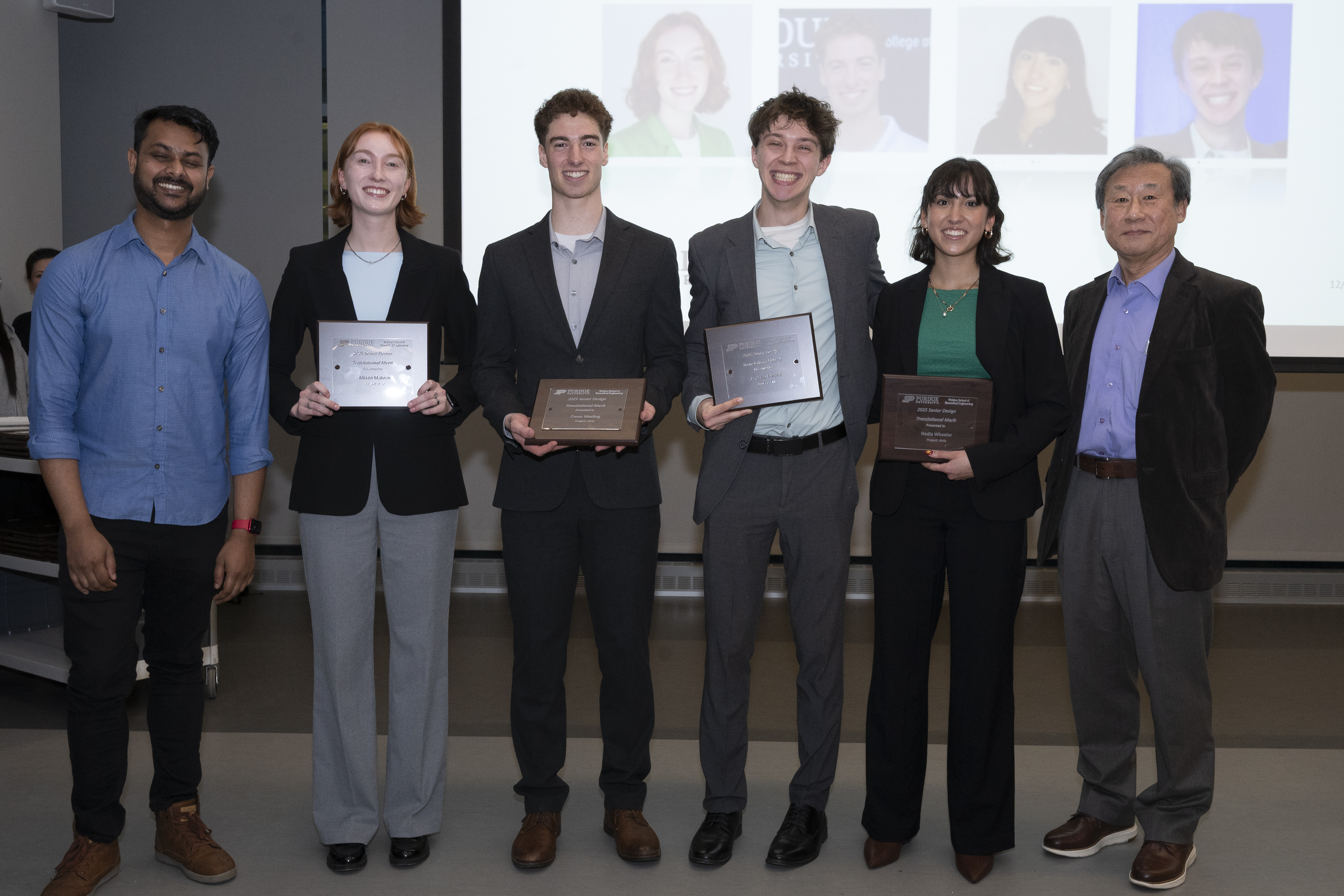
Honors projects well-positioned to advance through the product development cycle, including IP potential, advanced testing and manufacturing considerations.
Winner: Airlo — designed a device to reduce misuse of metered-dose inhalers.
· User Impact
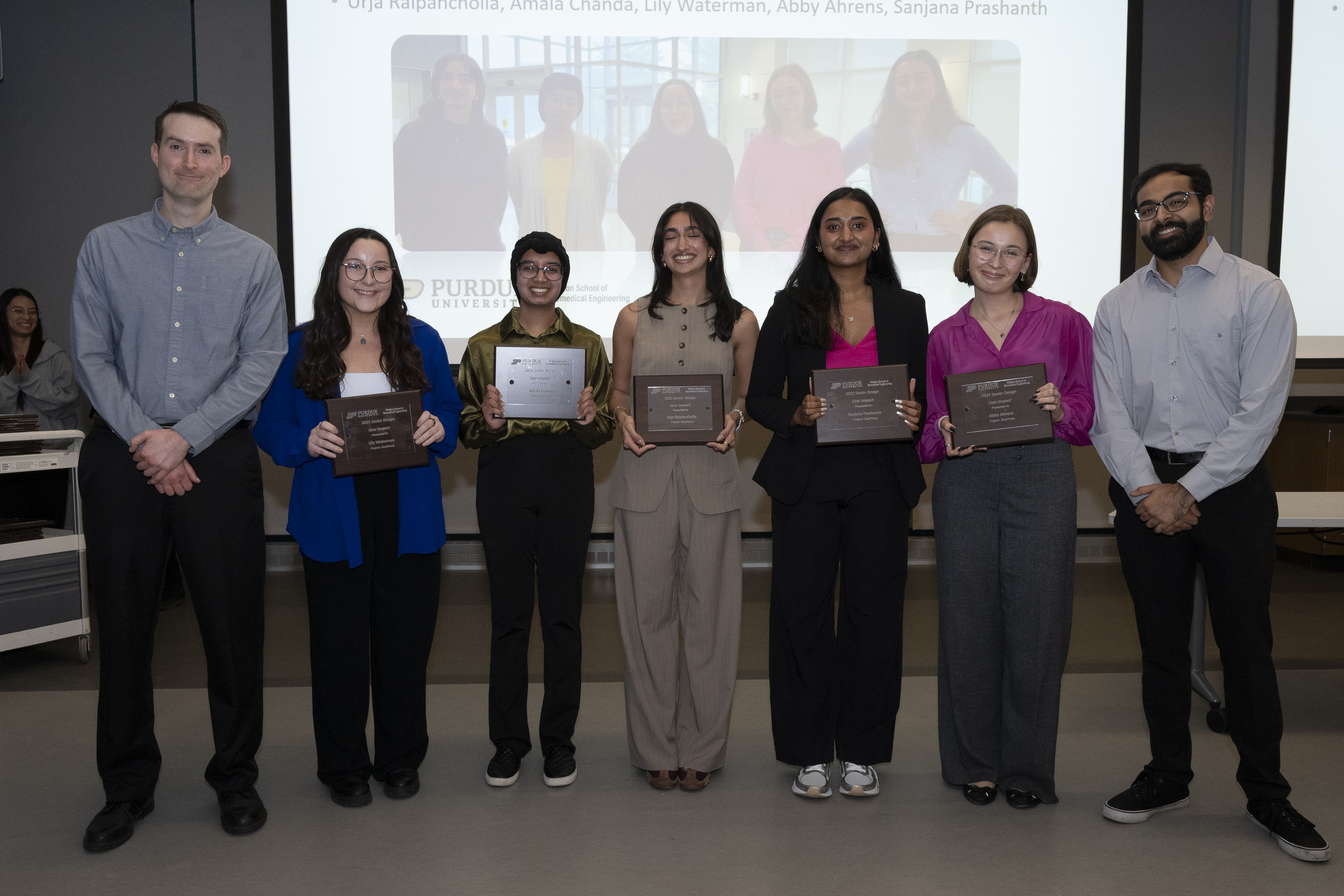
Celebrates solutions with the potential to significantly improve health outcomes, accessibility or care for underserved populations.
Winner: EasyPeasy — redesigned the pessary to improve treatment for stress urinary incontinence.
· Design Iteration
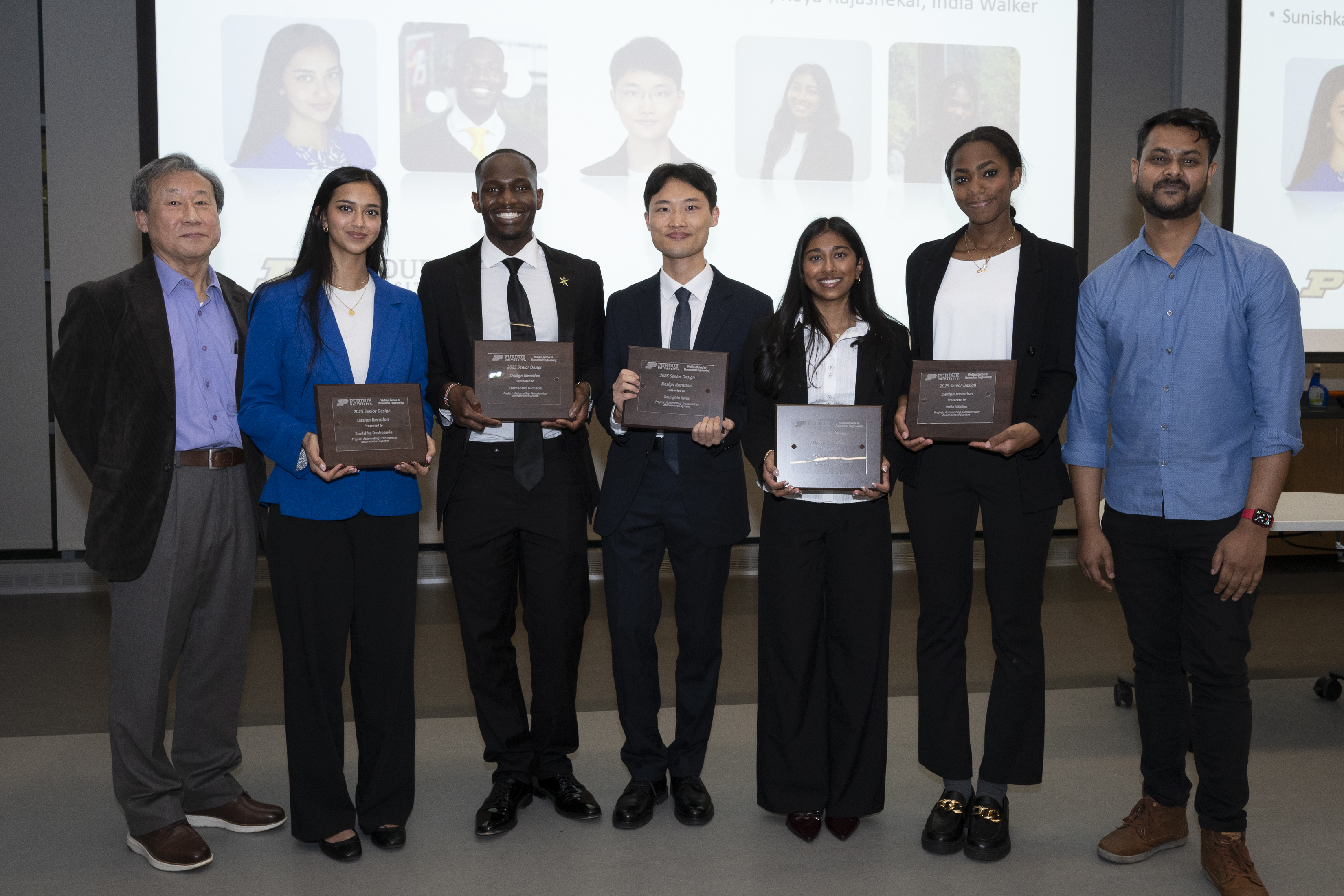
Recognizes evidence of multiple design iterations leading to a refined final prototype.
Winner: Translaminar Autonomous System — developed an integrated, closed-loop pressure pump system for ex vivo ocular research.
· Design Innovation
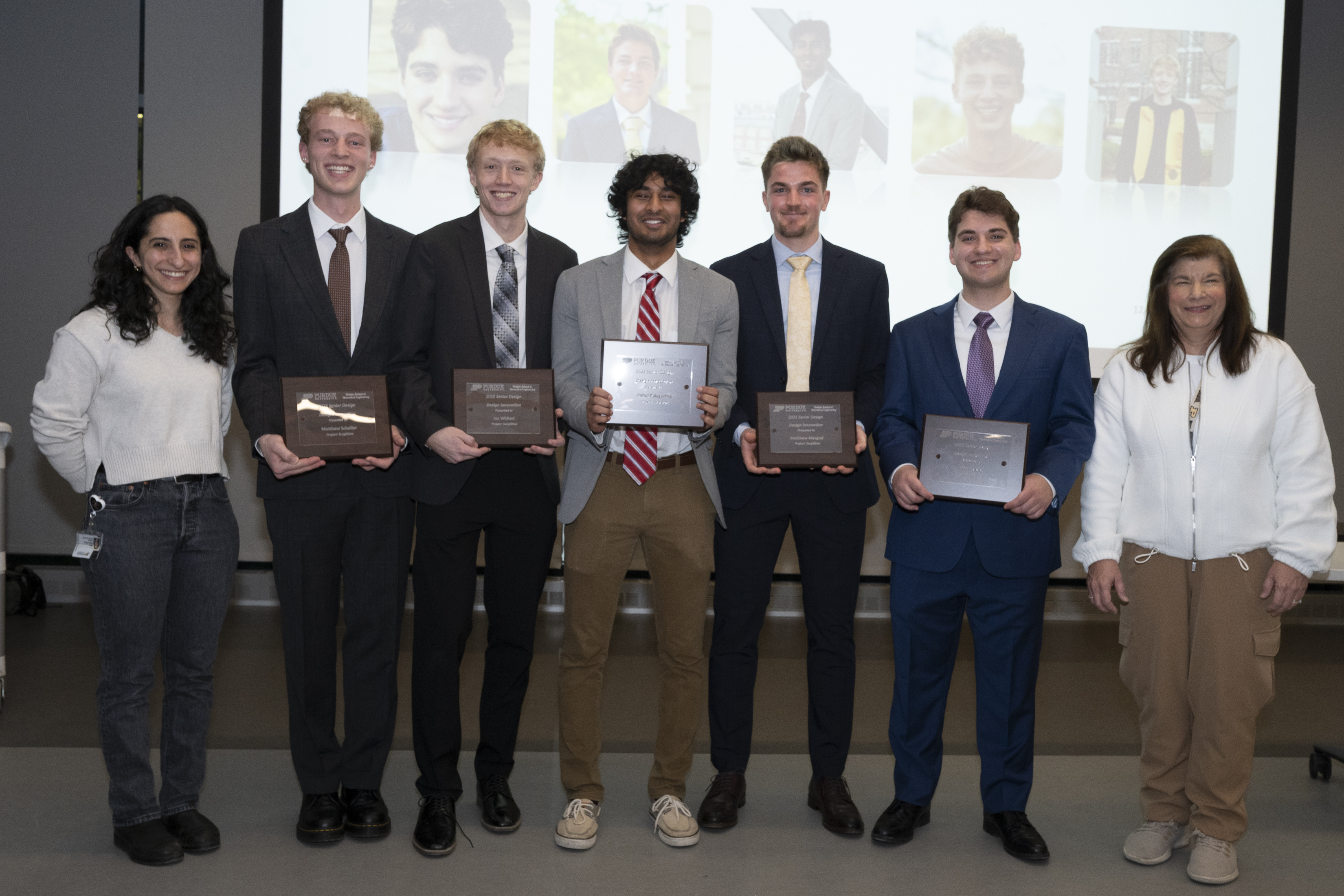
Honors projects that solve problems in novel ways compared to existing technologies or industry standards.
Winner: SurgiGlow — created an innovative tool-tracking solution for surgical lighting.
· Engineering Rigor
Recognizes exceptional technical depth, system integration and testing complexity.
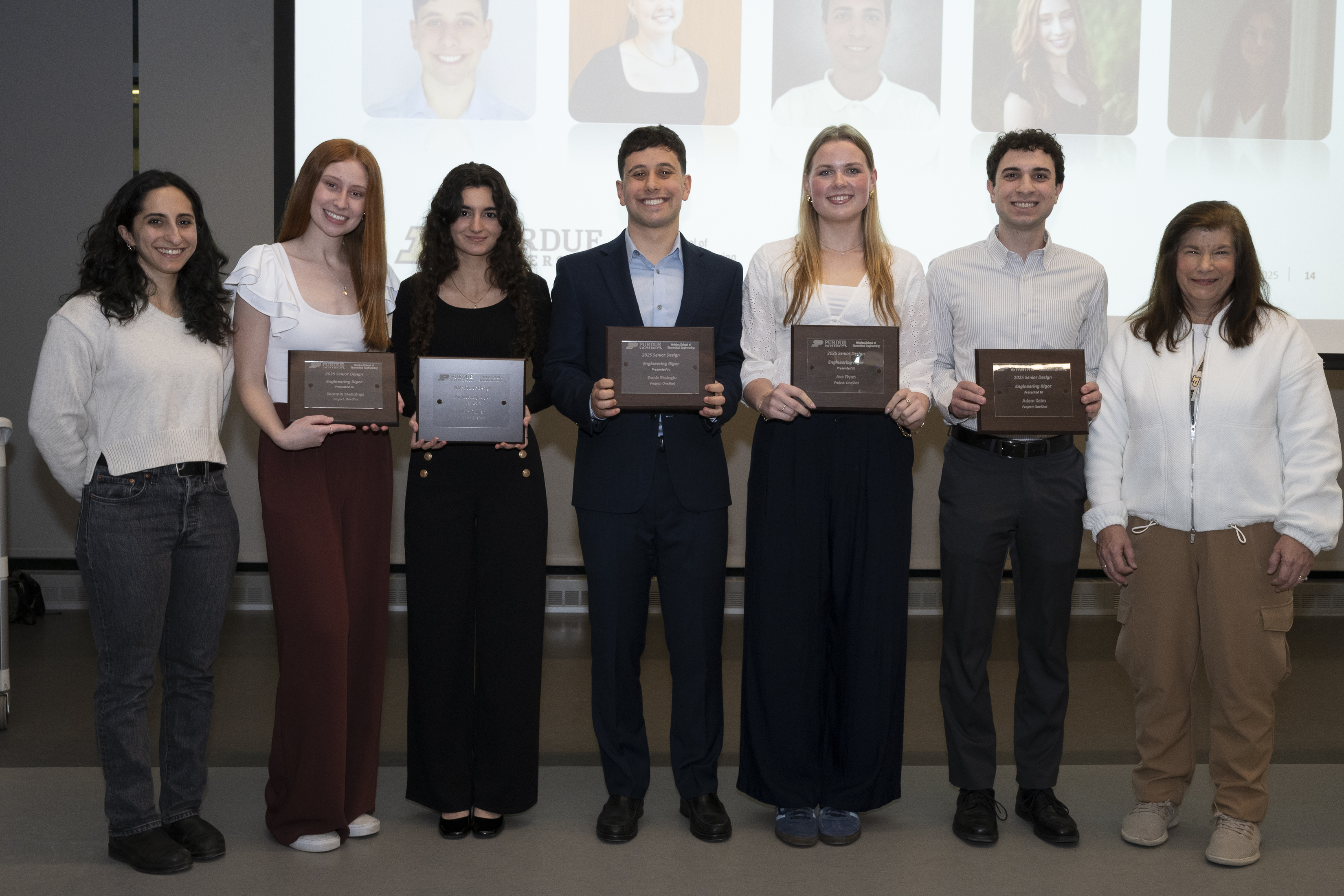
Winner: OneShot — developed an ultrasound-guided, integrated breast biopsy and marker chip placement system to improve breast cancer diagnosis.
Best Overall Projects
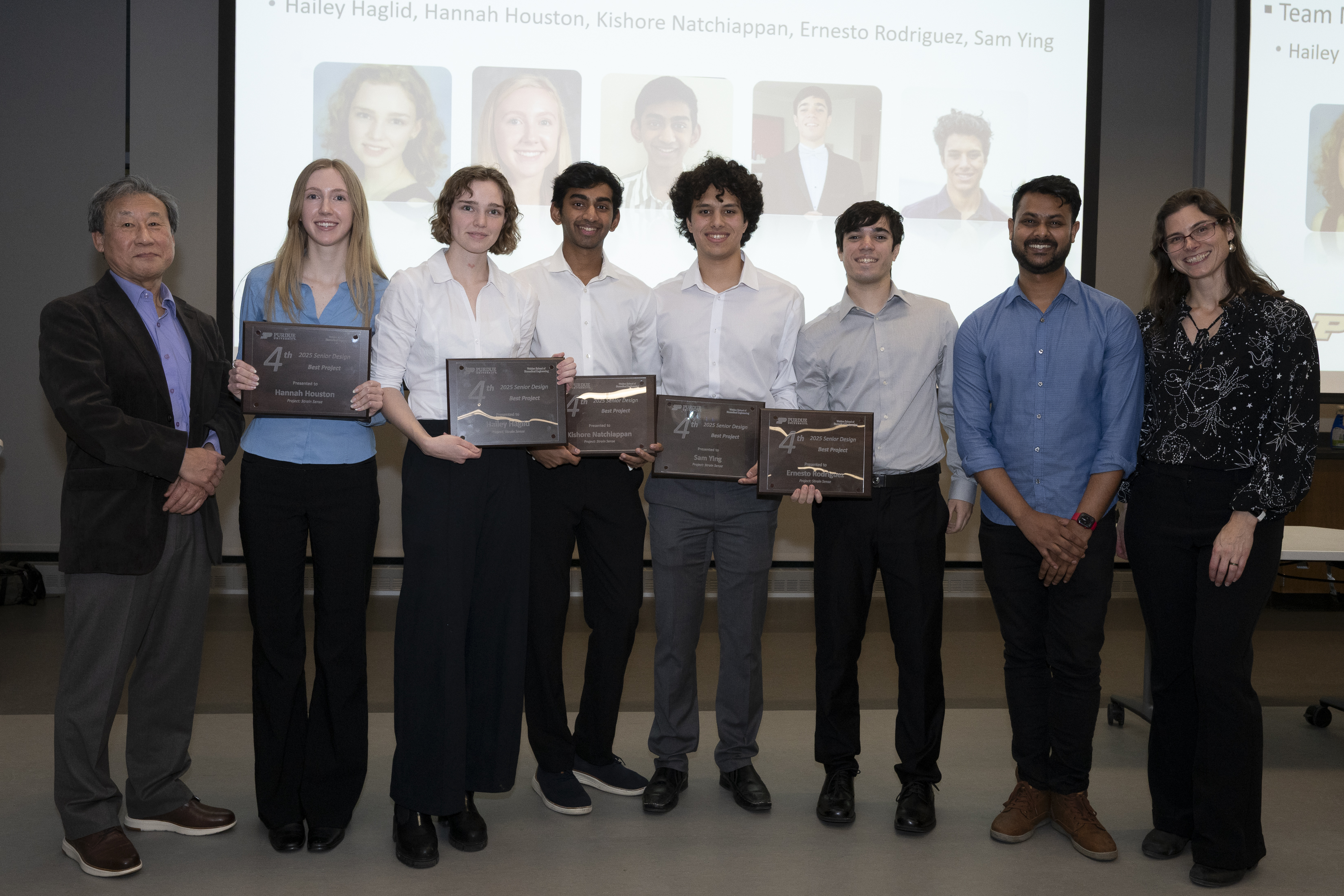
· 4th Place: Strain Sense — a sweat-sensing patch designed to detect overtraining.
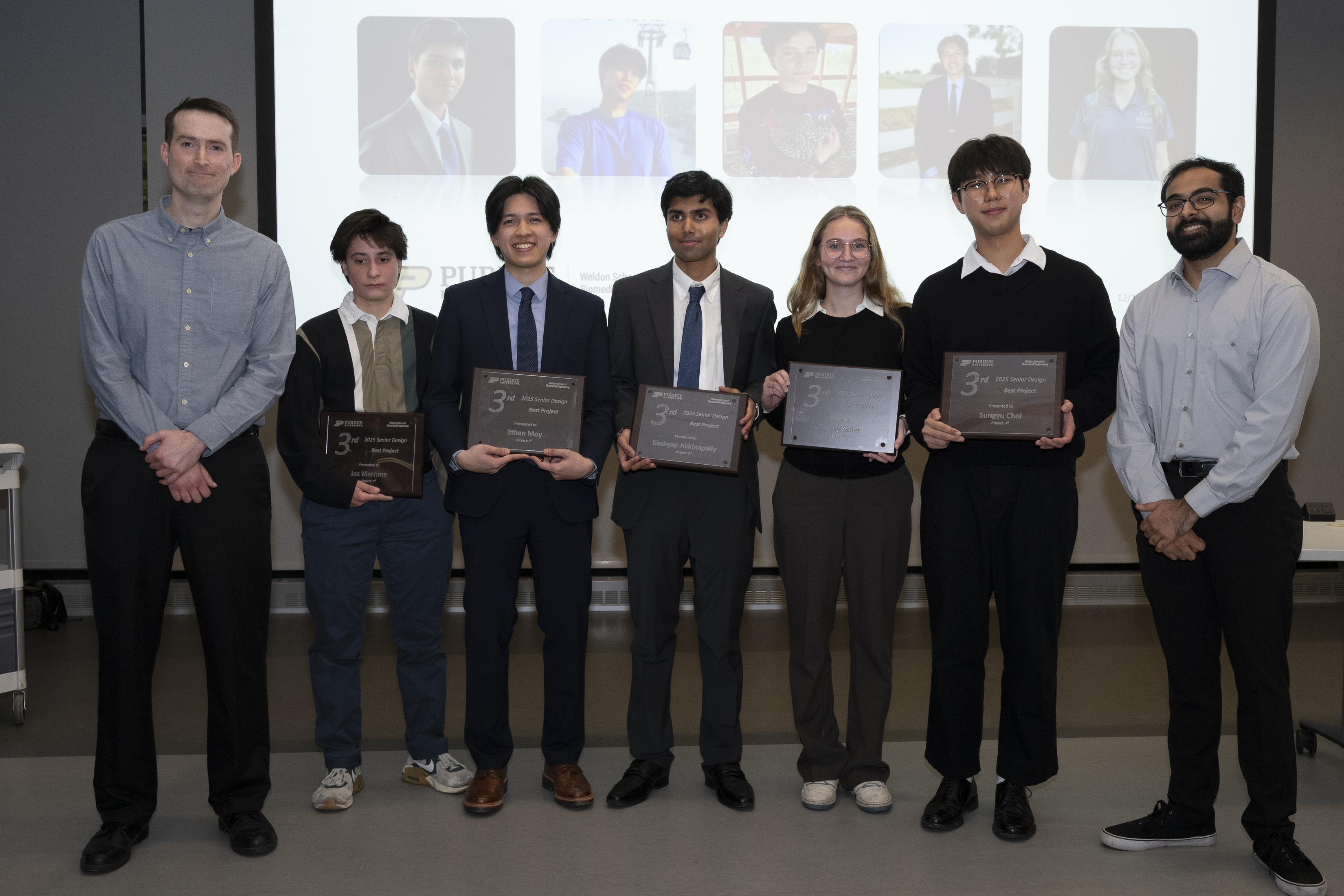
· 3rd Place: P3 (PCubed) — a system enabling precise bladder pressure monitoring during continuous bladder irrigation for gross hematuria.
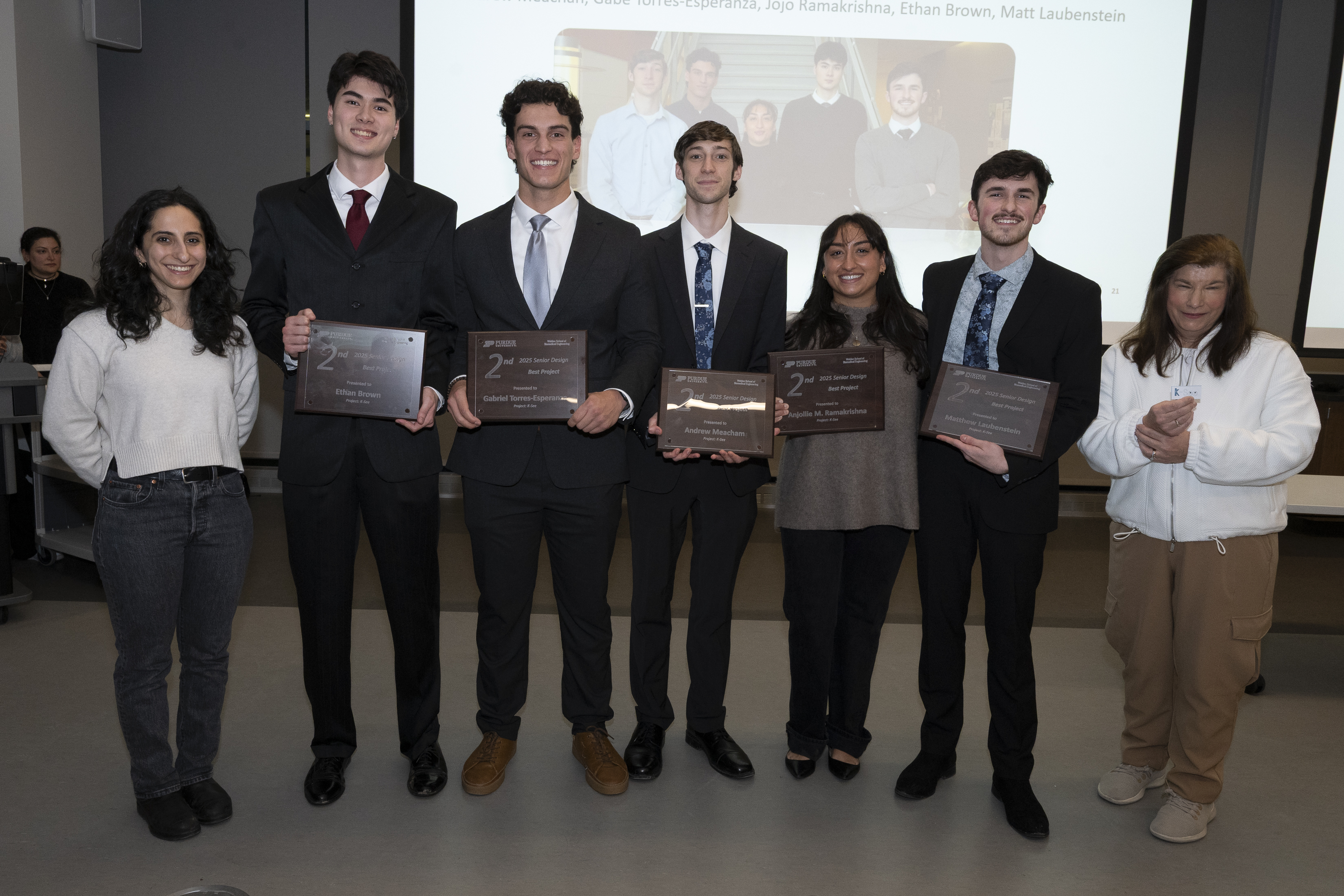
· 2nd Place: K-See — an affordable, portable assistive device that streamlines scleral lens application.
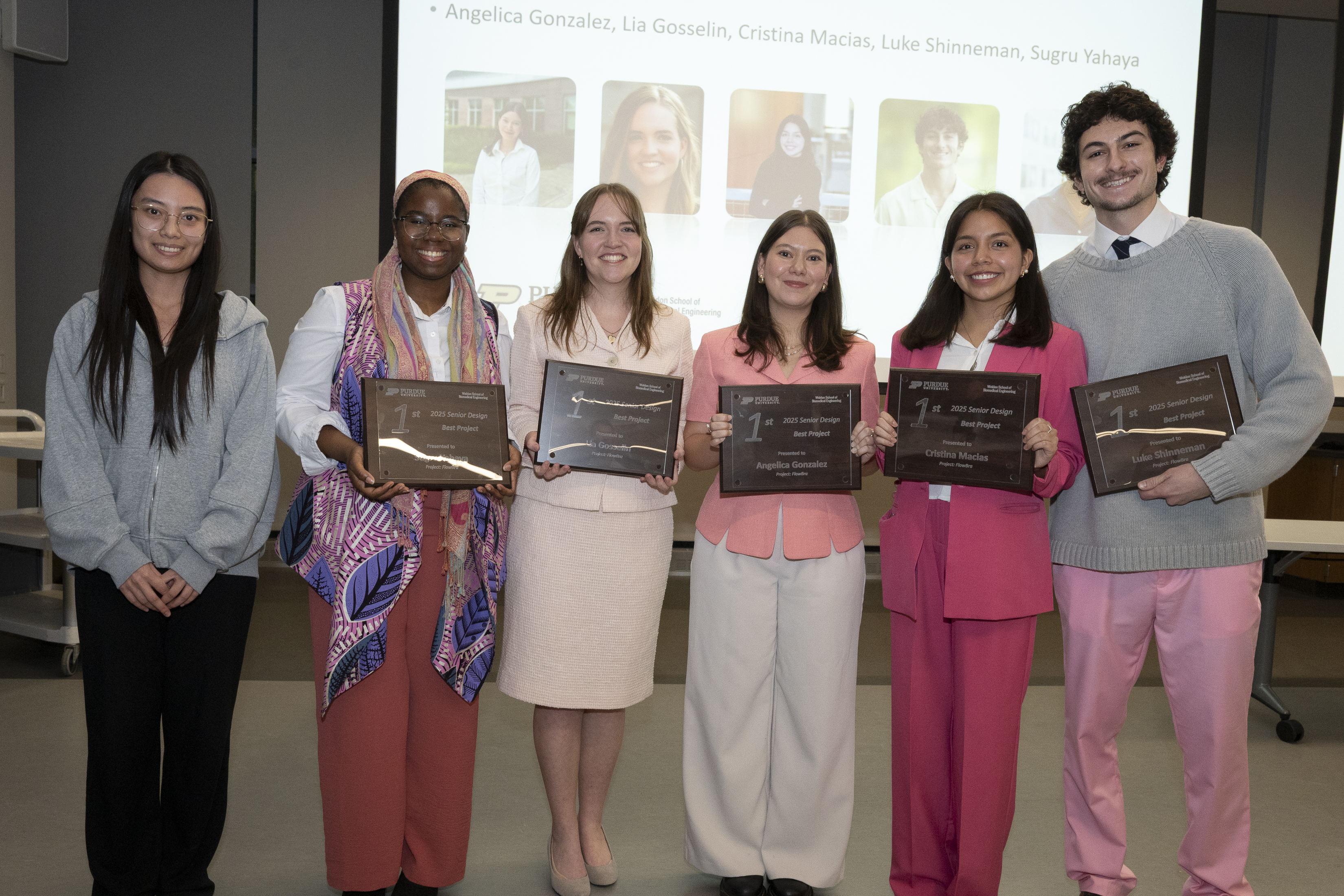
· 1st Place: FlowBra — a nursing bra using bioimpedance sensors to support and extend direct breastfeeding.
Thank You!
We extend our gratitude to all mentors, sponsors and collaborators for their invaluable support. Your contributions inspire and enable our students to innovate and succeed.