News

May 24, 2010

Nickel Nanoparticles as Electrochemical Sensors

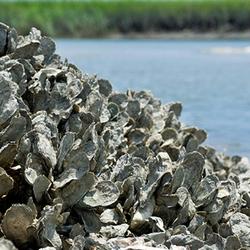
Professor Lia Stanciu and PhD student Yu-Ho Won, as well as colleagues from Clarkson University, have demonstrated in a new paper in the Journal Biosensors and Bioelectronics that nickel nanoparticles can be successfully used in the construction of electrochemical enzyme sensors for the detection of phenolic compounds.
April 19, 2010

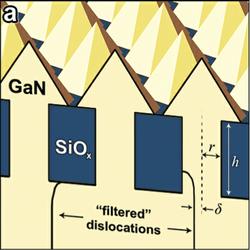
Freeing Gallium Nitride Nanorods from Dislocations

Purdue MSE and ECE researchers have demonstrated geometries and growth parameters that eliminate dislocations from nanorods for light-emitting diode devices. By reducing the occurrence of dislocations their deleterious effects on optoelectronic performance can be mitigated.
November 30, 2009

Nanowire Research for Electronics

"Having sharply defined layers of materials enables you to improve and control the flow of electrons and to switch this flow on and off," said Eric Stach, an associate professor of materials engineering at Purdue.
October 5, 2009

Better control of carbon nanotube 'growth' promising for future electronics

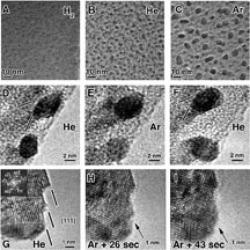
Carbon nanotubes, which were discovered in the early 1990s, could make possible more powerful, compact and energy-efficient computers, as well as ultra-thin "nanowires" for electronic circuits. The nanotubes might be ideal for future electronics because they conduct electricity more efficiently than any other metal, but their practical application requires that they be manufactured to specific standards.
August 26, 2009

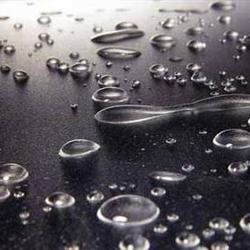
New coating helps wipe grease off with water

MSNBC (College of Engineering) -- Removing oily smudges from mirrors, countertops or fabrics usually requires some elbow grease ... and a strong soap or solvent. A new coating developed by Jeffrey Youngblood and colleagues at Purdue University promises that grease stains can be wiped away with plain old water.
< Previous 10 | Viewing 529 to 538 of 588 | Next 10 >