
From Mechanical Engineering to Materials Engineering: The Multidisciplinary Advantage of the MSE PMP
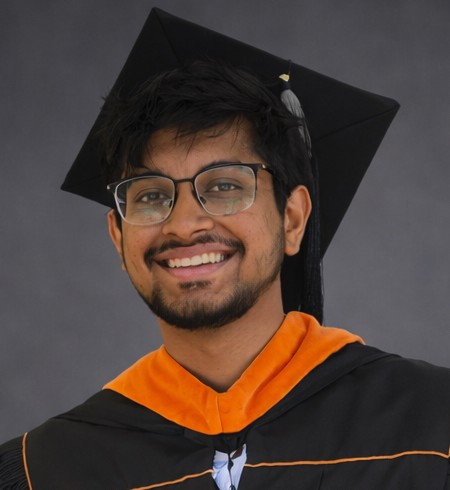
Sreeraman Balaji
I began my academic journey with an undergraduate degree in Mechanical Engineering from Vellore Institute of Technology (VIT) in India. During my final year, I completed my capstone project at the National University of Singapore, where I worked on plasma electrolytic oxidation coatings. That experience marked my first deep exposure to materials science and sparked my interest in transitioning from mechanical engineering into the materials domain. With strong faculty encouragement, I applied to Purdue’s Professional Master’s Program in Materials Engineering, which ultimately became the foundation for my career in industry.
One of the greatest strengths of the MSE PMP is its flexibility. While the program provides a strong core in materials science, it also allows students to explore coursework beyond a single discipline. In addition to my materials engineering courses, I was able to take electives in industrial engineering, electrical engineering, electronics packaging, and even a business-focused course in statistical analysis. This multidisciplinary exposure helped me think beyond purely technical solutions and better understand how engineering decisions fit into broader organizational and project contexts, skills that proved especially valuable during my industry roles. This broader perspective has been instrumental, especially during my co-op at Cummins, where multidisciplinary projects required me to communicate across departments and understand the bigger picture beyond pure engineering.
Among all the courses I took, Failure Analysis, taught by Professor Nikhilesh Chawla, had the most significant impact on my career. That course fundamentally shaped how I approach engineering problems and directly opened the door to my co-op opportunity at Cummins. Shortly after joining the program in August 2023, Cummins’ Materials Engineering leadership, led by a Purdue alumnus, visited campus to recruit students. I was selected for an eight-month co-op role, where I worked in a failure analysis group and applied concepts from the classroom directly to real-world engineering challenges. The theoretical knowledge I gained translated seamlessly into practical application, first during my co-op, and now in my current role at Caterpillar, where I continue working in the same field.
Throughout my time in the program, support from staff and faculty played a critical role in my success. Rosemary Son was my primary advisor and mentor, and her guidance on course selection, career direction, and industry opportunities was invaluable. Her openness and willingness to provide candid advice helped me navigate the program strategically and make informed decisions about my career. The combination of approachable faculty, applied coursework, and industry-aligned learning made the PMP experience both rigorous and practical.
After graduating in August 2025, I transitioned into my current role at Caterpillar, which is something that was once again supported by Purdue’s extensive alumni network. Alumni connections facilitated new conversations that ultimately led to my current position. Experiencing this level of alumni engagement firsthand reinforced just how powerful the Purdue Materials Engineering network is, long after graduation.
Looking back, the MSE PMP prepared me not just academically, but professionally. My advice to prospective students is to identify a focus area early, leverage the program’s flexibility, and actively engage with alumni, faculty, and peers. Purdue’s Professional Master’s Program offers the freedom and support to shape your own path, and if you take full advantage of it, it can open doors well beyond the classroom.