ECE researchers are working on a range of options to overcome a fundamental obstacle in commercializing "plasmonic metamaterials" that could bring advanced optical technologies for more powerful computers, new cancer treatments and other innovations.
A junior in computer engineering at Purdue, Heather Stephens says she wants to work in consumer electronics. “Anything you see in Best Buy, I want to be part of that,” she says. “My dream job would be to work for Sony and develop the PS-5.”
A new study has found that online tools, access to experimental data and other services provided through "cyberinfrastructure" are helping to accelerate progress in earthquake engineering and science.
Professor Jung received $49,548 for "Wireless Positioning and Tracking Technology for Indoor Location Based Services," a technology for an automated positioning and tracking system for indoor and outdoor applications with substantially higher resolution than GPS-style positioning systems.
Their paper, entitled "Low-Frequency Meandering Piezoelectric Vibration Energy Harvester," won the T-UFFC 2012 Outstanding Paper Award of the Ferroelectrics Society section.
Thanks to funding provided by a company co-founded by a Purdue alumnus, Purdue University is collaborating with Rutgers and Auburn Universities to revolutionize the efficiency of electric power consumption within the United States. Purdue's principal investigator is ECE Professor James Cooper.
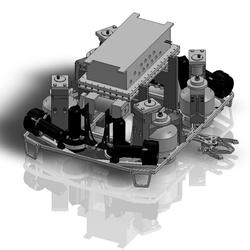
The mission theme this year was cabled ocean-observing systems. The Purdue team also won the Engineering Evaluation MVP Award for its ability to defend its design decisions in a logical manner, and received the Judges' Choice Award.