
Purdue 1 spaceflight showcases ECE-led quantum and semiconductor research
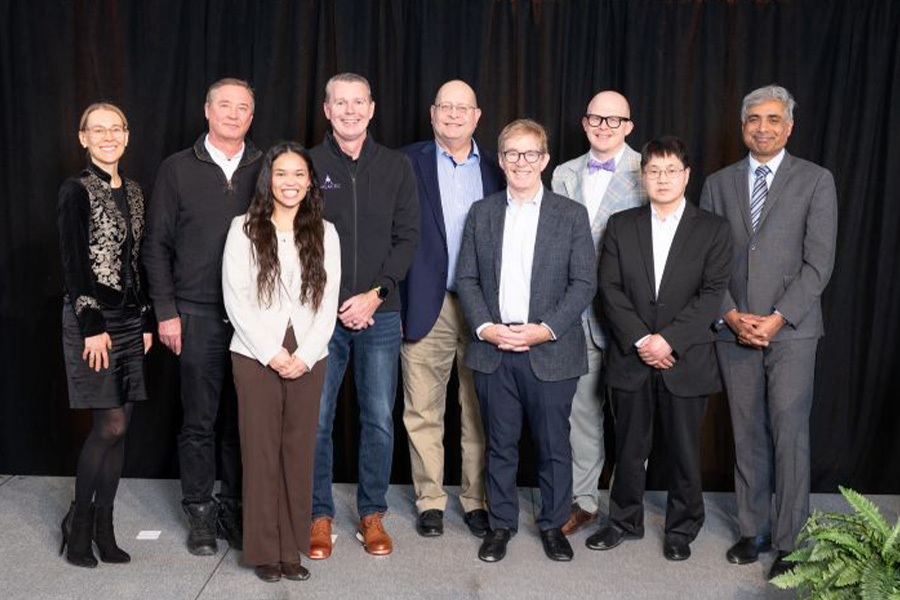
Purdue University’s first all-Boilermaker suborbital spaceflight, known as Purdue 1, will carry cutting-edge electrical and computer engineering research into space, positioning Purdue at the forefront of academic-led experimentation in microgravity.
Scheduled to launch aboard a Virgin Galactic spacecraft in 2027, Purdue 1 includes experiments designed and led by faculty in Purdue’s Elmore Family School of Electrical and Computer Engineering (ECE), reinforcing the university’s leadership in space-enabled research and hands-on engineering education.
ECE research at the core of Purdue 1
ECE faculty are leading two autonomous experiments and contributing to a crew-tended research payload that will operate during the flight. Together, the projects explore how microgravity environments can accelerate advances in quantum technology, semiconductor manufacturing and future space systems.
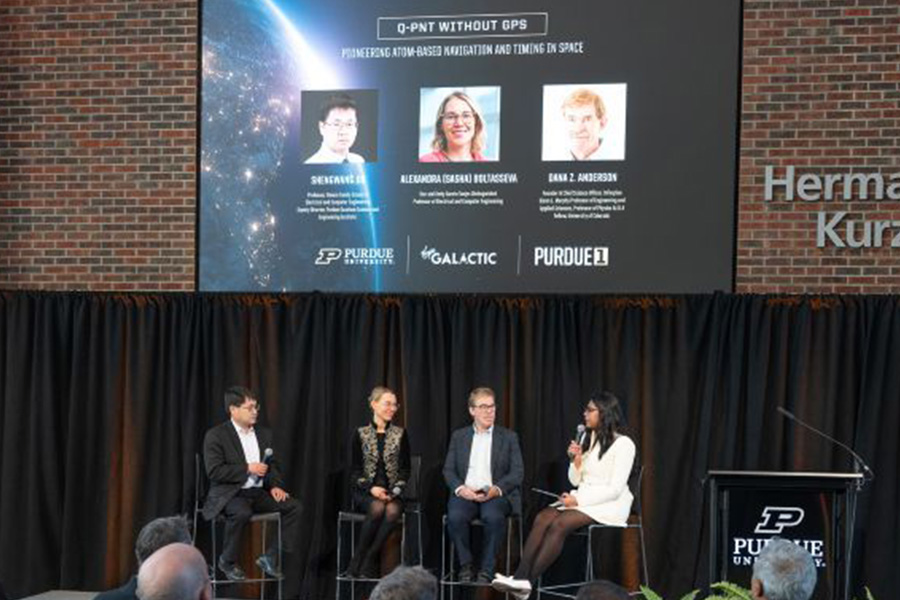
One autonomous experiment, led by Shengwang Du, professor of electrical and computer engineering, examines how laser-cooled atoms behave near absolute zero in microgravity, supporting the development of quantum positioning, navigation and timing technologies that could one day supplement or replace GPS.
ECE faculty Alexandra Boltasseva, the Ron and Dotty Garvin Tonjes Distinguished Professor of ECE, Vladimir Shalaev, Bob and Anne Burnett Distinguished Professor of ECE, and Joseph M. Lukens, associate professor of ECE, are also part of the quantum research team, working with industry partner Infleqtion.
A second autonomous experiment advances Purdue’s leadership in in-space manufacturing, exploring laser-assisted techniques for producing semiconductor and metal components in microgravity — research that could reduce reliance on Earth-based manufacturing for future missions.
Real-time research in microgravity
In addition to autonomous experiments, Purdue 1 will include crew-tended research conducted during the flight by Steven Collicott, professor in Purdue's School of Aeronautics and Astronautics, and graduate student Abigail Mizzi. Their work examines how liquids move and spread in zero gravity, data critical to spacecraft fuel systems and long-duration missions.
Expanding Purdue’s space legacy
Customized to include space for research lockers alongside its five-person crew, Purdue 1 establishes a new model for universities conducting research in space. Known as the “Cradle of Astronauts,” Purdue has produced 30 alumni who have flown in space or been selected as astronaut candidates — nearly all from engineering.
With ECE-led research spanning quantum science, semiconductor manufacturing and space-ready technologies, Purdue 1 highlights how the university’s engineering expertise is helping shape the future of space exploration.
Source: In-space manufacturing, quantum projects part of all-Boilermaker suborbital spaceflight