
Purdue ECE professor James Davis receives NSF CAREER Award for research on reusing AI models
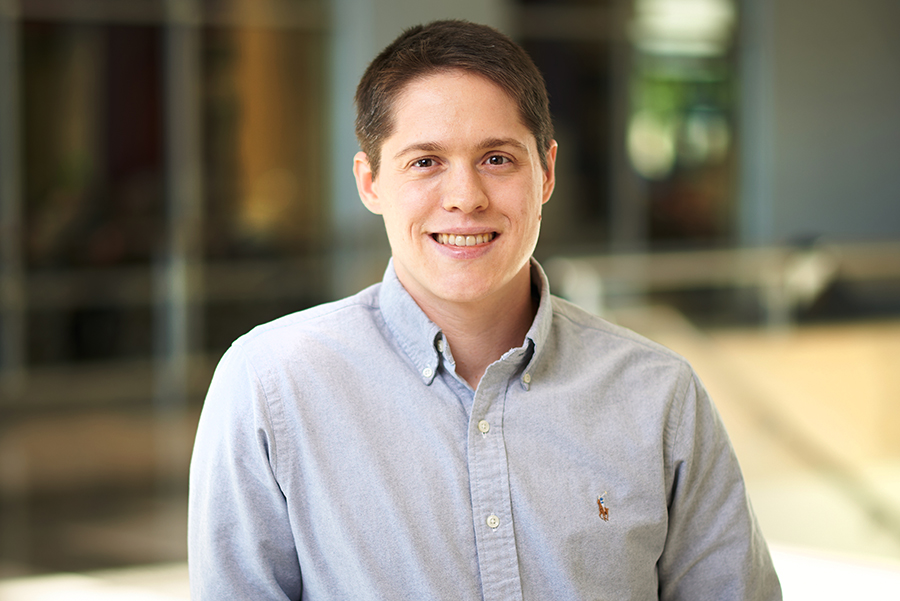
James C. Davis, assistant professor in Purdue University’s Elmore Family School of Electrical and Computer Engineering, has received a National Science Foundation CAREER Award to develop new software engineering foundations for reusing pre-trained neural models.
The NSF CAREER Award is one of the foundation’s most prestigious awards for early-career faculty, supporting researchers who have the potential to serve as academic role models in research and education.
Davis’s project, titled “PTM-SEER: Software Engineering Foundations for Re-Using Pre-Trained Neural Models,” focuses on a growing challenge in modern computing: how engineers can safely, effectively, and efficiently reuse artificial intelligence models that have already been trained.
In traditional software engineering, developers often reuse existing code rather than building everything from scratch. That approach saves time, reduces costs, and helps teams build more reliable systems. But AI models are different from traditional software components. They are shaped by the data used to train them, may behave differently in new settings, and commonly lack clear documentation (or understanding) about their limits.
As AI becomes more deeply embedded in everyday technology, engineers must decide which models to trust, how to adapt them, and how to explain their behavior. Davis’s research intends to provide the tools, standards, and shared understanding needed to make those decisions more systematically.
“Pre-trained models are quickly becoming building blocks for modern software, but we do not yet have the same engineering playbook for reusing them that we have for traditional software,” Davis said. “This project is about helping engineers make smarter, more transparent decisions about whether to reuse those AI components, and how to proceed when they choose to do so. The goal is to make AI reuse more practical, more efficient and more trustworthy.”
The project will study how software practitioners discover, evaluate, adapt, and maintain pre-trained models. Davis and his team will apply methods from human factors and software systems engineering to identify best practices, build taxonomies of engineering behavior, and develop new tools that can accelerate software engineering work.
The research will also produce an ecosystem-wide dataset of models for further analysis and advance software engineering theory by comparing the reuse of AI models with the reuse of conventional software. That comparison is especially important because AI models challenge long-standing assumptions about how software components are specified, tested, and verified.
The project’s broader impacts include a toolkit designed to lower the cost of developing intelligent computing systems and educational materials for K-12, undergraduate, and graduate students, as well as practicing professionals. By bolstering the foundation for trustworthy AI engineering, Davis’s work aims to support U.S. economic competitiveness, expand academia-industry partnerships, and help prepare a deeper pipeline of software engineers with AI skills for careers in industry, academia, and government.