
Purdue ECE PhD student Michael Tung earns prestigious NSF Graduate Research Fellowship
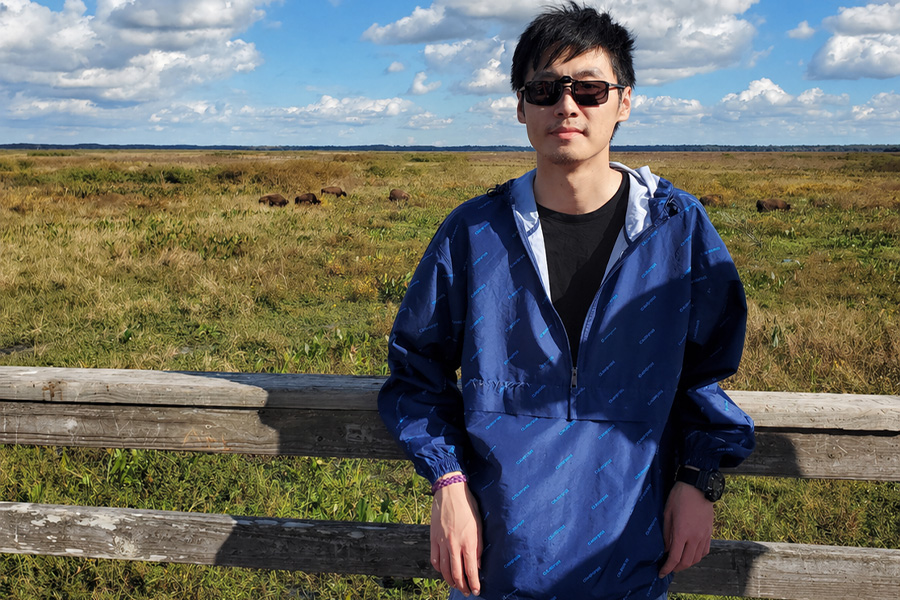
Michael Tung, a doctoral student in the Purdue University Elmore Family School of Electrical and Computer Engineering, has been awarded a 2026 Graduate Research Fellowship from the National Science Foundation (NSF), one of the nation’s most competitive honors for graduate students in science and engineering.
The NSF Graduate Research Fellowship Program supports outstanding students pursuing research-based master’s and doctoral degrees across STEM disciplines. Fellows are selected based on their demonstrated potential for significant research achievements.
Tung’s research focuses on the future of wireless communication as the world moves toward next-generation 6G networks. While today’s wireless systems are designed primarily for speed and connectivity, emerging applications in areas such as transportation, agriculture, manufacturing and defense demand something more: reliability that can be guaranteed.
To address this challenge, Tung is developing new communication strategies that combine traditional theory with modern, data-driven approaches. His work explores advanced feedback coding techniques designed to ensure highly reliable data transmission, even in the complex and unpredictable environments expected in 6G networks. Tung also plans to apply these ideas to 6G verticals, such as the Internet of Things (IoT) for agriculture.
“I am incredibly honored to receive this fellowship,” Tung said. “It gives me the freedom to focus on my research in 6G and advanced wireless systems, and it motivates me to push the boundaries of this field even further. I want to say a big thank you to my advisor, Professor Love, for all his support and guidance. I am also very grateful to my undergraduate professors who took the time to mentor me, and most importantly, I want to thank my family for supporting me throughout this entire journey.”
Tung’s advisor, David J. Love, the Nick Trbovich Professor of Electrical and Computer Engineering, said the recognition reflects both Tung’s talent and the importance of his work.
“Michael is tackling critical challenges that could lead to significant rate and reliability improvements in future communication networks,” Love said. “His ability to connect deep theoretical insights with practical applications makes him exceptionally well-positioned to advance the field and have a meaningful impact on future communication technologies.”
The fellowship will support Tung as he continues his research at Purdue ECE, contributing to innovations that could help shape the backbone of tomorrow’s connected world.