
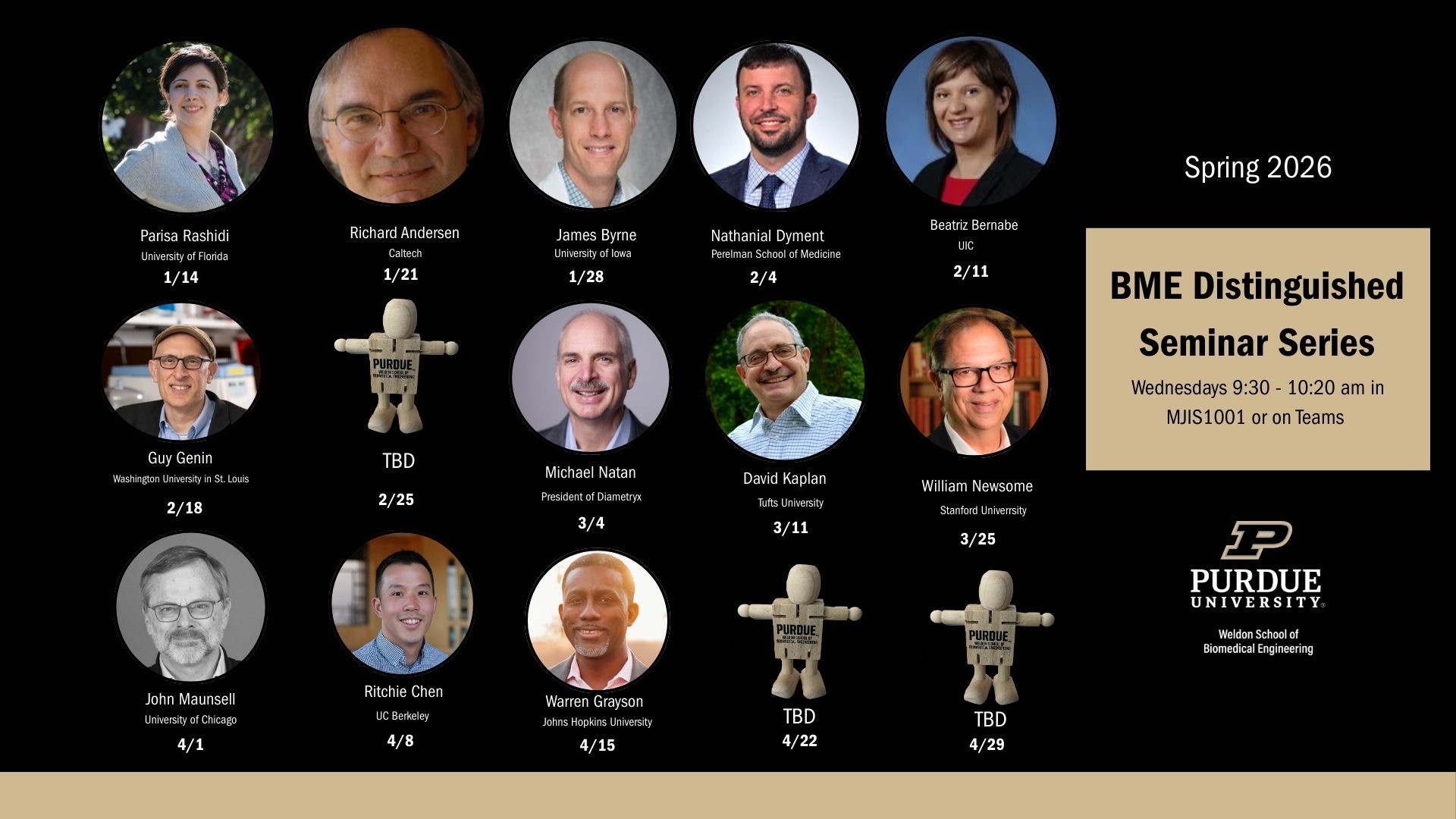
From thought to movement: helping paralyzed people with brain-machine interfaces with Richard Andersen, James G. Boswell Professor of Neuroscience, CalTech
Abstract:
Tetraplegia, the loss of movement and feeling in all four limbs, can result from spinal cord injuries at the level of the neck. Brain-machine interfaces (BMIs) can help people with tetraplegia by allowing them to control assistive devices with their thoughts. A BMI consists of arrays of tiny electrodes that can record the activity of large numbers of cortical neurons and provide electrical stimulation to restore the sense of touch. Our lab has implanted arrays in a variety of specialized cortical areas rather than just the motor cortex. Using this approach, we can explore the science of how these areas process sensory and motor information and apply that knowledge to developing neural prosthetics. We find that small patches of the posterior parietal cortex (PPC), a sensorimotor association cortical area, encodes preconsciously the intended actions of all parts of the body. Among its more sensory and cognitive functions, PPC encodes the awareness of touch, internal speech, and the observation of others. Lastly, I will show a neural prosthetic application in which bimanual brain control is used in a real environment in which a participant drives a commercial vehicle.
Biography
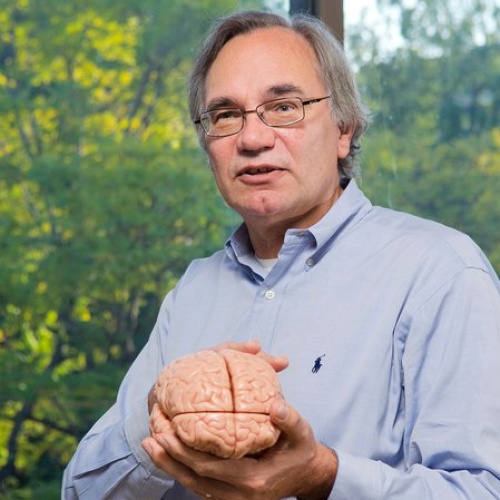
Richard Andersen is the James G. Boswell Professor of Neuroscience, the T&C Chen Brain-Machine Interface Center Leadership Chair, and the Director of the T&C Chen Brain-Machine Interface Center at Caltech. He studies the neural mechanisms of sight, hearing, balance, touch, and action, and uses these insights to inform the development of neural prosthetics.
Andersen is a member of the National Academy of Sciences, the National Academy of Medicine, and the American Academy of Arts and Sciences. He is a recipient of a McKnight Foundation Scholars Award, a Sloan Foundation Fellowship, and the Spencer Award from Columbia University, and is a visiting professor at the Collège de France. He has served as director of the McDonnell/Pew Center for Cognitive Neuroscience at MIT and of the Sloan-Swartz Center for Theoretical Neurobiology at Caltech, as well as being a member or chair of various government advisory committees.
Students registered for the seminar are expected to attend in person.
Teams ID and Passcode:
Meeting ID: 211 123 896 292 8
Passcode: Uh9qs2pf
Mark your calendars:
2026-01-21 09:30:00 2026-01-21 10:20:00 America/Indiana/Indianapolis From thought to movement: helping paralyzed people with brain-machine interfaces with Richard Andersen, James G. Boswell Professor of Neuroscience, CalTech MJIS 1001 and via Teams