
Engineering Conductive Hydrogels to Transform Cardiac Rhythm Management with Elizabeth M. Cosgriff-Hernandez PhD Professor of Biomedical Engineering, Judson S. Swearingen Regents Chair in Engineering The University of Texas at Austin
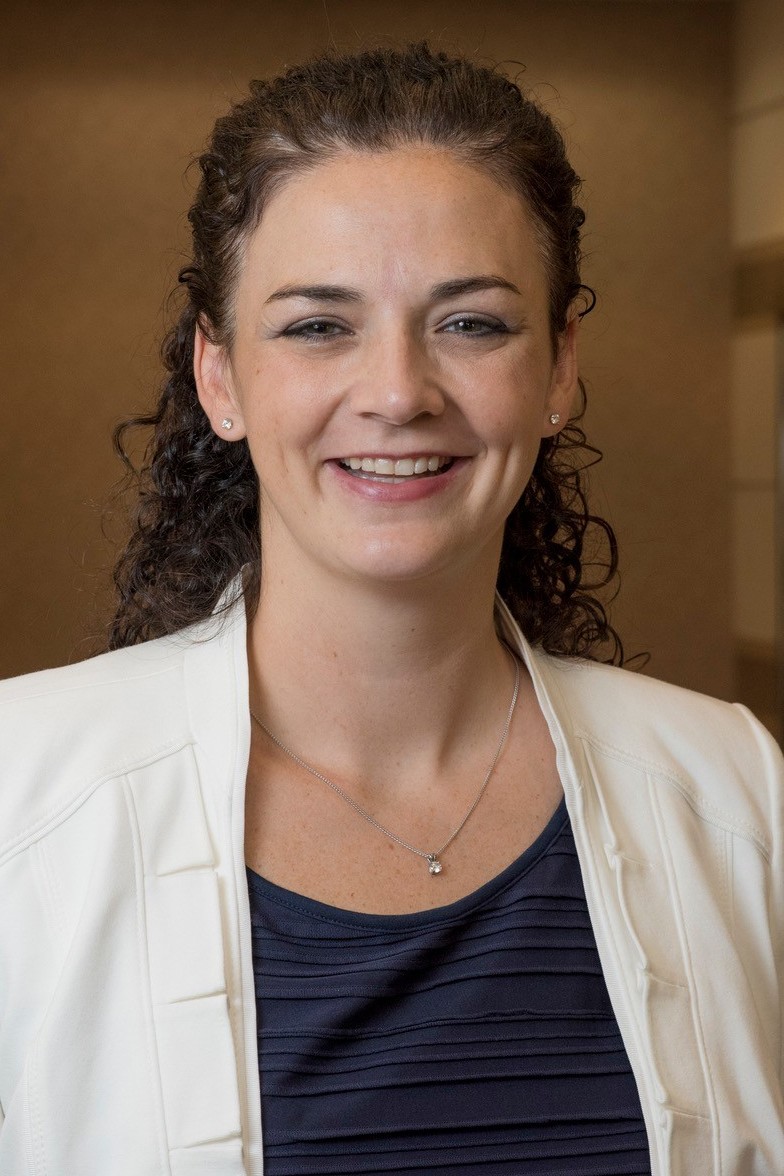
Bio: Elizabeth Cosgriff-Hernandez, Ph.D. is a Professor of Biomedical Engineering at The University of Texasat Austin and holder of the Judson S. Swearingen Regents Chair in Engineering.She received a B.S. in Biomedical Engineering and Ph.D. in Macromolecular Science and Engineeringfrom Case Western Reserve University under the guidance of Professors Anne Hiltner and JimAnderson. She then completed a UT-TORCH Postdoctoral Fellowship with Professor Tony Mikos at RiceUniversity with a focus in orthopaedic tissue engineering. Dr. Cosgriff-Hernandez joined the faculty ofthe Biomedical Engineering Department at Texas A&M University in 2007 prior to moving to TheUniversity of Texas at Austin in 2017. Her laboratory specializes in the development of polymeric biomaterials to improveclinical outcomes of medical devices and regeneration strategies.Her expertise in biomaterials and contributions to the field have been recognized by election as Fellow of the International Union of Societies for Biomaterials Science andEngineering, Biomedical Engineering Society, Royal Society of Chemistry, Tissue Engineering and Regenerative Medicine International Society, and the American Institute for Medical and BiologicalEngineering.She is a co-founder of Rhythio Medical, on thescientific advisory board of ECM Biosurgery, and a consultant to several companies on biostabilityevaluation of medical devices. Dr. Cosgriff-Hernandez is an Associate Editor of the Journal of MaterialsChemistry B and has previously served as President of the Society for Biomaterials, Board member of the Biomedical Engineering Society and AIMBE, Associate Editor of the Journal of Biomedical MaterialsResearch, Part B, and chair of the NIH study section on Musculoskeletal Tissue Engineering.
Students enrolled in the class are expected to attend in person.
Microsoft Teams meeting
Join: https://teams.microsoft.com/meet/213173981068428?p=5DIIAOUUGJhFHXwHXO
Meeting ID: 213 173 981 068 428
Passcode: tu6Qr3sg
2026-10-07 09:30:00 2026-10-07 10:20:00 America/Indiana/Indianapolis Engineering Conductive Hydrogels to Transform Cardiac Rhythm Management with Elizabeth M. Cosgriff-Hernandez PhD Professor of Biomedical Engineering, Judson S. Swearingen Regents Chair in Engineering The University of Texas at Austin Abstract: Ventricular arrhythmias are a leading cause of sudden cardiac death and remain a significant clinical challenge. Current therapies, including catheter ablation and implantable cardioverter-defibrillators (ICDs), are lifesaving but have important limitations. Ablation procedures can damage healthy tissue, produce incomplete lesions, and are associated with arrhythmia recurrence, while ICDs terminate life-threatening arrhythmias using painful high-energy shocks that substantially impact quality of life. These limitations underscore the need for new technologies that restore normal cardiac conduction while reducing treatment-associated morbidity. To address this challenge, we partnered with clinicians to develop a new class of conductive hydrogels that seamlessly interface with myocardial tissue. By combining polymer engineering with cardiac electrophysiology, we have created biomaterials that actively modulate electrical conduction within the heart. Our conductive hydrogel platform functions as an injectable hydrogel electrode capable of restoring conduction across scarred myocardium and re-establishing native electrical activation. We have also engineered conductive hydrogel interfaces for catheter ablation that improve energy delivery, reduce steam pop formation, and generate more uniform therapeutic lesions. This seminar will describe the design principles underlying conductive hydrogel biomaterials, fundamental studies of their interactions with cardiac tissue, and strategies for translating these materials into clinically relevant therapies. I will discuss how integrating materials science, bioelectronics, and cardiovascular medicine is enabling new approaches to treating arrhythmias and improving the safety and effectiveness of existing cardiac devices. Together, these advances illustrate the potential for conductive hydrogels to establish a new generation of bioelectronic materials that transform cardiac rhythm management. MJIS 1001 and via Teams