
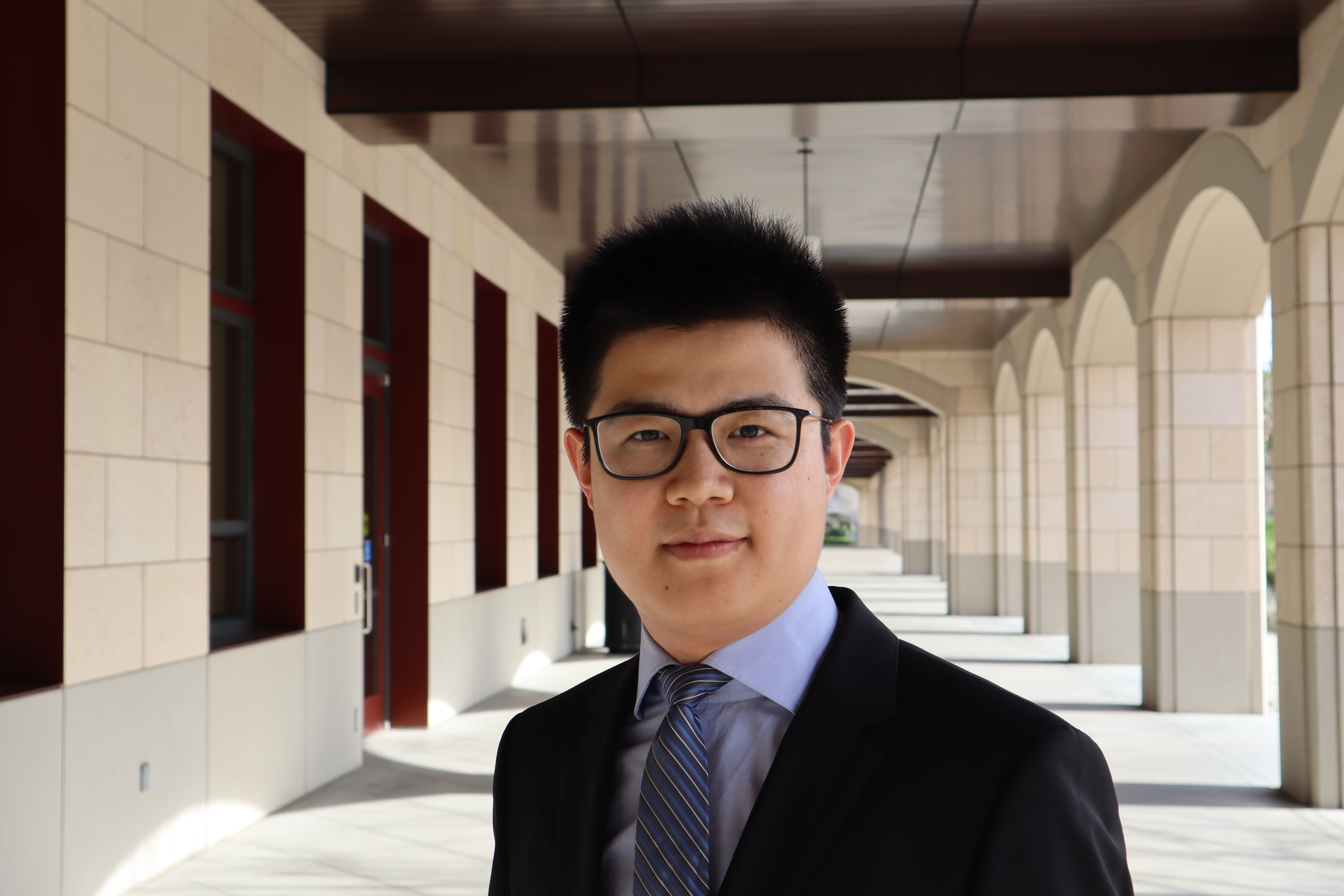
Battery-free and Edge-AI-empowered Wearable and Implantable Bioelectronics with Simiao Niu, Assistant Professor, Department of Biomedical Engineering, Rutgers University
Abstract: 60% of Americans live with at least one chronic disease.
These diseases and their associated comorbidities are now the leading causes of death in the United States. The effective management of complex chronic diseases requires body-wide, long-term, accurate, and continuous monitoring of multiple physiological signals from wearable and implantable devices to determine the pathological state precisely.
Wearable and implantable physiological signal monitoring can dramatically reduce the demand for physician visits and increase patients' engagement and treatment adherence rates. Specifically, battery-free wearables and implantable electronics reduce device volume and mechanical stiffness, significantly improving wear comfort, which is highly desirable for next-generation wearable and implantable electronics.
However, battery-free wearables and implantable electronics still face many challenges, mainly wireless energy, data transfer, and edge-AI integration. To address these challenges, my research has involved the exploration of rational system design concepts, material and device fabrication innovation, and tailored edge-AI algorithms to enable smart battery-free wearables and implantable electronics targeting next-generation chronic disease management.
Here, I would like to discuss three of my developed technology platforms to elaborate on the concept of battery-free wearable and implantable systems.
First, inspired by self-sustaining intelligent biospecies, we developed a biomimetic, battery-free, high-precision edge-AI-empowered system through the holistic co-design of ultralow-power edge-AI-empowered sensor hardware and an energy harvester, eliminating charging downtime and enabling true 24/7, hassle-free monitoring. This work establishes a new paradigm for system-level, edge-AI-empowered, and self-sustaining sensing, demonstrating that intelligence and energy autonomy can coexist within a single wearable platform and pointing to next-generation always-on, personalized digital health systems.
Second, I will describe a triboelectric transducer-based implantable battery-free device. This technology platform uses ultrasound waves and triboelectric transducers as energy and data transmission media and has broad applications in implantable sensing.
Third, I will describe an RFID-based active living bioelectronic technology platform. This technology encompasses capabilities across the biogenic (bacteria), biomechanical(starch-based hydrogels), and bioelectrical properties (battery-free biosensors and stimulators) simultaneously and shows promising results in managing skin inflammation. Overall, the developed technology platforms can assess multiple health outcomes and treatment responses to various chronic diseases.
Ultimately, this technology will help alleviate the burden of chronic diseases, lower medical costs, and improve the quality of life for patients.
Bio: Dr. Simiao Niu is an assistant professor at the Department of Biomedical Engineering, Rutgers University. Before Rutgers, he was a hardware systems engineer at Apple Inc.'s health technology team.
He completed his postdoctoral training in the Department of Chemical Engineering at Stanford University and earned his Ph.D. in the School of Materials Science and Engineering at Georgia Tech in 2016.
Dr. Niu's past research on wearable technology and bioelectronics has led to multiple awards, including the MIT Technology Review TR35 Asia Pacific List, Clarivate Web of Science Cross-Field Highly Cited Researcher, MRS Early-career Distinguished Presenter, Georgia Tech 40 under 40, the 36th and 38th Japan Telecommunications Advancement Foundation Best Paper Award, Research.com Rising Star of Science Award, Apple Special Recognition Award, and the MRS graduate student award.
His current work focuses on wearable and implantable devices and energy harvesting systems for biomedical applications.
Students registered for the seminar are expected to attend in person.
Microsoft Teams meeting
Join: https://teams.microsoft.com/meet/213173981068428?p=5DIIAOUUGJhFHXwHXO
Meeting ID: 213 173 981 068 428
Passcode: tu6Qr3sg
2026-08-26 09:30:00 2026-08-26 10:20:00 America/Indiana/Indianapolis Battery-free and Edge-AI-empowered Wearable and Implantable Bioelectronics with Simiao Niu, Assistant Professor, Department of Biomedical Engineering, Rutgers University Abstract: 60% of Americans live with at least one chronic disease. These diseases and their associated comorbidities are now the leading causes of death in the United States. The effective management of complex chronic diseases requires body-wide, long-term, accurate, and continuous monitoring of multiple physiological signals from wearable and implantable devices to determine the pathological state precisely. Wearable and implantable physiological signal monitoring can dramatically reduce the demand for physician visits and increase patients' engagement and treatment adherence rates. Specifically, battery-free wearables and implantable electronics reduce device volume and mechanical stiffness, significantly improving wear comfort, which is highly desirable for next-generation wearable and implantable electronics. However, battery-free wearables and implantable electronics still face many challenges, mainly wireless energy, data transfer, and edge-AI integration. To address these challenges, my research has involved the exploration of rational system design concepts, material and device fabrication innovation, and tailored edge-AI algorithms to enable smart battery-free wearables and implantable electronics targeting next-generation chronic disease management. Here, I would like to discuss three of my developed technology platforms to elaborate on the concept of battery-free wearable and implantable systems. First, inspired by self-sustaining intelligent biospecies, we developed a biomimetic, battery-free, high-precision edge-AI-empowered system through the holistic co-design of ultralow-power edge-AI-empowered sensor hardware and an energy harvester, eliminating charging downtime and enabling true 24/7, hassle-free monitoring. This work establishes a new paradigm for system-level, edge-AI-empowered, and self-sustaining sensing, demonstrating that intelligence and energy autonomy can coexist within a single wearable platform and pointing to next-generation always-on, personalized digital health systems. Second, I will describe a triboelectric transducer-based implantable battery-free device. This technology platform uses ultrasound waves and triboelectric transducers as energy and data transmission media and has broad applications in implantable sensing. Third, I will describe an RFID-based active living bioelectronic technology platform. This technology encompasses capabilities across the biogenic (bacteria), biomechanical(starch-based hydrogels), and bioelectrical properties (battery-free biosensors and stimulators) simultaneously and shows promising results in managing skin inflammation. Overall, the developed technology platforms can assess multiple health outcomes and treatment responses to various chronic diseases. Ultimately, this technology will help alleviate the burden of chronic diseases, lower medical costs, and improve the quality of life for patients. MJIS 1001 and via Teams