BME News

October 5, 2023

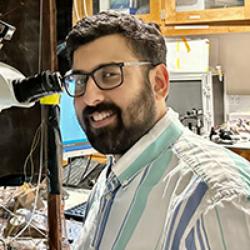
Jayant selected for NIH Director's New Innovation Award

The National Institutes of Health (NIH) announced Krishna Jayant, assistant professor in the Weldon School of Biomedical Engineering, was selected for a prestigious award created to reward and encourage young researchers.
September 20, 2023

Student design team wins $20K prize

A senior design team from the Weldon School of Biomedical Engineering won first place in the National Institute of Biomedical Imaging and Bioengineering’s Design by Biomedical Undergraduate Team (DEBUT) Challenge.
September 12, 2023

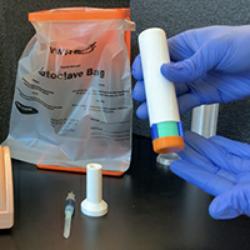
Modeling release rates for implantable drugs

A novel mathematical model can bypass time-consuming and costly experimentation to accurately predict the drug release. The underlying study, “Mechanistic computational modeling of implantable, bioresorbable, drug release systems,” has been published by the journal Advanced Materials.
August 7, 2023

Purdue offers flexible advancement opportunities in biomedical engineering

Biomedical engineers have strong prospects over the next decade, according to the Bureau of Labor Statistics, which projects that employment of bioengineers and biomedical engineers will grow 10% between 2021 and 2031. During that period, an average of 1,200 new jobs will be posted each year.
June 13, 2023

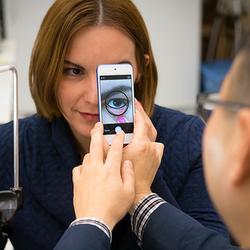
AI-driven mobile health algorithm uses phone camera to detect blood vessel oxygen levels

You may already use your smartphone for remote medical appointments. Why not use some of the onboard sensors to gather medical data? That’s the idea behind AI-driven technology developed at Purdue University that could use a smartphone camera to detect and diagnose medical conditions like anemia faster and more accurately than highly specialized medical equipment being developed for the task.
May 15, 2023

Karaoke and wearable health devices: Weldon School students hit a high note exploring the future of wearable sensors in new course

Just a decade ago, it might not have been predicted that nearly 45% of Americans would use wearable heath devices with the ability to measure various types of physiological and environmental data. Apple alone sells over 40 million Apple Watches per year, which can track your heart rate, mobility and cardio fitness, blood oxygen level, and even detect falls. These types of devices are being used more each day in medical research to collect large amounts of data on patients’ health and behaviors, which can be used to improve disease management and treatment.
< Previous 10 | Viewing 281 to 290 of 1552 | Next 10 >