
(IN)SCRIBE Scholars Turn Clinical Observations into Healthcare Innovation
The paid six-week program combines clinical immersion, design training and team-based innovation to help students identify unmet healthcare needs and develop potential solutions. Offered through Purdue University's Weldon School of Biomedical Engineering, the program leverages the proximity of Purdue in Indianapolis to major healthcare systems serving diverse patient populations.
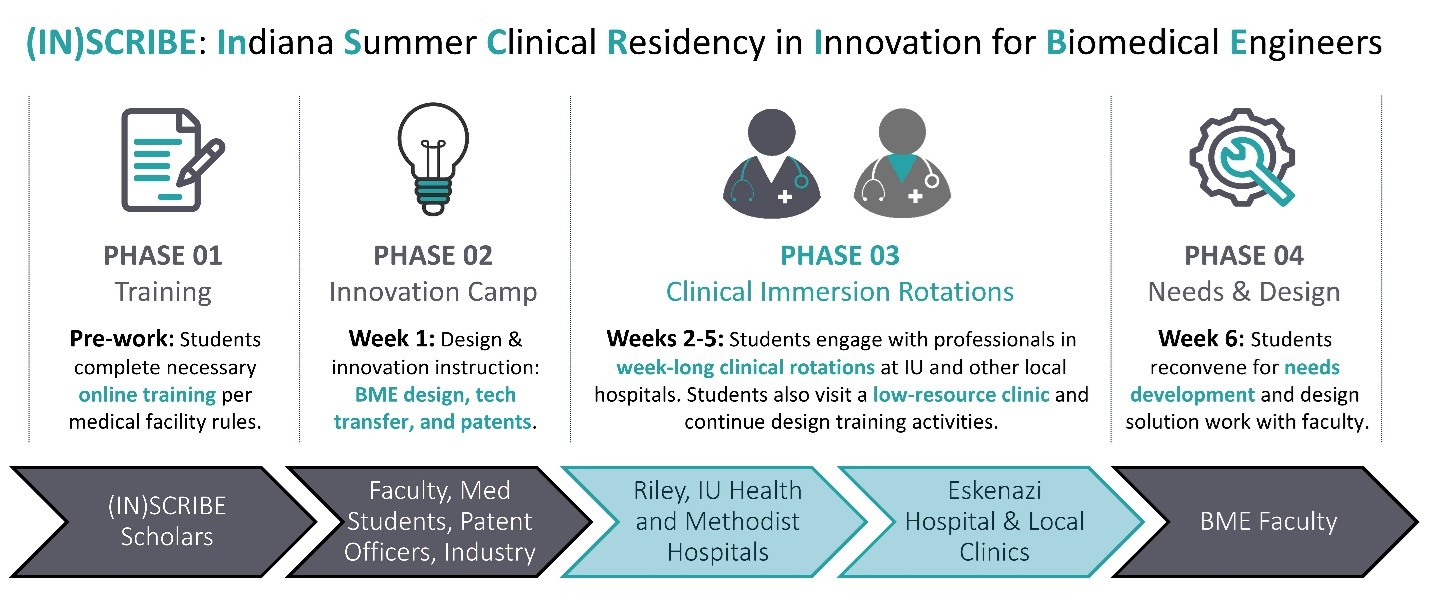
Working in teams of three, the 12 students shadowed healthcare professionals in a variety of specialties, observing clinical workflows and patient care environments. After identifying a challenge, each team had just three days to define the need, research the market opportunity, evaluate regulatory considerations and develop a potential solution.
"The goal is not simply to build a device," said Steve Higbee, Director for BME programs in Indianapolis and Associate Professor of Biomedical Engineering. "Students learn how innovation begins by understanding the people, processes and healthcare systems involved."
The four student teams addressed challenges ranging from accessibility to surgical efficiency:
- A stethoscope solution designed to improve usability for physicians with hearing impairments, reducing disruptions caused by removing and replacing hearing aids during patient examinations.
- A medication-delivery patch concept aimed at improving treatment adherence and quality of life for teenagers undergoing kidney transplant care.
- An infection-prevention solution for patients performing peritoneal dialysis at home, where reducing contamination risks remains a significant challenge.
- A reusable hernia mesh deployment device intended to simplify one of the most difficult steps in robotic hernia repair procedures.
In addition to developing concepts, students conducted market analyses to evaluate the size and impact of the healthcare need and researched U.S. Food and Drug Administration requirements that would influence eventual device development and translation.
For many participants, the opportunity to observe specialists in action was among the highlights of the experience, with neurosurgery emerging as a favorite clinical area.
The (IN)SCRIBE Program was created to help prepare the next generation of biomedical engineers by connecting classroom learning with real-world healthcare challenges. Through clinical immersion and hands-on design experiences, students gain a deeper understanding of how engineering innovation can improve patient care and address pressing healthcare needs throughout Indiana and beyond.
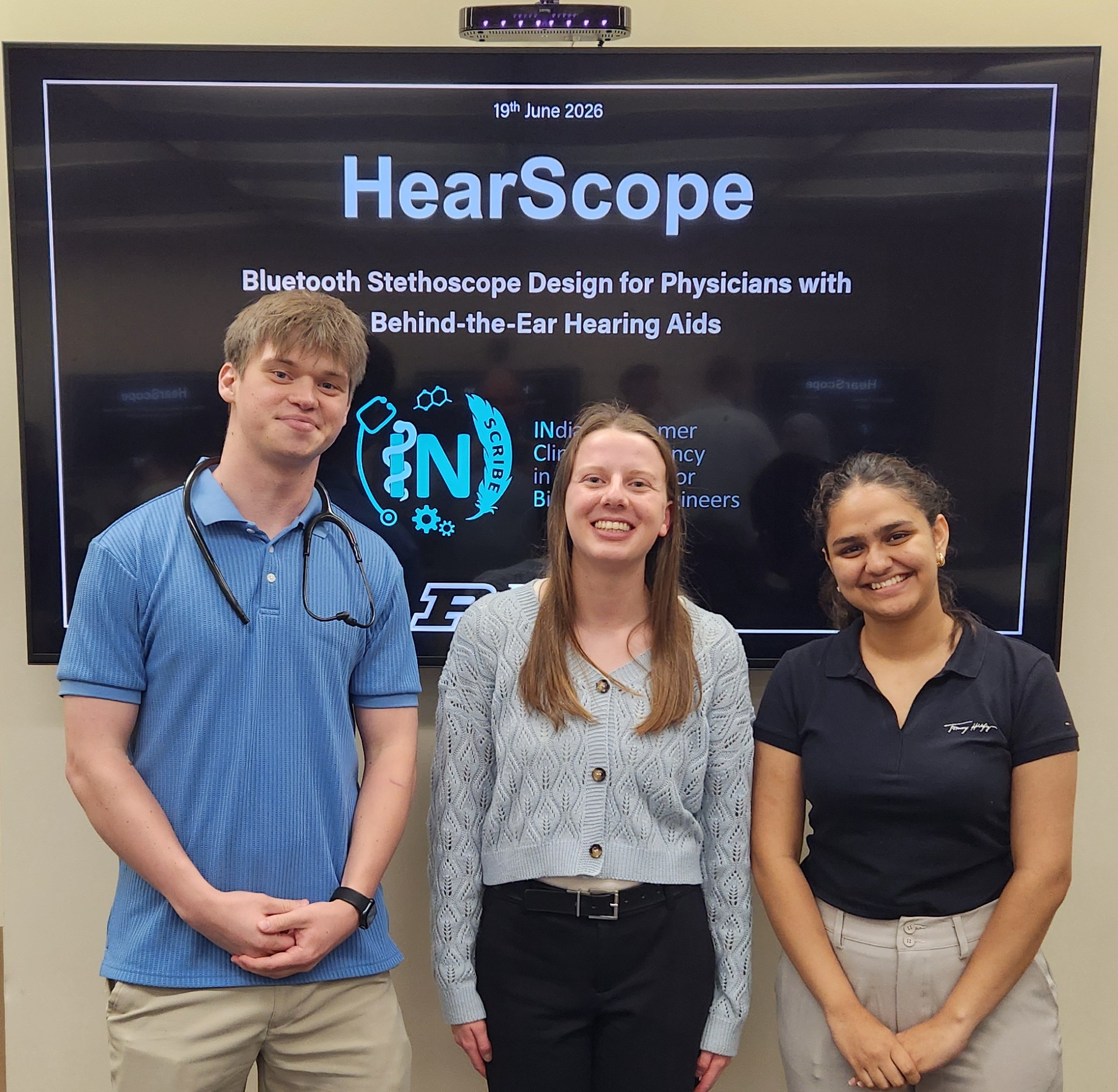
HearScope Team: Charlotte Rosenbaum, Pranavi Kumari and Andrew Rolofson looked at a stethoscope solution designed to improve usability for physicians with hearing impairments, reducing disruptions caused by removing and replacing hearing aids during patient examinations.
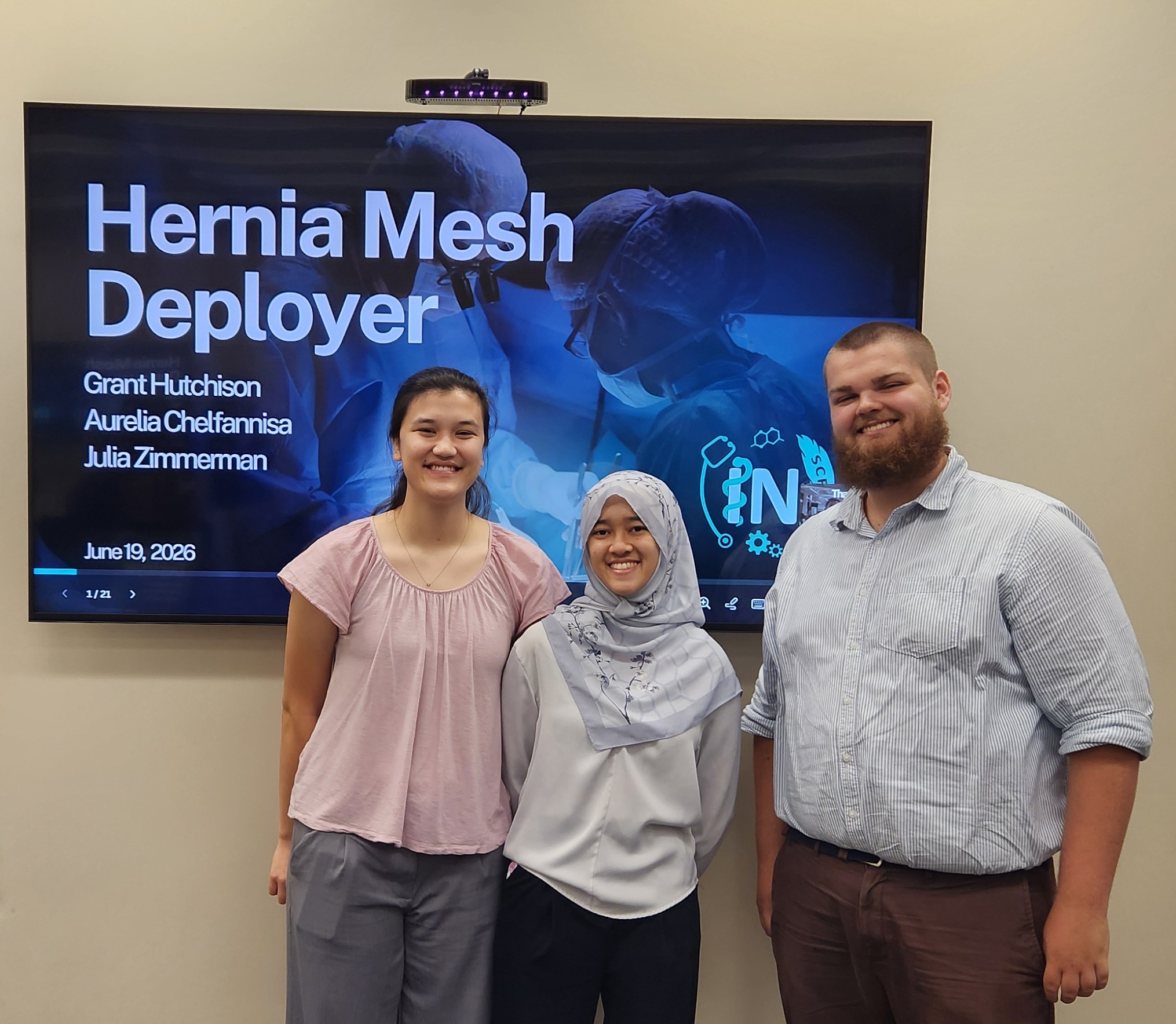
HerniaMesh Deployer Team: Julia Zimmerman, Aurelia Chelfannisa and Grant Hutchinson looked at a reusable hernia mesh deployment device intended to simplify one of the most difficult steps in robotic hernia repair procedures.
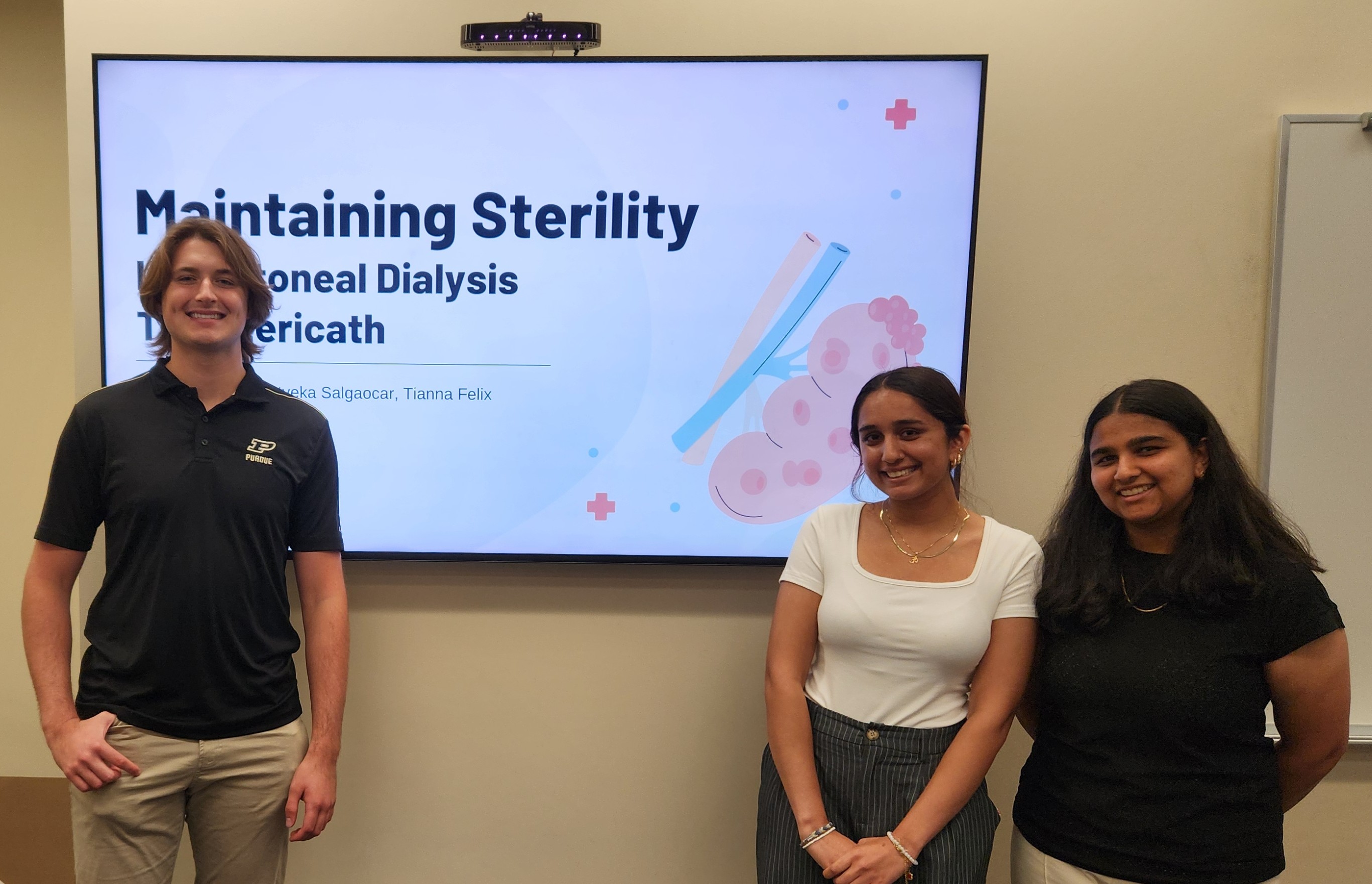
Maintaining Sterility Team: Tianna Felix, Nicholas Baltz and Satvela Salgocar looked at an infection-prevention solution for patients performing peritoneal dialysis at home, where reducing contamination risks remains a significant challenge.
TracPod of the Kidney Team: Sachenka Angel Aranguena, Ahana Roy and Joyoti Saha looked at a medication-delivery patch concept aimed at improving treatment adherence and quality of life for teenagers undergoing kidney transplant care.