
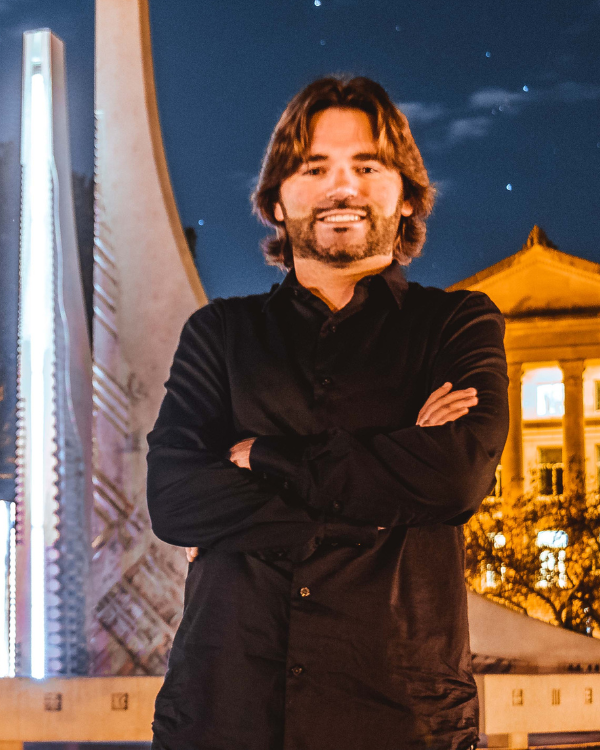
"As someone who initially struggled when I set out to become an engineer, being selected for something like this was furthest from my mind. I am forever grateful for the growth and learning from my time at Purdue, and how that shaped my approach to challenges during my career at SpaceX.”
Through his time at SpaceX, Trip Harriss oversaw launch, payload, and recovery operations, regulatory overhaul, and software development. This work spanned Vandenberg and Cape Canaveral, the world’s two busiest spaceports, and most recently involved heavy coordination with NASA, the Department of War, and the FAA to maintain the regulatory and logistical framework required for SpaceX’s high-cadence mission schedule.
Harriss' nearly two-decade career at SpaceX spanned launch preparation, transport, inspection, refurbishment, refueling, and relaunch operations. His contributions directly impacted launch cadence, increasing the launch rate from single-digit to triple-digits per year.
Harriss was also involved in building major facilities at Cape Canaveral and Kennedy Space Center to support these operations. One of these structures, nearly the size of NASA’s Vehicle Assembly Building from the Apollo program, is designed to house multiple Starships at a time.
He also contributed to SpaceX’s early launch systems by developing ground control software for Falcon 1 and leading the ground software team for the first Falcon 9 missions.
Harriss also spent several years supporting launch operations from the Kwajalein Atoll and later managed Falcon recovery and fleet operations. In that role, he negotiated approval for booster landings at Cape Canaveral, directed build-out and activation of Landing Zone 1, and led recovery teams during the company’s early booster re-use achievements. His career reflects broad experience across launch operations, software development, fleet management, and the integration of new systems to support SpaceX’s evolving mission architectures.