by Sang Ho Yoon | Oct 16, 2016 | 2016, Embedded Input, Fabrication, HUMAN SHAPE INTERACTION, Karthik Ramani, Ke Huo, Mid-air Interaction, Recent Publications, Sang Ho Yoon, TANGIBLE, EMBEDDED & EMBODIED INTERFACES, Tangibles, Yunbo Zhang
We present TRing, a finger-worn input device which provides instant and customizable interactions. TRing offers a novel method for making plain objects interactive using an embedded magnet and a finger-worn device. With a particle filter integrated magnetic sensing...
by Convergence Design Lab Admin | Aug 29, 2016 | 2016, Design Collaboration, Design Learn, DESIGN METHOD, Design Representation, Publications, Senthil Chandrasegaran, Tarun George
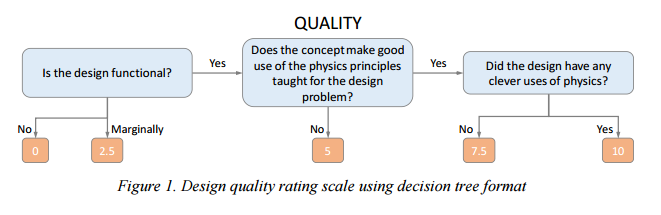
In this study, we structured a toy design workshop to provide hands on and engaging design activities for middle school students, to help them develop self-efficacy beliefs in design, model and scaffold engineering design mindsets, and apply design concepts in...
by Convergence Design Lab Admin | Aug 19, 2016 | 2016, Ayan Sinha, Recent Publications, Shape Understanding, Spatial Analytics
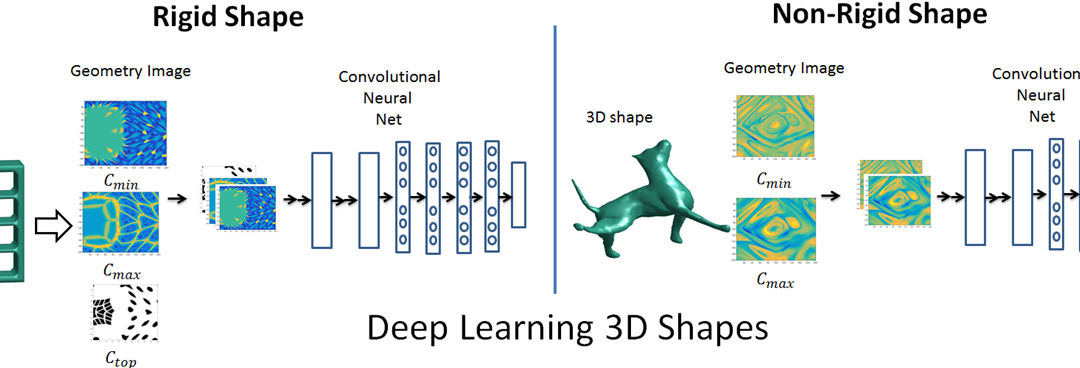
Surfaces serve as a natural parametrization to 3D shapes. Learning surfaces using convolutional neural networks (CNNs) is a challenging task. Current paradigms to tackle this challenge are to either adapt the convolutional filters to operate on surfaces, learn...
by cecil | Aug 6, 2016 | 2016, Cecil Piya, Design Representation, Karthik Ramani, Multi-touch Interaction, Recent Publications
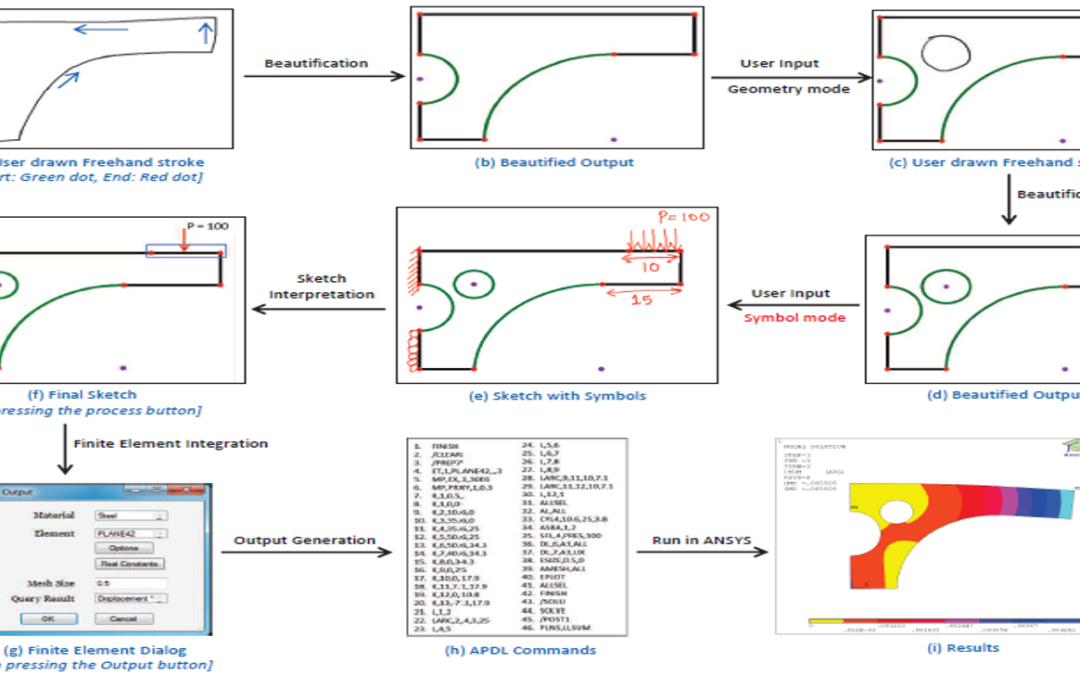
Freehand sketching is an integral part of early design process. Recent years have seen an increased interest in supporting sketching in computer-based design systems. In this paper, we present finite element analysis made easy (FEAsy), a naturalistic environment for...
by cecil | Jul 20, 2016 | 2016, Cecil Piya, HUMAN SHAPE INTERACTION, Karthik Ramani, Mid-air Interaction, Multi-touch Interaction, Recent Publications, TANGIBLE, EMBEDDED & EMBODIED INTERFACES, Vinayak
We explore tangible 3D interactions that allow for geometric and perceptual correspondence between a midair modality and the 3D elements it controls. To demonstrate our approach, we use a concrete application scenario through Proto-TAI++, a multimodal system using...