
How Industrial Engineers Strengthen Supply Chains
Discover how industrial engineers use data, analytics, artificial intelligence, and optimization to keep products moving, reduce disruptions, and build more resilient supply chains.
What Do Industrial Engineers Do in Supply Chain Management?
Industrial engineers may help:
- Forecast customer demand
- Optimize transportation networks
- Improve warehouse operations
- Design resilient supply chains
- Reduce inventory costs
- Improve manufacturing logistics
- Analyze global trade risks
- Apply AI to supply chain decision making
Why Supply Chains Need Industrial Engineers
Industrial engineers help organizations answer:
-
How can disruptions be predicted before they happen?
-
Where are the biggest risks in the supply chain?
-
How much inventory should be maintained?
-
How can products move more efficiently?
-
Which suppliers provide the greatest resilience?
-
How can artificial intelligence improve forecasting?
By combining engineering, data science, optimization, and operations research, industrial engineers help organizations make smarter decisions in an increasingly uncertain world.
Supply Chains in the Real World
Industrial engineers make a major difference across a wide variety of areas.
Global Logistics
Coordinate products across international transportation networks.
Warehousing & Distribution
Improve fulfillment, automation, and inventory management.
Retail & E-Commerce
Help companies deliver products faster while reducing costs.
Manufacturing
Synchronize production with suppliers and customer demand.
Disaster Response
Ensure critical medical supplies, food, and emergency resources reach communities quickly during crises.
Artificial Intelligence
Use machine learning and predictive analytics to forecast demand, detect risks, and optimize decision making.
Whether delivering life-saving medical supplies, improving online shopping experiences, or helping manufacturers recover from disruptions, industrial engineers play a critical role in keeping the global economy moving.
Advancing Smarter, More Resilient Supply Chains
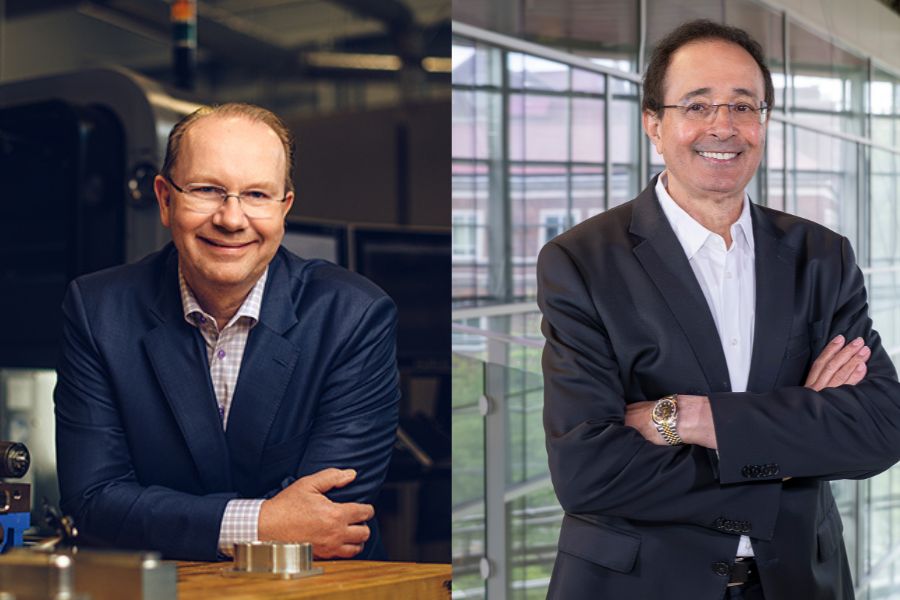
David Simchi-Levi is one of the world's leading experts in supply chain management and operations research. As director of Purdue's Data Science Center for Decision Making, his research explores how organizations can use artificial intelligence, advanced analytics, and optimization to improve decision-making across complex supply chains.
Stephan Biller leads research focused on helping organizations measure and improve supply chain resilience. His work on the Supply Chain Resiliency Index provides organizations with tools to better understand vulnerabilities, benchmark performance, and prepare for future disruptions before they become costly crises.
Together, these efforts demonstrate how Purdue Industrial Engineering is helping shape the future of global supply chain management through research that directly impacts industry.
Highlights
-
Artificial intelligence for supply chain optimization
-
Data Science Center for Decision Making
-
Supply Chain Resiliency Index
-
Operations research and optimization
-
Predictive analytics
-
Decision science
-
Logistics and transportation systems
Your Path to Purdue Industrial Engineering
Interested in solving some of the world's most complex logistics and supply chain challenges? Purdue Industrial Engineering offers two distinct pathways to earn the same nationally recognized Purdue IE degree..
West Lafayette
Experience the traditional residential Purdue campus with access to world-class research, student organizations, laboratories, and the complete undergraduate experience.
Indianapolis
Begin your Purdue Industrial Engineering degree in Indianapolis with close industry connections and hands-on experiences before completing your degree in West Lafayette.