
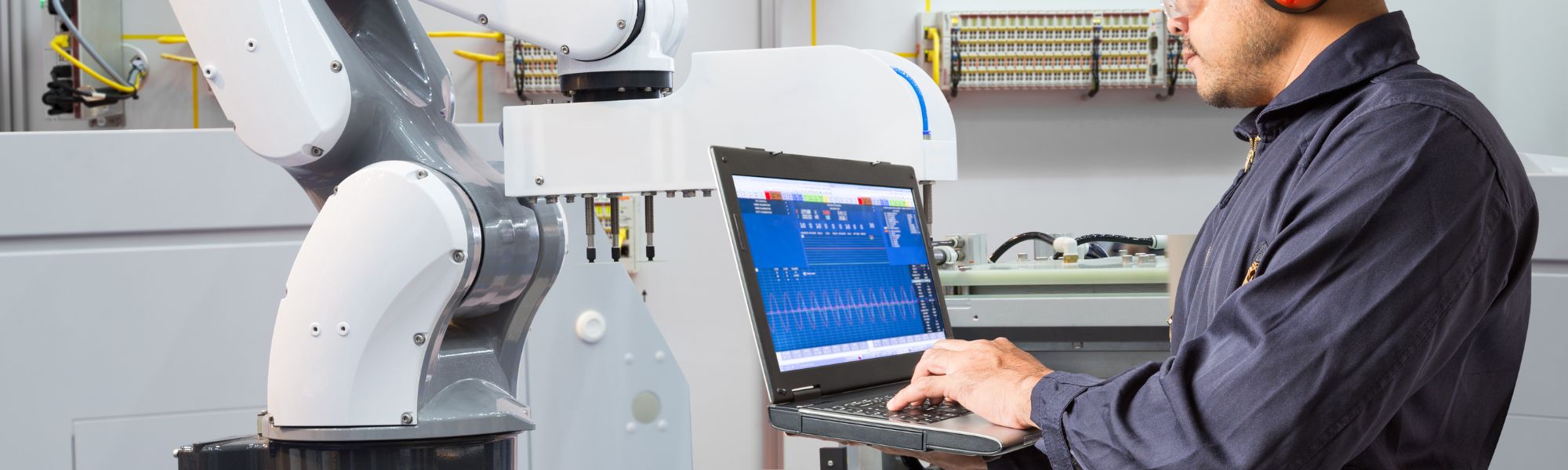
How Industrial Engineers Impact Manufacturing
Discover how industrial engineers use automation, robotics, AI, digital twins, and data to design smarter factories, improve quality, and make manufacturing more efficient and resilient.
Every day, manufacturers make thousands of decisions that affect production performance and product quality. Industrial engineers help make those decisions smarter by improving the systems behind manufacturing. From optimizing production lines and reducing waste to designing automation systems and applying artificial intelligence, industrial engineers help manufacturers deliver safer, faster, and more efficient production.
What Do Industrial Engineers Do in Manufacturing?
Industrial engineers help manufacturers improve the systems that support production and product development. Rather than building individual products themselves, they design better processes, improve workflows, analyze data, and help manufacturing teams produce higher-quality products more efficiently.
At Purdue, industrial engineering students learn how to improve manufacturing systems using optimization, simulation, artificial intelligence, robotics, data analytics, and human-centered design.
Industrial engineers may help:
- Reduce production delays and manufacturing bottlenecks
- Improve production scheduling and resource planning
- Optimize manufacturing workflows and material flow
- Design safer and more efficient manufacturing processes
- Improve workforce planning and production staffing
- Analyze manufacturing and quality data
- Develop industrial automation and robotics systems
- Support AI-assisted production and decision-making
Why Manufacturing Needs Industrial Engineers
Industrial engineers ask:
- How can products be manufactured more quickly?
- How can manufacturers improve product quality and safety?
- Where are production delays and inefficiencies occurring?
- How should workers, machines, and technology work together?
- Can artificial intelligence help manufacturers make better decisions?
- How can manufacturers produce more with limited resources?
By improving the systems surrounding manufacturing, industrial engineers help production teams focus on what matters most—creating high-quality products efficiently and reliably.
Manufacturing and Industrial Engineering in the Real World
Industrial engineers are working in a number of areas to improve manufacturing efficiency, product quality, and production outcomes.
Production Operations
Improve manufacturing flow, reduce production delays, and optimize workforce and equipment utilization.
Industrial Automation & Robotics
Support automated manufacturing systems through robotics, human factors, workflow design, and data analysis.
Artificial Intelligence
Use AI to improve quality control, predictive maintenance, scheduling, and operational decision-making.
Manufacturing Analytics
Analyze production and quality data to improve efficiency, reliability, and product outcomes.
Advanced Manufacturing Technologies
Design safer and more effective systems around automation, additive manufacturing, and smart factory technologies.
Quality & Process Improvement
Develop systems that improve product quality, reduce waste, and increase manufacturing performance.
Whether the goal is building safer workplaces, improving product quality, reducing waste, or developing the next generation of intelligent manufacturing systems, industrial engineers play a critical role in turning emerging technologies into practical solutions.
Your Path to Purdue Industrial Engineering
Interested in improving healthcare through engineering? Purdue Industrial Engineering offers two distinct pathways to earn the same nationally recognized Purdue IE degree.
West Lafayette
Experience the traditional residential Purdue campus with access to world-class research, student organizations, laboratories, and the complete undergraduate experience.
Indianapolis
Begin your Purdue Industrial Engineering degree in Indianapolis with close industry connections and hands-on experiences before completing your degree in West Lafayette.