
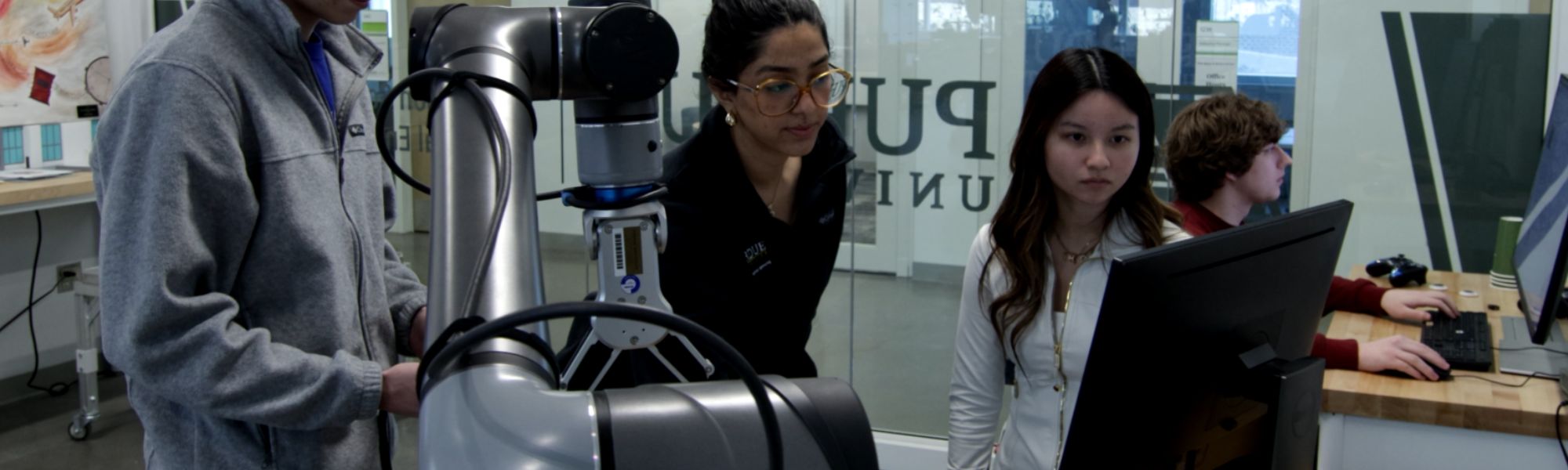
How Industrial Engineers Use Artificial Intelligence & Robotics
Discover how industrial engineers use artificial intelligence, machine learning, robotics, and data to solve complex real-world problems.
Industrial engineers use artificial intelligence, machine learning, robotics, and data analytics to improve complex systems. In AI and robotics, industrial engineering connects technology with people, processes, safety, efficiency, and real-world decision-making.
What Do Industrial Engineers Do in AI and Robotics?
Artificial intelligence and robotics are transforming nearly every industry—but these technologies are only as effective as the systems in which they operate. That is where industrial engineers make a difference.
Industrial engineers do not just build robots or develop AI algorithms. They design the larger systems that allow people, technology, data, and processes to work together efficiently and safely. Whether it is a robot on a factory floor, an AI-powered healthcare tool, or an autonomous delivery vehicle, industrial engineers focus on making technology solve real-world problems.
At Purdue, industrial engineering students learn how to apply artificial intelligence, machine learning, robotics, optimization, and data analytics to improve complex systems.
Industrial engineers may help:
- Train AI models using real-world data
- Optimize robotic workflows and automated processes
- Improve interaction between people and robots
- Design safer and more reliable automated systems
- Use machine learning to predict failures and improve quality
Why AI and Robotics Need Industrial Engineers
Artificial intelligence and robotics do not succeed because of technology alone. They succeed when they are thoughtfully integrated into the systems people use every day.
Industrial engineers take a systems-level approach. They look beyond an individual robot, algorithm, or piece of software and consider how the entire operation will function.
Industrial engineers ask:
- Will this technology actually improve the process?
- How should people interact with it?
- Is it safe, reliable, and efficient?
- What data is needed to make informed decisions?
- How should success be measured?
By combining engineering, data science, operations research, optimization, and human-centered design, industrial engineers help organizations implement AI and robotics in ways that create meaningful improvements—not simply impressive technology.
AI and Robotics in the Real World
Artificial intelligence and robotics are already changing the way we live and work, and industrial engineers are helping shape that future across a wide range of industries.
Advanced Manufacturing
Robots assemble products, inspect quality, and collaborate safely alongside human workers.
Healthcare
AI can improve patient scheduling, operating-room efficiency, robotic-assisted surgery, and clinical decision-making.
Warehousing and Logistics
Autonomous robots and intelligent software move products, manage inventory, and improve fulfillment.
Transportation
AI supports route planning, autonomous vehicles, delivery systems, and more efficient transportation networks.
Predictive Maintenance
Machine learning helps identify potential equipment failures before they interrupt operations.
Human-Robot Collaboration
Industrial engineers design safer, more intuitive ways for people and intelligent machines to work together.
Whether the goal is building safer workplaces, improving patient care, reducing waste, or developing the next generation of intelligent systems, industrial engineers play a critical role in turning emerging technologies into practical solutions.
Your Path to Purdue Industrial Engineering
Interested in applying artificial intelligence and robotics to solve real-world challenges? Purdue Industrial Engineering offers two distinct pathways to earn the same nationally recognized Purdue IE degree.
West Lafayette
Experience the traditional residential Purdue campus with access to world-class research, student organizations, laboratories, and the complete undergraduate experience.
Indianapolis
Begin your Purdue Industrial Engineering degree in Indianapolis with close industry connections and hands-on experiences before completing your degree in West Lafayette.