You’re pinned under the rubble of a collapsed building. Hundreds of roaches scuttle toward you, but you’re unable to move. You can only watch as a great brown swarm closes in. But there’s something different about this approaching army of bugs. Each one hefts a coin-size sensor that’s glued to its back. The troop of roaches has been sent to rescue you.
Researchers have demonstrated a method for "temporal cloaking" of optical communications, representing a potential tool to thwart would-be eavesdroppers and improve security for telecommunications.
Purdue University and The Jackson Laboratory have created a new bioengineering facility and will hold a joint symposium to discuss the latest research in areas from implantable medical devices to the genetics behind human diseases.
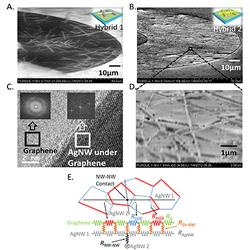
Researchers have created a new type of transparent electrode that might find uses in solar cells, flexible displays for computers and consumer electronics and future "optoelectronic" circuits for sensors and information processing.
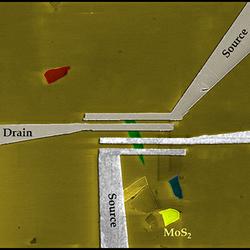
Researchers are developing a new type of semiconductor technology for future computers and electronics based on "two-dimensional nanocrystals" layered in sheets less than a nanometer thick that could replace today's transistors.
Engineers have created a tiny motorized positioning device that is claimed to have twice the dexterity of similar devices being developed for applications that include biological sensors and more compact, powerful computer hard drives.
According to the United States Department of Energy, the amount of solar energy that hits the surface of the earth every hour is greater than the total amount of energy that the entire human population requires in a year.