More than anything, I believe the spring semester represents new beginnings. With it, comes the new year, new classes, and — for our soon-to-be graduates — the beginning of their careers.
A Purdue-connected startup is leveraging AI to help public works departments across multiple Indiana cities automate road condition assessments and maintain local road infrastructure.
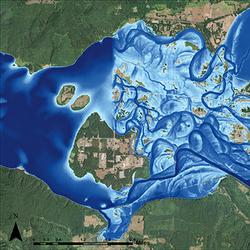
Aging dams in the U.S. pose a significant risk, with more than 16,000 labeled a high hazard. Researchers with the NSF-funded Institute for Geospatial Understanding through an Integrative Discovery Environment (I-GUIDE) initiative use advanced modeling to help communities prepare for rare but catastrophic dam failures.
A typical morning hair care routine can expose you to as much immediate nanoparticle pollution as standing in dense highway traffic, report Purdue engineers.
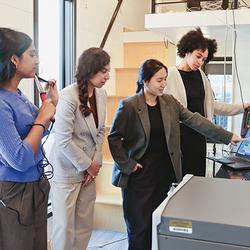
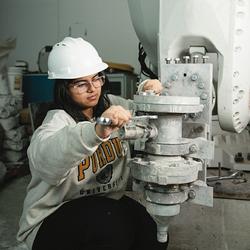
When Riya Raj (BSCE ’25) talks about how much she’s learned about research at Purdue, her enthusiasm is unmistakable. Her curiosity led her to an undergraduate research position with a group exploring whether structural materials can be 3D-printed underwater.
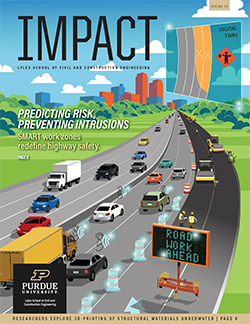
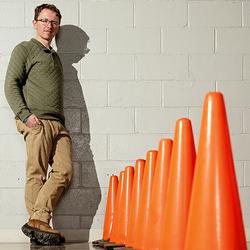
Highway work zones are among the most dangerous places to work in the country. An interdisciplinary research team co-led by Sogand Hasanzadeh, assistant professor of civil and construction engineering, is working to change that.
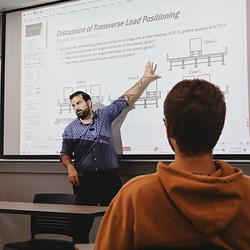
In response to increasing industry demands, the Lyles School of Civil and Construction Engineering is introducing new courses, seminars and — in the future — a concentration to address the United States’ bridge infrastructure workforce gap.