Abstract:
The rising global demand for energy underscores the importance of advancing nuclear energy efficiency. Achieving this goal requires structural materials capable of withstanding increasingly
extreme operating conditions in next-generation reactors, including elevated temperatures and chemically aggressive environments. Such conditions accelerate degradation processes,
threatening material reliability and long-term performance. Addressing these challenges demands not only the development of advanced materials, but also a mechanistic understanding of their behavior under extremes.
Using examples from our recent research, I present strategies for understanding and mitigating degradation in advanced materials for nuclear applications. First, I focus on silicon carbide (SiC), a leading candidate for nuclear structural applications, and examine its corrosion behavior under aggressive environments. By integrating atomistic modeling with advanced experimental techniques, we probe the relationships between microstructure, microchemistry, corrosion, and radiation response. I highlight approaches for designing SiC with enhanced corrosion resistance and examine the synergistic effects of radiation and corrosion on its performance. In addition, I discuss how coolant chemistry control can be leveraged to further improve corrosion resistance. As a second example, I discuss the development of compositionally complex ceramics for nuclear applications. Our recent findings reveal how chemical complexity influences defect formation and organization, providing new opportunities to tailor defect structures and improve material performance under extreme environments.
These examples demonstrate the critical role of modeling in developing mechanistic insights into degradation and defect behavior. Such understanding provides a foundation for the rational design of durable nuclear materials and supports the deployment of advanced nuclear technologies.
Bio:
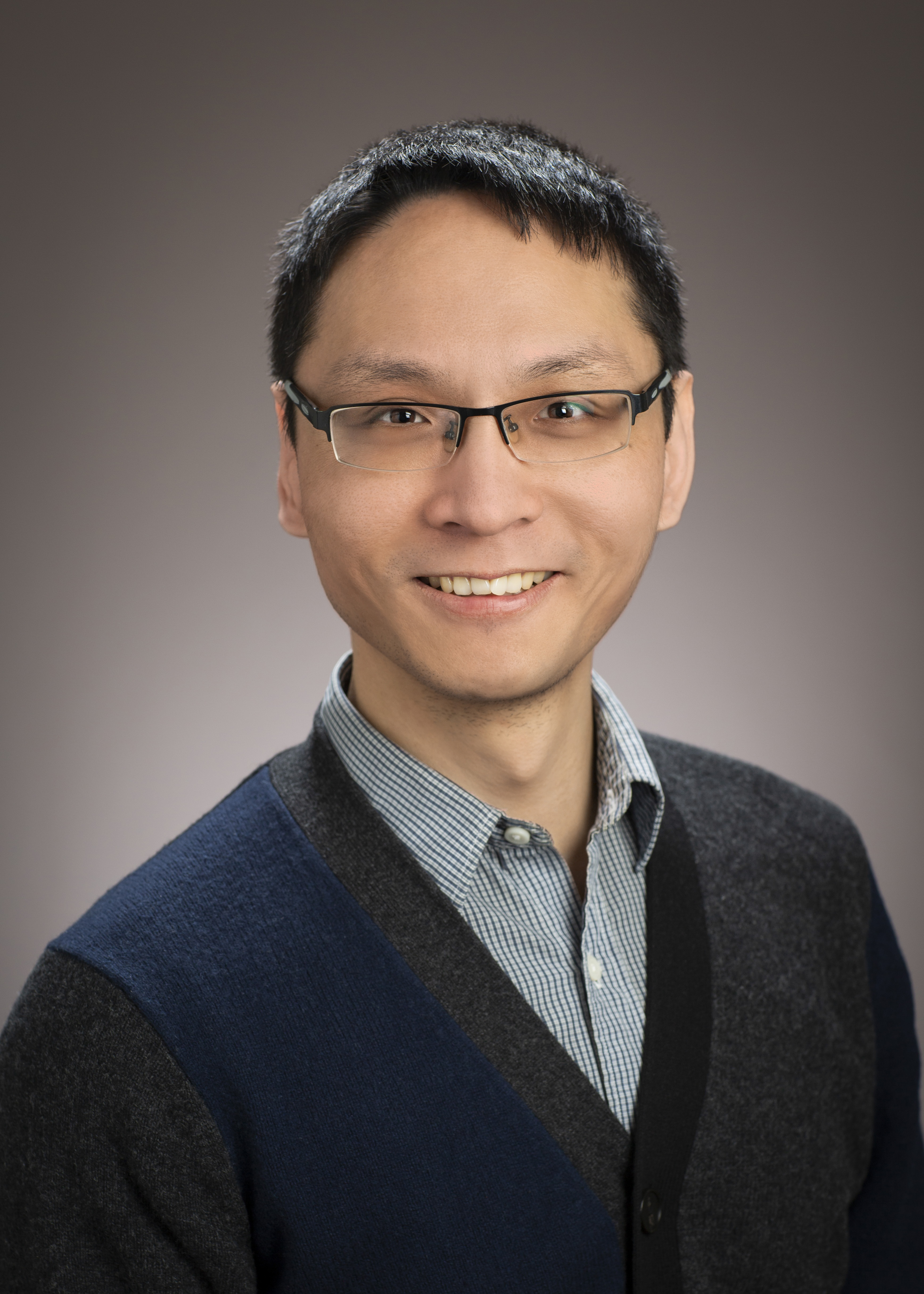
Dr. Jianqi Xi is an assistant professor in NPRE and the director of the MNM group at UIUC. Before moving to UIUC, Dr. Xi was a scientist of Digital FIB group in Thermo Fisher Scientific Inc. Dr. Xi earned his Ph.D. from the University of Tennessee in 2017, advised by Prof. William J. Weber on the modification of functionality in nuclear materials. Then, he moved to Izabela Szlufarska’s group at the University of Wisconsin-Madison and worked as staff scientist to study the coupling effects of radiation and corrosion on the stability of nuclear materials. Dr. Xi is especially interested in applying integrated multiscale models and experimental techniques to the study of radiation & corrosion degradation of nuclear materials, as well as in employing machine learning approaches to design materials for extreme applications.