
From the Cradle of Astronauts to "Mars"
Saranya Ravva brings structural health monitoring research to the Mars Desert Research Station
Saranya Ravva came to Purdue University with a clear goal in mind: to become an astronaut.
“Purdue has always been my dream school,” she says. “It’s known as the ‘Cradle of Astronauts,’ and that legacy really inspired me.”
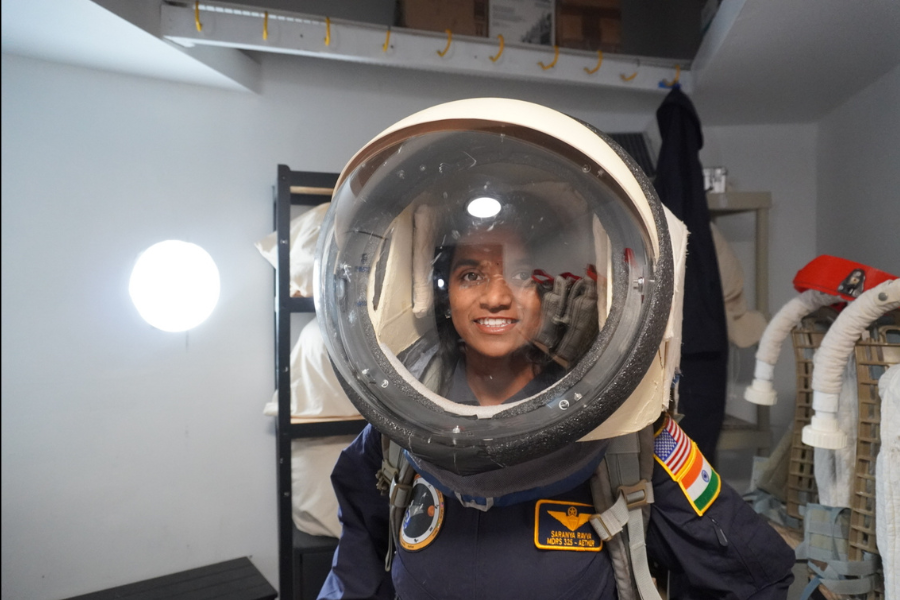
Now a Ph.D. student at the School of Aeronautics and Astronautics, Saranya recently stepped into one of the most immersive spaceflight simulations available on Earth, the Mars Desert Research Station (MDRS) in Hanksville, Utah. As a member of Crew 325, she spent nearly two weeks living and working in a simulated Martian environment, conducting research under operational constraints that mirror future human missions to Mars.
Engineering for Failure Before It Happens
Ravva’s path to MDRS began long before she suited up for her first extravehicular activity.
During her undergraduate degree in mechanical engineering, she became fascinated with mechanics of materials.
“I was curious about questions like: Why does a structure fail? What happens inside a material when it’s loaded?” she says.
That curiosity led her to specialize in structures and materials at Purdue and ultimately into nondestructive evaluation (NDE) and structural health monitoring (SHM).
“In aerospace, failure isn’t just inconvenient; it can be catastrophic,” Ravva explains. “Instead of waiting for something to break, can we detect damage early? Can we monitor a system continuously and understand its condition in real time?”
Her research focuses on developing inverse methods that reconstruct mechanical states from electrical measurements using self-sensing piezoresistive materials. The long-term goal: aerospace systems that are safer, more reliable and more intelligent.
Living the Mission at MDRS
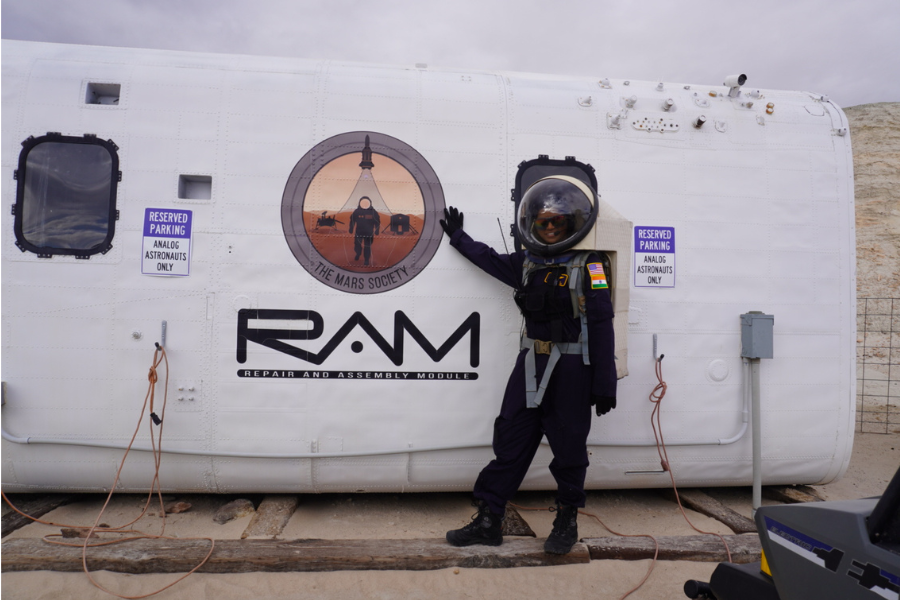
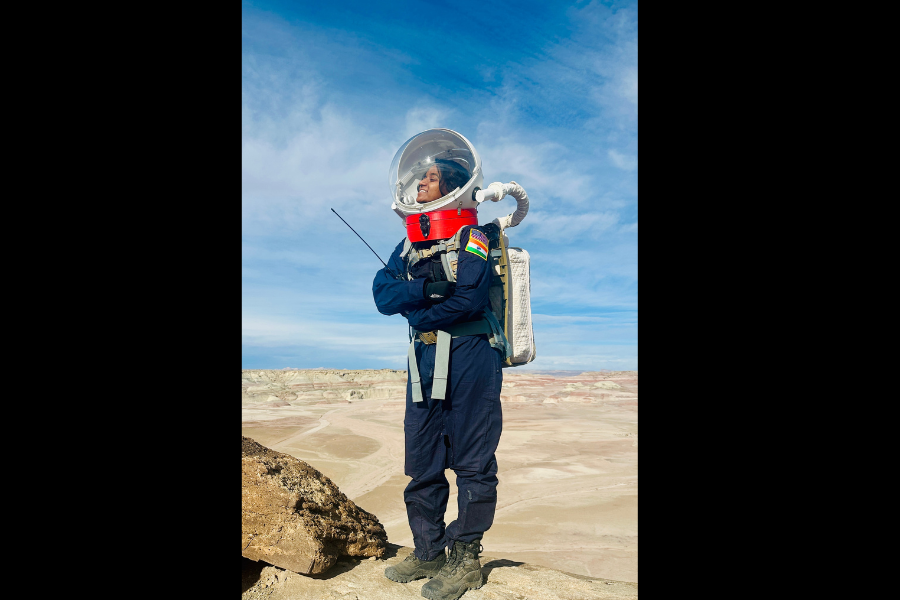
The Mars Desert Research Station, operated by the Mars Society, is one of the few facilities in the world that allows researchers to simulate life on another planet. Crews live inside a cylindrical habitat known as “the Hab,” follow strict operational procedures and conduct research during EVAs in full simulated space suits.
For Ravva, MDRS offered something no lab could.
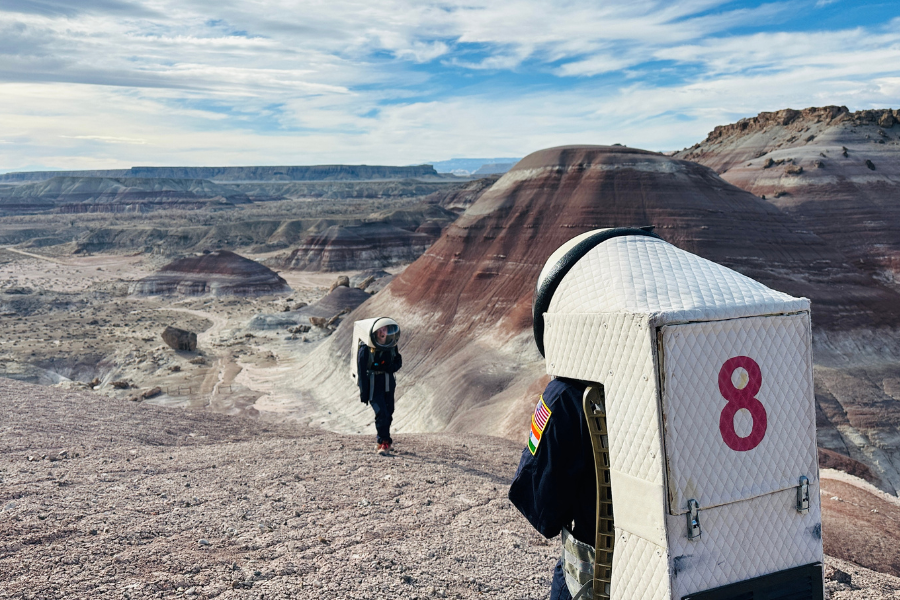
“I wanted to understand what it actually feels like to live and work inside a space habitat,” she says. “Not just the research, but the discipline, teamwork and adaptability required in a mission setting.”
Unlike a traditional campus lab, researchers at MDRS also live at the site full-time. Crew members cook, clean, maintain equipment and submit mission reports from the hab, using only the limited and restricted Internet access that you’d expect 140 million miles away from Earth.
“If something breaks, you fix it with what’s available,” she says. “That environment forces you to think practically and prioritize what truly matters.”
Engineering for Life Beyond Earth
While serving as Crew Journalist, documenting daily mission life, Ravva also conducted two research projects aligned with the needs of long-duration space missions.
Her first project was to study if special infrared cameras could help check the health of a space habitat without taking anything apart. Using handheld thermal cameras, she scanned the MDRS habitat to look for unusual heat patterns that might reveal hidden problems, such as weak insulation, small cracks, or areas where materials were joined together.
“In a Mars habitat, maintaining structural integrity and airtightness is critical,” she explains. “Even small thermal irregularities can indicate potential risks.”
Thermal imaging, she says, could serve as an early screening tool allowing astronauts to quickly scan large areas without dismantling structures or installing embedded sensors.
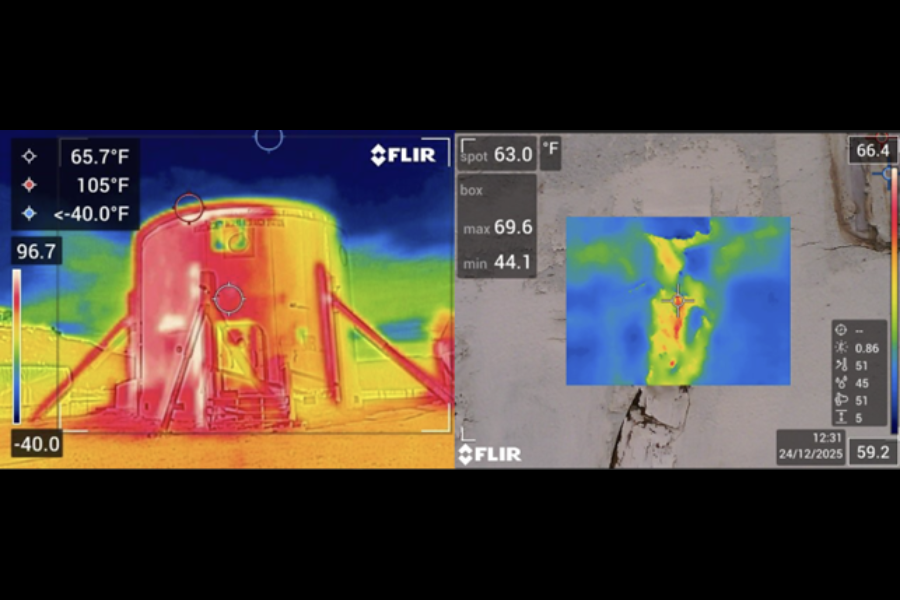
Left: Thermal image of the MDRS habitat; Right: Thermal image showing structural discontinuities on the habitat.
Growing Life in Altered Gravity
Her second project focused on simulated microgravity plant germination using a Random Positioning Machine to mimic reduced gravity conditions.
While germination rates remained similar to those in normal gravity, growth patterns shifted.
“Roots and shoots showed altered orientation and less consistent directional growth,” she says. “Even short-term exposure to altered gravity can influence early plant development.”
Understanding those changes is critical for bioregenerative life support systems, future habitats will rely on plants for food, oxygen and waste recycling.
Together, her projects addressed two fundamental requirements for long-term space habitation: structural reliability and biological sustainability.
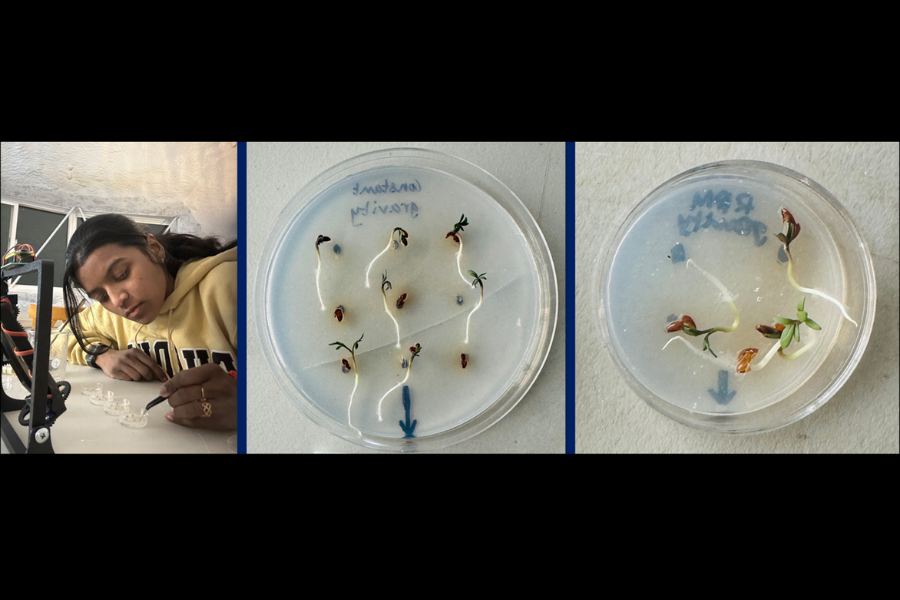
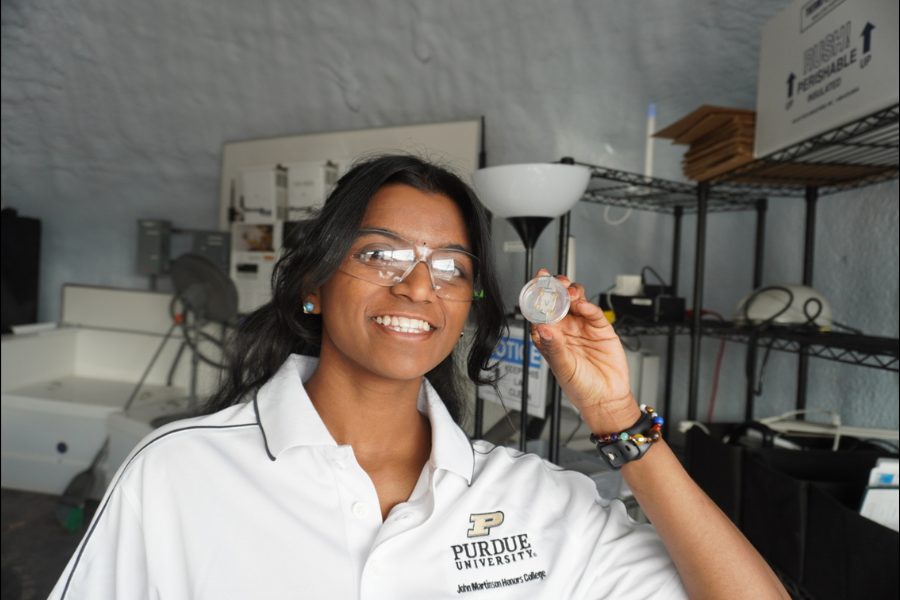
AAE student Saranya Ravva prepared Petri dishes with seeds and grew the samples in regular vertical gravity (centre) and in simulated reduced gravity.
When the Simulation Felt Real
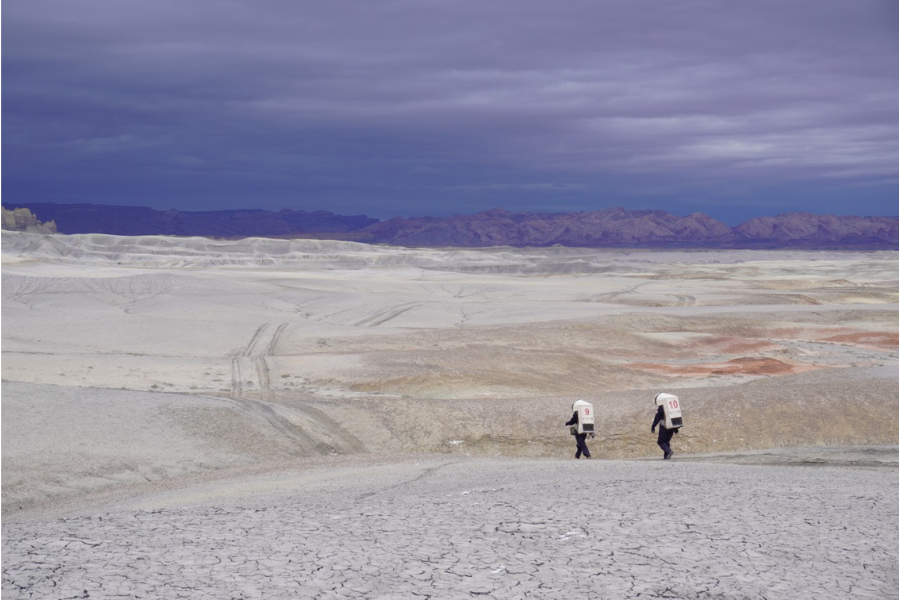
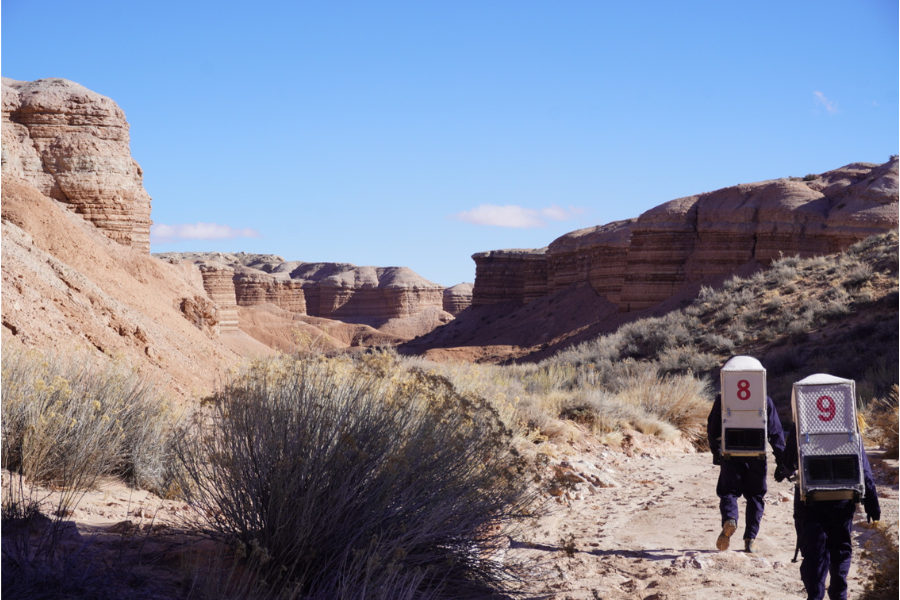
One of the most memorable moments for Ravva came during rover travel to EVA sites.
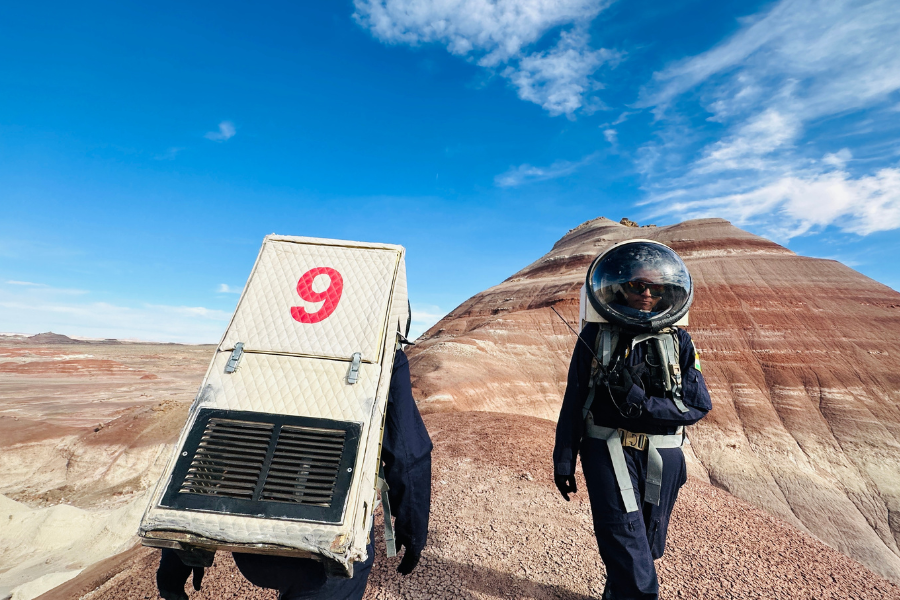
“We navigated rough terrain in full suits, communicating only through radios, with no external connectivity,” she recalls.
Battery conservation, safety kits, timing and mission objectives all had to be managed simultaneously. Climbing higher elevations in heavy suits required careful footing and constant awareness of fatigue.
“Balancing safety, teamwork and exploration made it feel very close to real space operations,” she says.
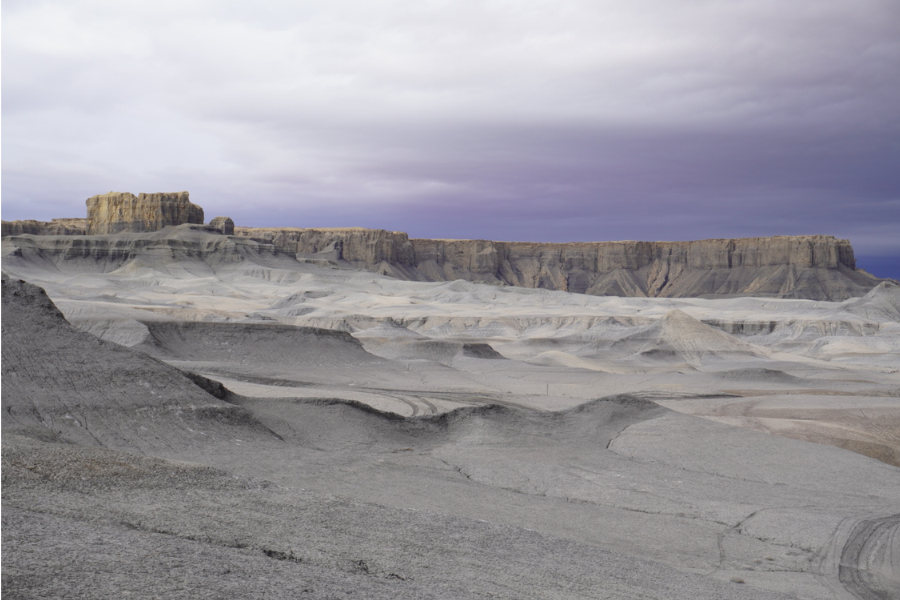
The stark landscape of Hanksville amplified the sense of realism.
“It created a powerful backdrop for the work we were doing. It felt unique and immersive in a way I hadn’t experienced before.”
Beyond Technical Training
At Purdue, Ravva is trained to think deeply within her research domain. MDRS added another layer: operations and communication.
“As a Crew Journalist, I had to explain technical work in a clear and accessible way,” she says. “It made me more intentional about how I present my research.”
The experience also reframed how she approaches engineering problems.
“It’s one thing to design a method in theory,” she says. “It’s another to ask whether it can actually be implemented in a habitat with limited tools and time.”
Purdue’s Presence on “Mars”
Purdue’s participation at MDRS is distinctive. The university has sent multiple crews to the analog facility, and in recent years has been invited to send consecutive back-to-back teams — a rare opportunity among participating institutions.
That sustained presence strengthens Purdue’s leadership in human space exploration and reflects the university’s commitment to experiential, mission-driven learning.
“For students who want to contribute to future missions to the Moon or Mars, this is an incredible opportunity,” Ravva says. “Space habitats require engineers, biologists, roboticists, communicators — many perspectives working together.”
Looking Ahead
For Ravva, the mission reinforced practical decision-making, teamwork and adaptability under constraint — skills that will shape her future in aerospace research and, she hopes, in human spaceflight.
“Space is often described as the final frontier,” she says. “There is still so much we don’t fully understand about living and working beyond Earth. That’s what makes it exciting.”
Ad Astra.