
Propulsion, Perseverance and a Path to NASA
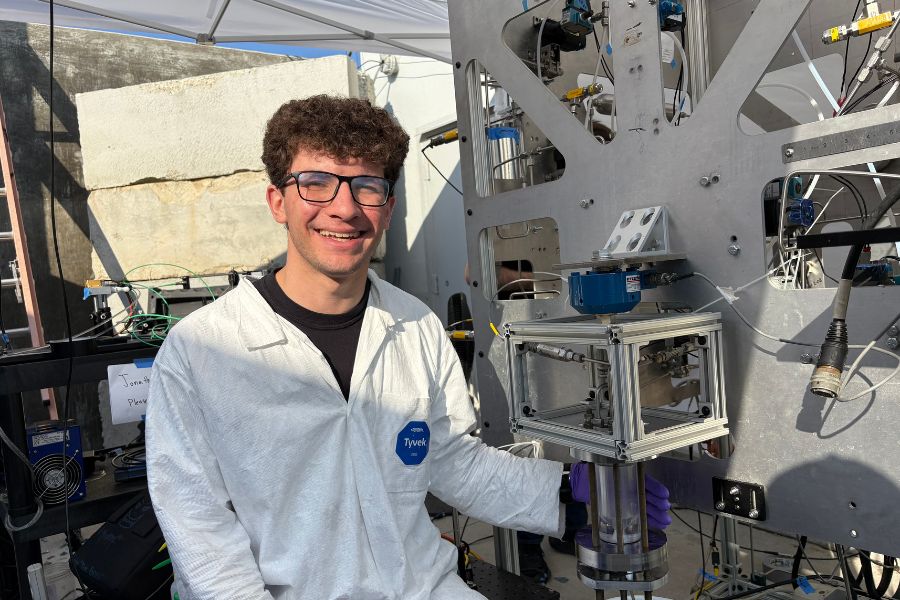
Joseph Ligresti, a graduate student in Aeronautics and Astronautics at Purdue University, has been selected as a recipient of the NASA Space Technology Graduate Research Opportunities (NSTGRO) fellowship, a highly competitive award that supports research tied to future space missions. The fellowship recognizes not just a project, but the dedication behind it.
For Ligresti, the award marks a meaningful milestone in a journey shaped by consistency, mentorship, and a willingness to take on challenging opportunities. Years of hands-on research and collaboration helped him build both confidence and clarity in his work. “This fellowship is a chance to work on research with real impact,” he says. “It’s an opportunity to contribute to something larger than myself.”
Why Propulsion? Why NASA
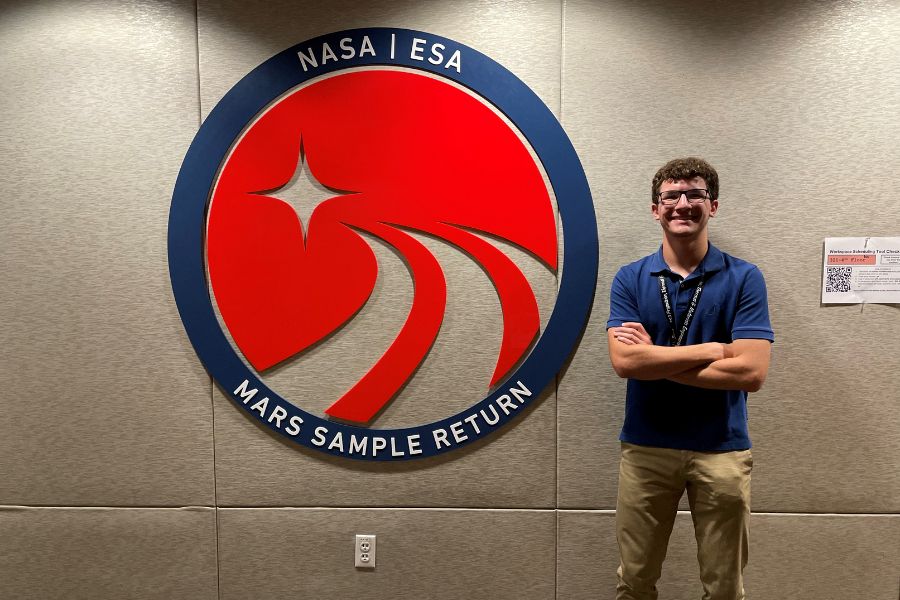
Ligresti’s focus on propulsion took shape during his time at NASA Jet Propulsion Laboratory, where he contributed to the Mars Sample Return project across four internships—working on systems whose performance would be tested far beyond Earth.
His NSTGRO-funded research focuses on hypergolic rocket fuels — propellants that combust instantly upon contact — and examines how their combustion byproducts behave under the extreme conditions of space. His project, Effects of Vacuum Conditions on Fuel-Oxidizer Reaction Product (FORP) Reactivity and Long-Term Viability of MON-25/MMH Thrusters, investigates how extended exposure to vacuum and thermal gradients influences the reactivity of combustion intermediates during long cruise phases. This is important for exploration missions to the outer solar system.
This work will be conducted at Zucrow Labs, the largest academic propulsion laboratory in the world, and directly supports NASA’s need for reliable, long-duration propulsion systems.
Ligresti credits his advisor, Professor Timothée Pourpoint, for helping shape him as a researcher and a professional. Their collaboration laid the groundwork for the winning research proposal.
Building Expertise at Purdue
Ligresti earned his bachelor’s degree in Aeronautics and Astronautics at Purdue and is currently completing his master’s in the same field, specializing in propulsion. Purdue, he says, became the place where theory turned into intuition, and ambition found direction.
What set Purdue apart was access — to advanced facilities, to faculty deeply invested in student success, and to research experiences typically reserved for much later stages of an engineering career. Early involvement in the Purdue Space Program, a chapter of SEDS, introduced Ligresti to propulsion subsystems and large-scale teamwork. Undergraduate research at Zucrow Labs gave him experience in propulsion testing and experimental analysis.
The work went beyond equations and simulations, helping him understand how propulsion systems behave under real-world conditions. That foundation would later prove invaluable in high-pressure research and internship environments.