
Daniel Dumbacher selected to be a member of the Class of 2026 AIAA Fellows
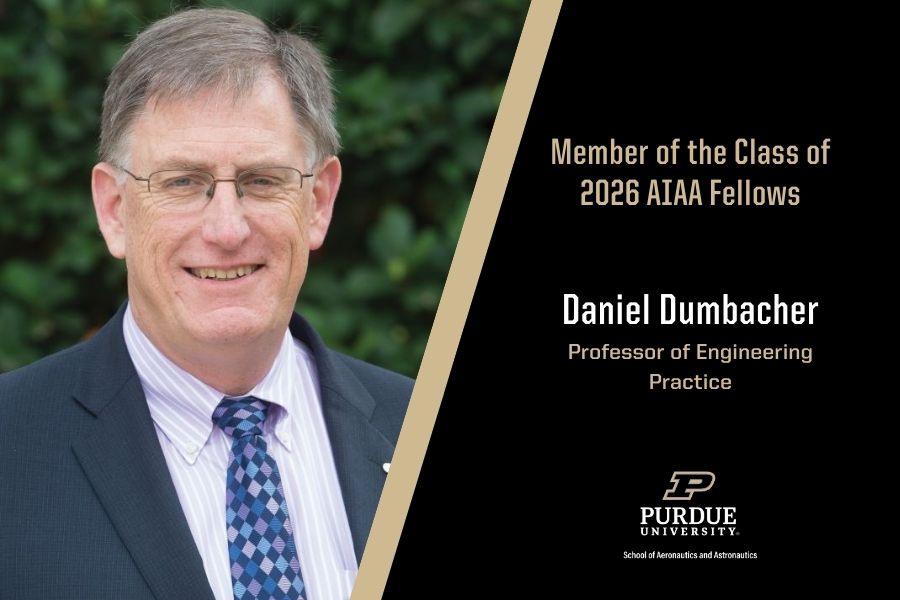
Daniel Dumbacher has distinguished himself by his contributions to the aerospace community and has earned this title based on those contributions.
He has had a distinguished career in government, industry, and academia focused on the development and deployment of complex space transportation systems, while also recently leading the members of the aerospace profession as Chief Executive Officer of AIAA.
While at NASA, Dan led an agency/industry team that transitioned the cancelled Constellation Human Spaceflight Program to the Moon/Mars to the current Artemis Program (including Space Launch System (SLS), Orion capsule and Exploration Ground Systems) from program inception to the Preliminary Design Review of SLS and Orion. Dan provided the leadership to establish and implement the hardware transition plans, while developing the overall system requirements, accomplishing the SRR/SDR/PDR processes for all of the major elements. Dan’s key and tireless leadership established the foundation for the U.S. human spaceflight program, resulting in the successful Artemis 1 mission, which demonstrated the capability that will return humans to the lunar surface on future Artemis missions.
Dan led the NASA Research Announcement evaluation efforts for selecting the X-37 for NASA thermal protection system test applications. Upon selection, the U.S. Air Force (USAF) began participation in the X-37 project. Dan took over the Project Management role when severe technical issues with the structural design were discovered that could have sidetracked the program. Dan led the team that corrected all technical issues and put the project back on track, through the initial ground taxi and landing tests, while establishing a strong partnership with the USAF. Dan provided the key leadership and was integral to ensuring a smooth transition of the NASA project to the USAF. X-37 won the 2019 Collier Trophy, and is utilized today by the USAF as test vehicle for various national security on-orbit and reentry experiments.
Dan provided outstanding and critical leadership (government/industry team with 200 people and $150M annual budget) to develop the very first U.S. vertical launch and landing rocket system, DC-XA, that flew at White Sands Missile Range. DC-XA successfully demonstrated the ability and control authority to maneuver a vertically launched rocket to also land vertically, while demonstrating the very first cryogenic liquid oxygen tank constructed of aluminum/lithium, prior to usage on the Space Shuttle External Tank. DC-XA also demonstrated the first successful composite liquid hydrogen tank, subjected to over 50 fill cycles and flight tests with no hydrogen leakage, using composite liquid hydrogen valves and realizing rapid turnaround of a cryogenic rocket system. DC-XA was prepared for rapid turnaround in 8 hours, until weather and range constraints at White Sands forced a delay to 26 hours. Under Dan’s technical leadership, DC-XA demonstrated the rapid cryogenic propellant loading, identification of software/electronics issues, replacement of failed components, reload/verification of flight software, all in 45 minutes, which was unheardof compared to previous Shuttle experience. Dan ensured the DC-XA project accomplished all flight test objectives, on schedule, and 10% under budget, and laid the foundation for future reusable vertical rocket systems.
Dan led a Marshall Space Flight Center Technology Test Bed Team that tested for the first time the reengineered high pressure turbo machinery for the Space Shuttle Main Engine (SSME). This work included a new large throat main combustion chamber that reduced internal system pressures and temperatures while maintaining overall engine performance and advancing health management technologies ultimately implemented across the SSME program. The testing of the reengineered turbo machinery and modified combustion chamber was critical to the new system being integrated into the the final flight configuration, resulting in over 30 successful Shuttle flights.
Finally, Dan has devoted much of his career to ensure the future for the next generation of aerospace professionals. This includes mentoring as a Professor of Practice at Purdue, through the Brooke Owens Fellows, and AIAA, to prepare students for the working world of aerospace. Additionally, he supports professional mentoring across the industry, including NASA professionals. In his role as CEO of AIAA, Dan led the Institute through the COVID crisis, reestablishing in-person events and assuring financial recovery from the losses experienced during the pandemic. Dan’s leadership in reestablishing AIAA as the key thought leader across the aerospace industry has led to AIAA’s stability and growth. Through these efforts and impactful accomplishments, Dan Dumbacher truly merits selection as an AIAA Fellow.
Read the official announcement from the AIAA here.