
Purdue IE faculty and students earn multiple honors at 2026 HFES annual meeting
Faculty and graduate students from Purdue University's Edwardson School of Industrial Engineering received numerous awards and recognitions at the 70th International Annual Meeting of the Human Factors and Ergonomics Society (HFES), held October 19-23 in Reno, Nevada.
The annual conference, known as ASPIRE, brings together researchers, educators and industry professionals to share advances in human factors and ergonomics. Purdue IE's accomplishments included honors for research, innovation, leadership and student achievement.
Brandon Pitts, Elliott Sigal Rising Star Associate Professor of industrial engineering, received the HFES Inclusion Award for Research, recognizing his contributions to advancing inclusive technology design. Pitts' research focuses on making environments with emerging technologies safer and more accessible, particularly for older adults and people with disabilities. His work includes the development of EASI RIDER, an accessible autonomous vehicle platform designed to address mobility challenges.
Pitts also began a three-year term as an at-large member of the HFES Executive Council, where he will help guide the society's strategic direction and programs.
Denny Yu, Cubit Rising Star Professor of industrial engineering, received the Jack A. Kraft Innovator Award, which recognizes significant efforts to extend or diversify the application of human factors and ergonomics principles into new areas. Yu's research includes innovative approaches to measuring human physical performance through biobehavioral sensing, modeling and computer vision.
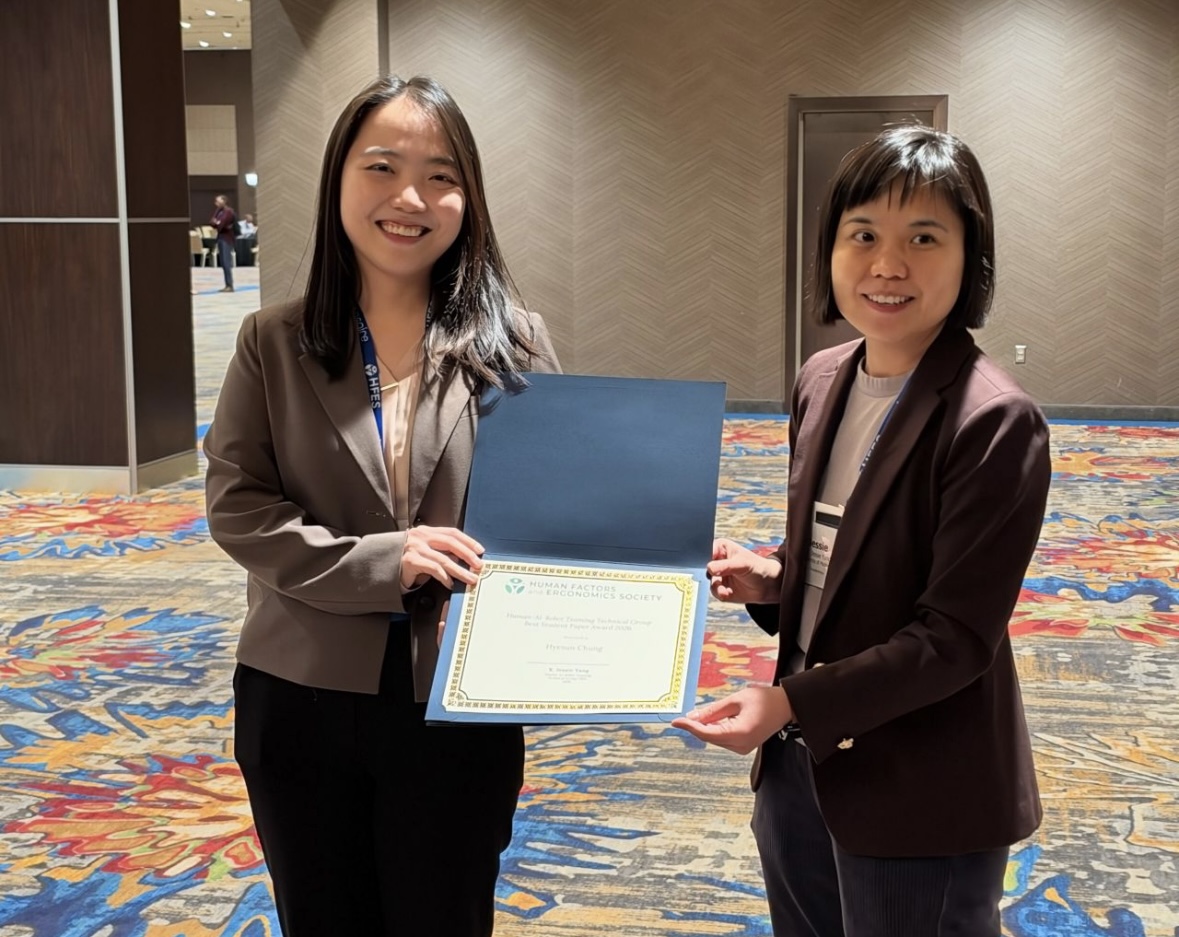
Hyesun Chung, assistant professor of industrial engineering, received the Human-AI-Robot Teaming (HART) Technical Group Best Student Paper Award for research examining human collaboration with artificial intelligence. Her work explores how trust, leadership and individual differences influence interactions between people and AI teammates.
Jing Zang, a fourth-year Ph.D. student in Pitts' Next-generation Human-systems and Cognitive Engineering (NHanCE) Lab, received the HFES Perception and Performance Technical Group (PPTG) Student Research Grant. The award will support her dissertation research on context-aware human–automated vehicle interfaces, contributing to efforts to improve how people interact with automated driving technologies.
Myeongkyu Lee, also a fourth-year Ph.D. student in the NHanCE Lab, received the HFES Student Member with Honors Award, recognizing his accomplishments and contributions as a student member of the society.
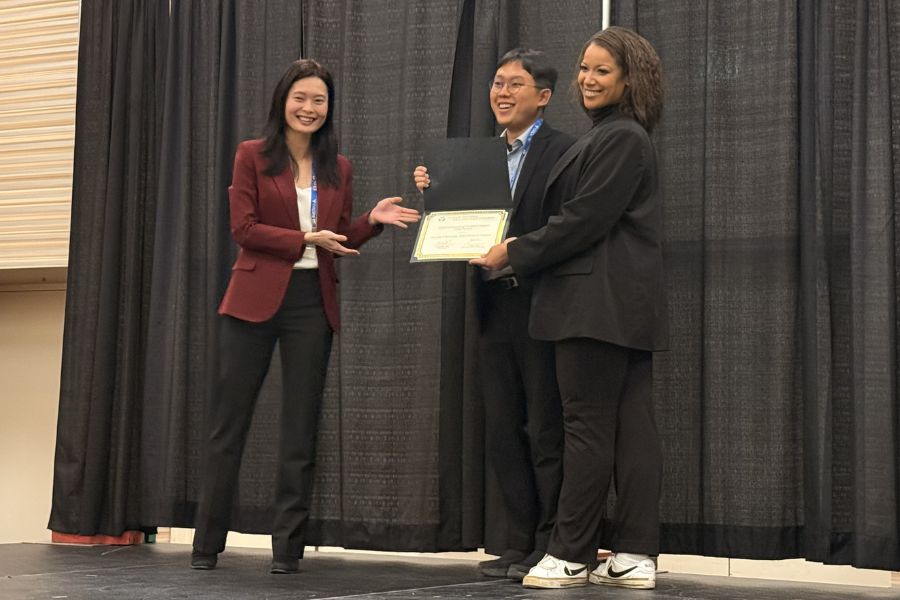
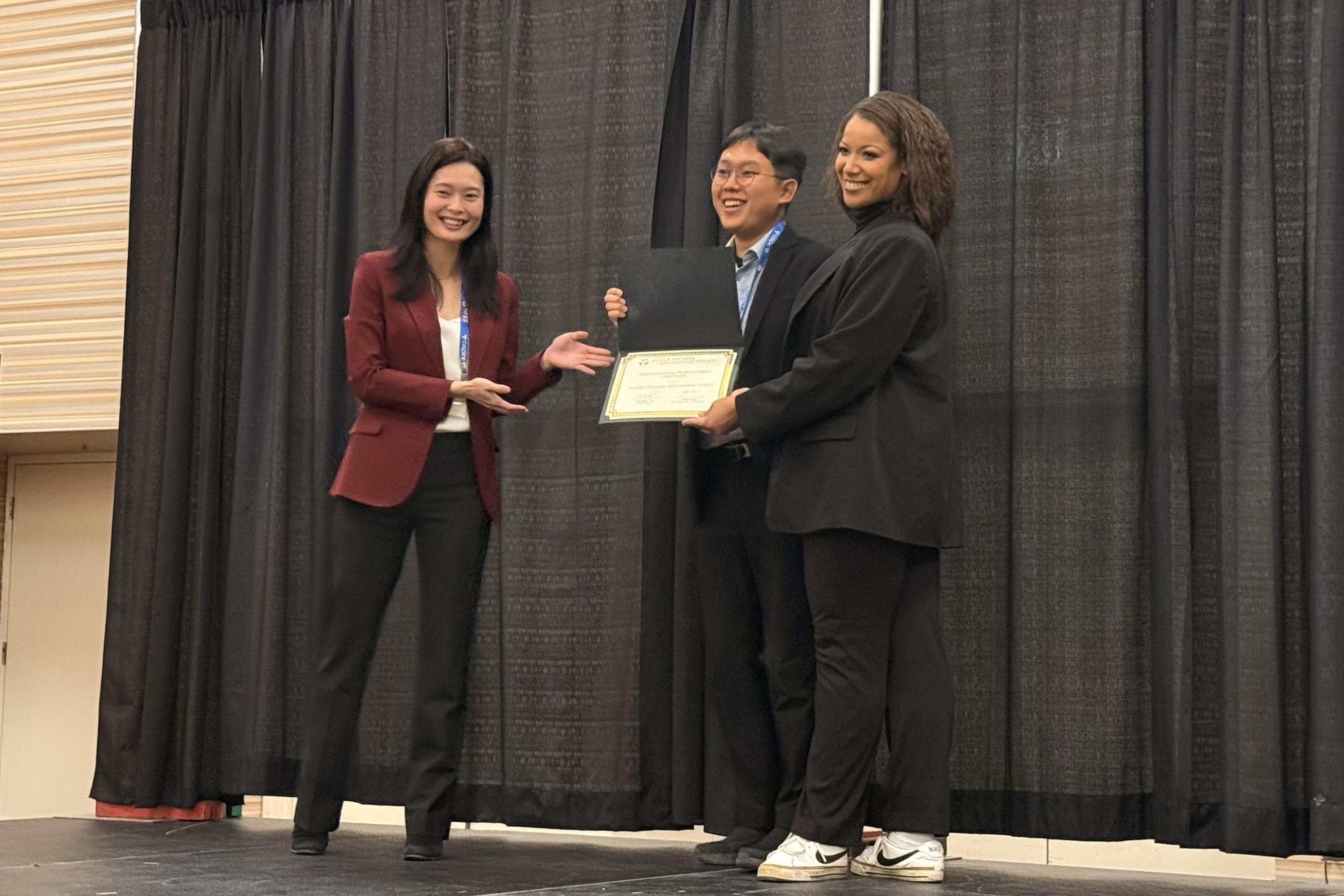
The Purdue HFES Student Chapter received its 17th Gold Chapter Award, continuing its longstanding tradition of recognition for outstanding student involvement and contributions to the human factors and ergonomics community. Led by Lee, the chapter brings together students from multiple disciplines with shared interests in human performance, technology design and human-system interaction.
In addition to the individual and student chapter honors, the Surface Transportation Technical Group (STTG), chaired by Pitts, earned Gold Level distinction in the HFES Technical Group Circle of Excellence, recognizing the group's successful fulfillment of its mission and meaningful contributions to the society.
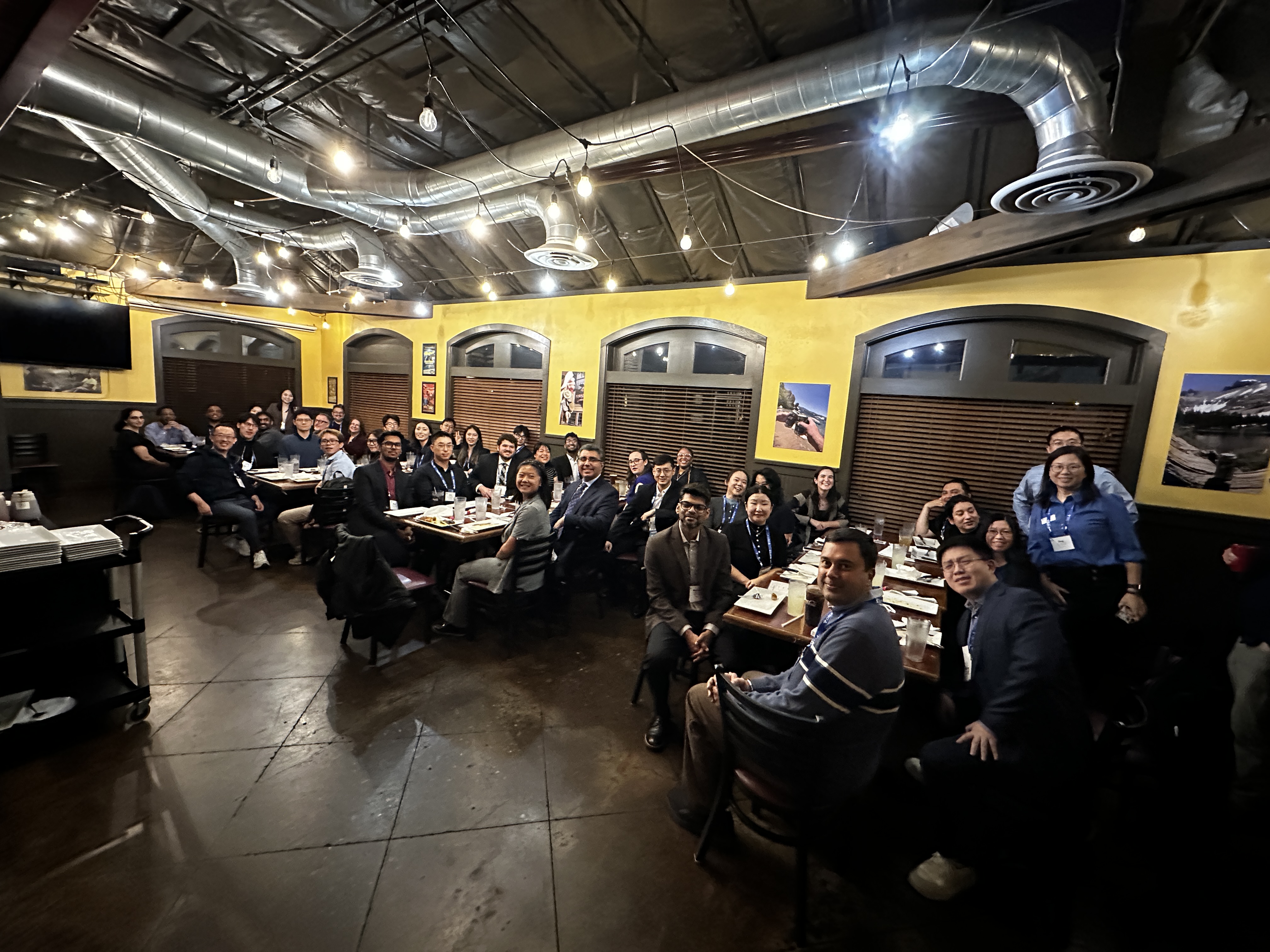
Beyond the conference presentations and awards, the annual meeting provided an opportunity for Purdue's human factors community to reconnect. On October 21, the Edwardson School of Industrial Engineering hosted a dinner attended by more than 40 Purdue students, alumni and faculty members.
The recognitions reflect the breadth of human factors research and engagement at Purdue IE, from advancing accessible transportation and human-AI collaboration to preparing the next generation of researchers and leaders in the field.