
PV Magazine Highlights Twice: Integrated Wind, Solar and Battery Technologies for Extreme-Cold Conditions Led by Purdue ChE Professor Pol
PV Magazine is an independent, technology-focused media platform that covers the latest developments, market trends, and innovations in the solar photovoltaic (PV) and energy storage industries worldwide, providing in-depth reporting, industry news, and analysis to professionals and stakeholders.
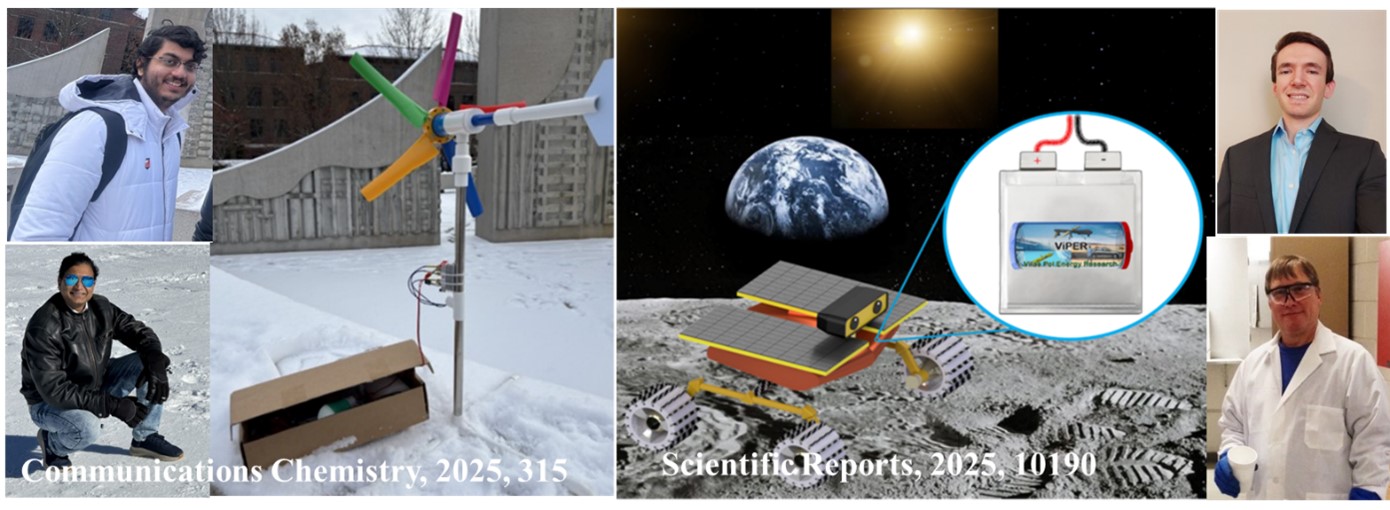
Professor Pol’s research team in the Davidson School of Chemical Engineering at Purdue University has achieved a significant advance by developing a novel testing platform to evaluate solar-plus-storage systems across the remarkably broad temperature range of −180°C to 300°C. For initial validation, the platform integrated a polycrystalline silicon photovoltaic (PV) cell with an innovative lithium-ion battery featuring a niobium tungsten oxide cathode and advanced electrolyte. This system demonstrated robust charge-discharge cycling at temperatures as low as −120°C, significantly surpassing the capabilities of conventional lithium-ion batteries. The research is published in the journal Scientific Reports as “Efficient photovoltaics integrated with innovative Li-ion batteries for extreme (+80°C to −105°C) temperature operations”. This achievement is highlighted by PV Magazine in the article "Solar-plus-storage for extreme low temperatures".
Moreover, PV Magazine highlights a recent study from the same team, which successfully demonstrated a sodium-ion battery (SIB) pouch cell capable of reliable operation in extreme, ultra-low temperatures, achieving stability down to -100°C. The SIB research progressed beyond laboratory testing to successful field demonstrations, integrating the pouch cells with both a mini wind turbine and polycrystalline silicon PV modules to validate system-level performance. The findings were published in the paper “Evaluating sodium-ion pouch cell battery for renewable energy storage under extreme conditions” in Communications Chemistry
Comprehensive research from Professor Pol's group establishes a cohesive path forward by utilizing the validated integrated PV-battery architectures and planning to extend testing to perovskite photovoltaics, betavoltaic sources, and novel lithium and sodium-ion batteries. This work aims to enable reliable renewable power across extreme temperature ranges for critical applications in polar regions, defense, and deep-space exploration. It is fascinating to observe that silicon solar cell efficiency increases at lower temperatures due to the widening of the band gap, while battery performance typically decreases as temperature drops, presenting both opportunities and challenges for integrated renewable energy systems. The details of patented innovations and publications can be found at ViPER.