
Purdue's Flying Ducks: Ambitious design goals give Boilermaker team their best finish in 15 years in AIAA Design/Build/Fly competition
Written by the student members of the Purdue AIAA Design/Build/Fly team

What do rubber ducks and hockey pucks have to do with aviation? For this year’s Design/Build/Fly competition, held by the American Institute of Aeronautics and Astronautics (AIAA), teams from around the world sought out their own answers to this question.
The design goals change every year. For the 2025-26 cycle, the rules were simple: design an RC aircraft that can tow a banner while also carrying passengers (rubber ducks) and cargo (hockey pucks).
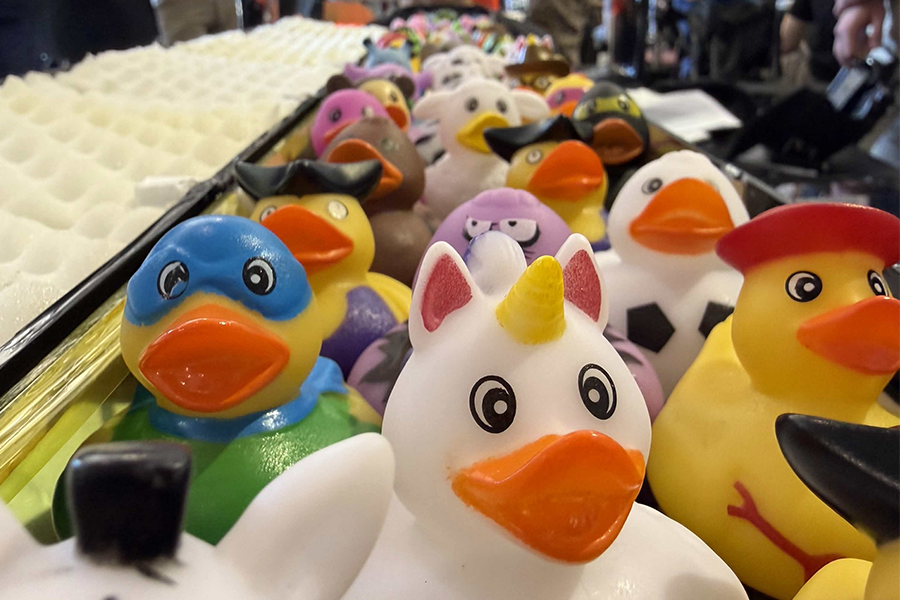
For the 20 students in Purdue’s DBF team, our final rank — 11th out of 98 teams — was a huge success for the team: It marked the first time in over a decade where we successfully completed all three flight missions.
What led to this success was months of intense design, construction, and testing work built on the backs of years of previous experience competing. This year’s team gained dozens of hours of hands-on experience, both for all 16 of the members that traveled to competition and the rest of the team that helped with aircraft development.
Each year, around the start of the fall semester, AIAA releases the rules for the competition, which takes place the following April. For 2025-26, they released the rules earlier than expected, which allowed all of us to get excited about the potential designs extra early before our travel to Wichita, Kansas for the final competition. How would we make a plane that could haul a bunch of ducks and tow a gold-and-black banner?

After a few weeks of club introductions, requirements breakdowns, and brainstorming, we finally had a design to pursue. We decided to go all in on carrying passengers, with a final aircraft that could hold 54 ducks and 9 pucks, one of the highest totals out of the competition. We also incorporated a unique-looking tail design, with a removable middle vertical stabilizer to tow our banner.
Completing this task would prove difficult; we had to pursue a larger fuselage than had ever been done in club history, and we had to construct a tail unlike any we had experience with. These choices were intentional: We wanted to branch out into more uncomfortable designs to give the entire team more experience, and to give ourselves a better shot at higher ranks.
Our ambition paid off.
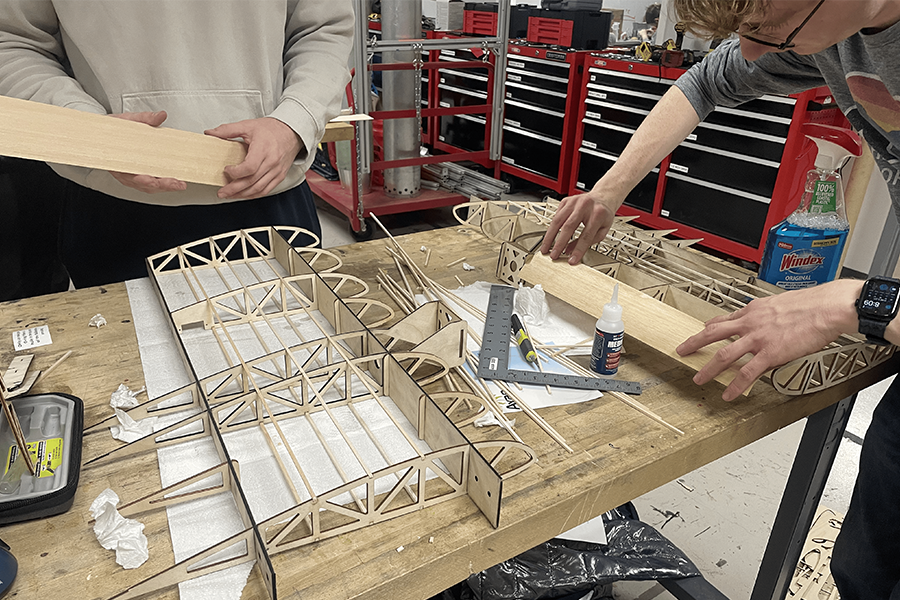
We pushed through the many trials and tribulations of the fall semester, including midterms and a technical proposal. A harsh December meant we had to clear snow from the local RC runway. By the start of finals week, though, we were able to fly our prototype and collect valuable data.
A huge design review with our sponsor in the spring semester led to a weeklong scramble finalizing our report for the competition. These reports are heavily weighted by the competition committee.
By the time we arrived in Wichita for the competition, we had flown a second prototype aircraft, crashed it, rebuilt it, and flown it successfully. We were nervous but confident. Success in the first two missions – first empty, then with our payload of ducks and pucks — kept our spirits high.
That success raised the stakes for us, though. It had been years since the last time our team had success in the third mission.
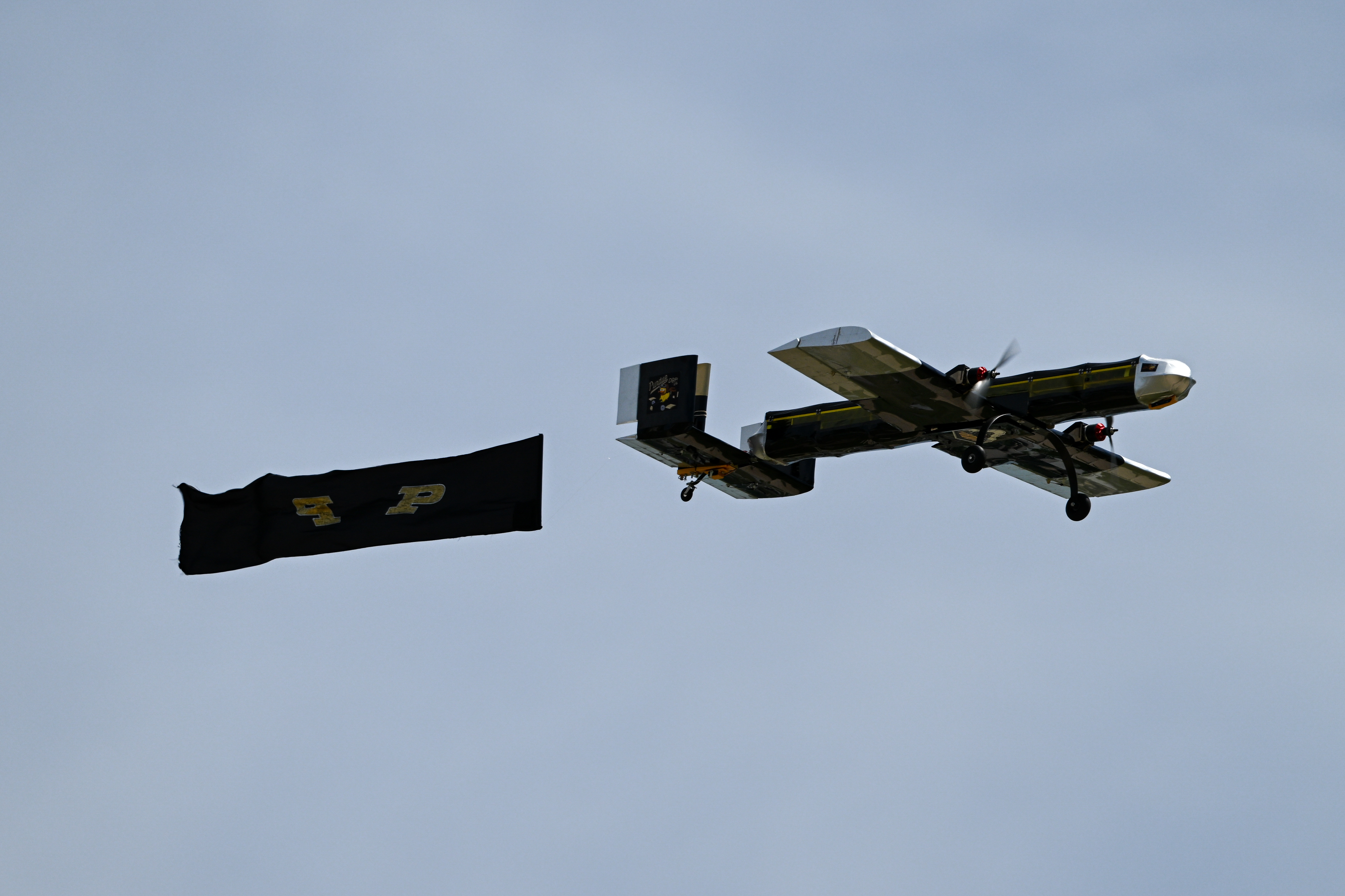
We watched with bated breaths as the aircraft took off, flew, and finally deployed our banner in flight, going around for another three laps before landing with no incident.
This past year was a resounding success: finishing 11th overall gave us our first top 20 ranking since 2011. None of this could have happened without the generous sponsorship of General Atomics, the advice of Professors Tom Bietsch, Thiago Guimaraes, and James Canino, and the facilities granted to us by Purdue.
We are looking towards our future to continue improving, with a lofty goal of winning the entire 2026-27 competition.
Keep up with our latest build on Instagram and LinkedIn, and join us for this year's callout on Tuesday, September 1 in PHYS 114!