
Software-first startup led by Purdue alums receives $220k in funding
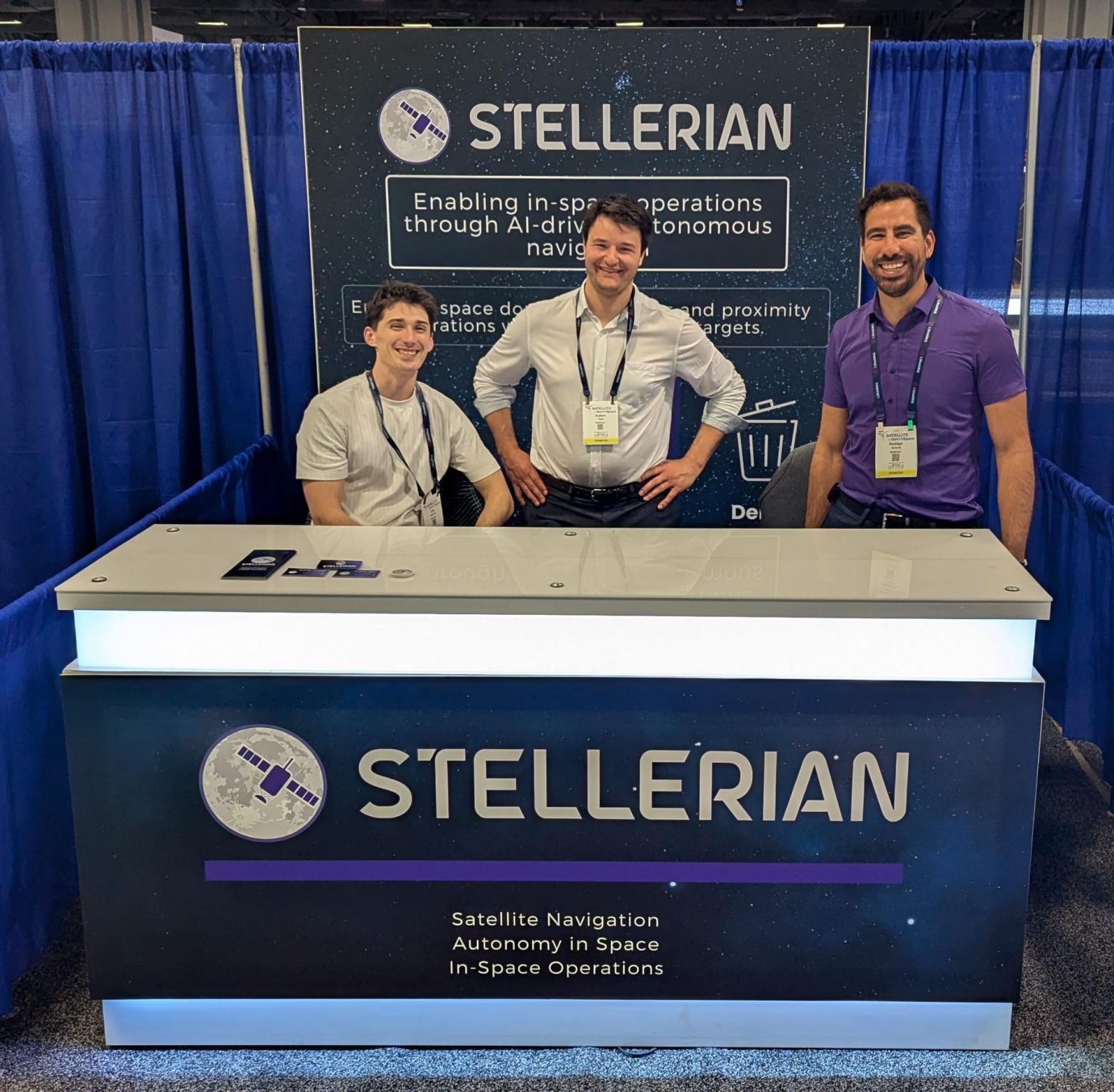
A new startup won key funding from the Techstars Space Accelerator, a prestigious technology incubator program. The company, founded by two Purdue AAE alumni, is developing lightweight software that will allow even small satellites to detect objects around them. Satellites can then use that information to perform maneuvers like collision avoidance or docking to conduct repairs.
Stellerian is a software-first company focused on, according to Rodrigo Schmitt (PhD AAE '25), “(becoming) the new standard for safer and more robust satellite navigation systems”. The company expects to accomplish this with software designed for both long-range navigation, which calculates the trajectory of a satellite against a background of stars, and short-range vision, which is trained on generated images to detect how close a satellite is. The software’s parallel tracking allows for simultaneous long-range and short-range detection, providing much more accurate and efficient connections with other spacecraft. A software-first approach, Schmitt says, maximizes their flexibility and adaptability, replacing heavy hardware with code.
There’s a lot of high-level math required to make it all possible, which can be time-consuming for less powerful computers. Schmitt’s studies at Purdue were fundamental to making these complex calculations possible on a small, low-power CubeSat platform. “There’s a lot of controls, orbital mechanics, and software development involved in both of these, which is where having a deep aerospace technical background really makes a difference,” he says.
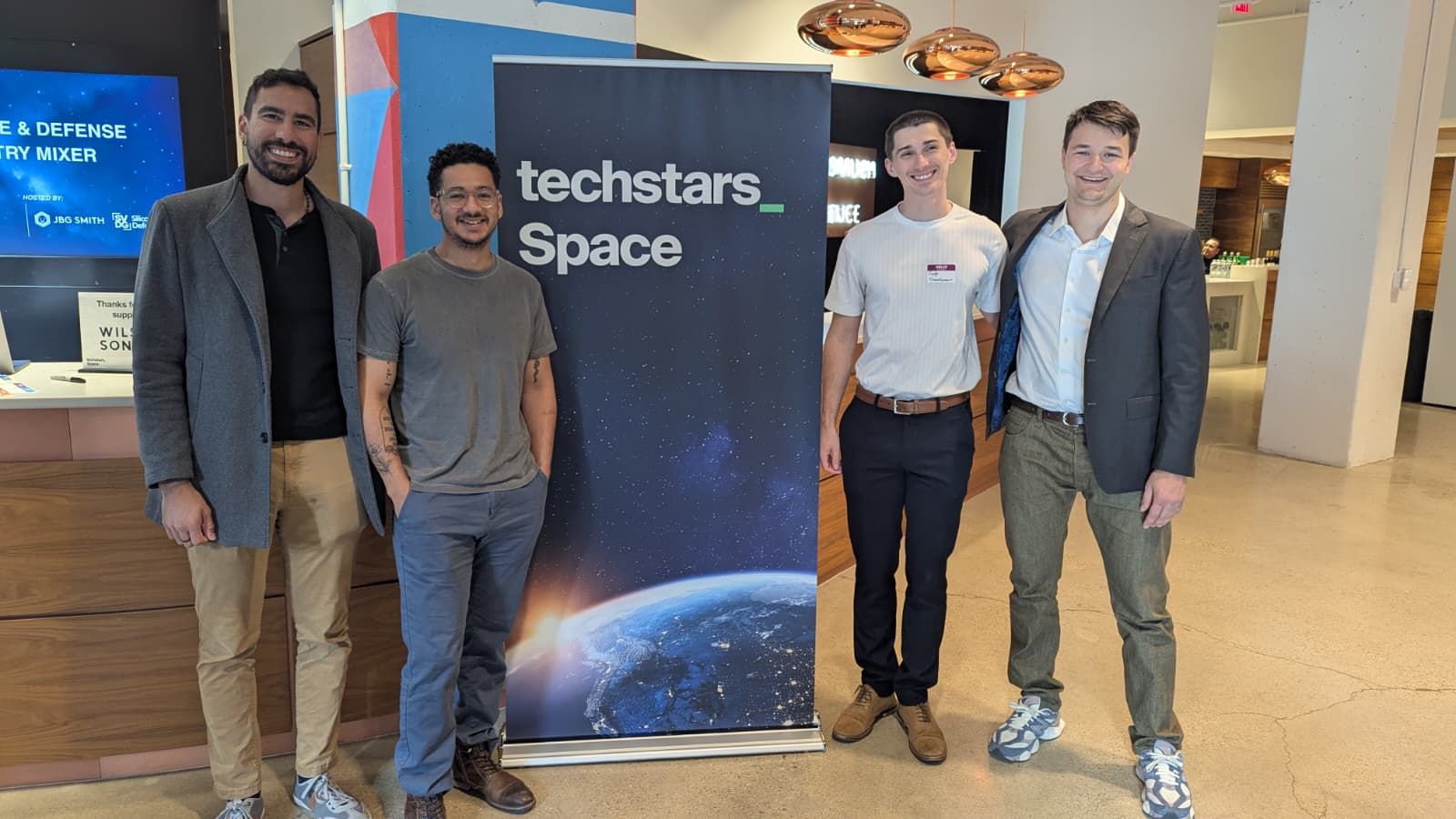
Schmitt met astrodynamicist Cody Waldecker (PhD AAE '25), his co-founder, while they were both pursuing their PhDs at Purdue. Despite being involved in different programs, the two grew familiar with each other through several AAE activities and events. These occasions, as well as the proximity of their offices, easily prompted frequent conversations about Waldecker’s startup, Stellerian. The pair soon realized that their goals were aligned, so Schmitt hopped on board to partner with Waldecker in 2023. Just two years later, their company received $220k in funding from TechStars Space Accelerator in one of the most competitive programs in the US.
The navigation software is currently being tested on a ground-based satellite through a third-party collaborator, with extensive updates coming by June of this year. Stellerian is also looking into a full-system test flight using a 12U CubeSat with all software and hardware on board.
Find the latest updates from Stellerian on their website and on LinkedIn.