
Khir & Kong advised teams experience ShahLab.AI success
This past summer, 3 teams representing the Edwardson School of Industrial Engineering advanced to the next round of the ShahLab.AI competition.
Bringing together students, faculty, and external partners, this Purdue Engineering initiative aims to address pressing societal challenges through innovative AI solutions. Deemed the “AI for Social Good Competition”, teams work with community partners to develop their ideas into measurable, ethical, and sustainable impact. Rather than simply replacing human-developed solutions, each interdisciplinary team developed a system to supplement the work being done to solve real-world problems.
One student-led project, advised by Dr. Nan Kong, partnered with North Central Nursing Clinics to produce CLARA: an AI-assisted system for evaluating nursing procedure videos. As a professor in both the Industrial and Biomedical Engineering departments, Dr. Kong and his team were able to identify a healthcare workforce development challeng that they believed AI could help address. Currently, the assessment workload for nursing instructors education and practice is incredibly high. However, by introducing CLARA, the system can analyze student performance, examining whether each step was performed correctly, how confidently it was completed, and whether external difficulties affected it. Its aim is not to replace nursing instructors, but to reduce their workload, allowing for more attention directed at uncertain or safety-critical cases. Simultaneously, CLARA is centered on providing trainees with faster, more personalized feedback without lowering the evaluation criticality and compromising the learning outcomes.
Student team members Shen Chang (PhD, PWL BME), Eric Tang (UG, in PUI CS), Francis Lung (UG, in PWL BME), together with Jessica Xie (a local high-school student) played a significant role in conceptualizing and building CLARA with their technical competency and entrepreneurial spirit. In fact, their engineering background allowed them to identify a significant challenge in curating their data. Where most nursing videos contain ideal demonstrations of practice, CLARA needed authentic examples of student error, hesitation, and varied performance style to be trained on. By looking beyond the AI model and understanding the real-world needs to be addressed by this system, the team was able to design a process that could fit into nursing education rather than simply developing a technically accurate model. They collaborated with the Purdue Nursing Center to collect video data. Then, using the help of student annotators and nursing experts, they were able to gain clinical judgments on the performance. As the team moves into Phase 2, they hope to test CLARA on their expert-annotated dataset, while also scaling their data to improve the model’s accuracy and reliability. In addition, with the joining of Abijith Subramanian (UG in PWL Polytech) onto the team, they hope to further the collaborations with North Central Nursing Clinics and Purdue School of Nursing to develop the AI technology more comprehensively, establish the data inventory on nursing education, and scale their community implementation.
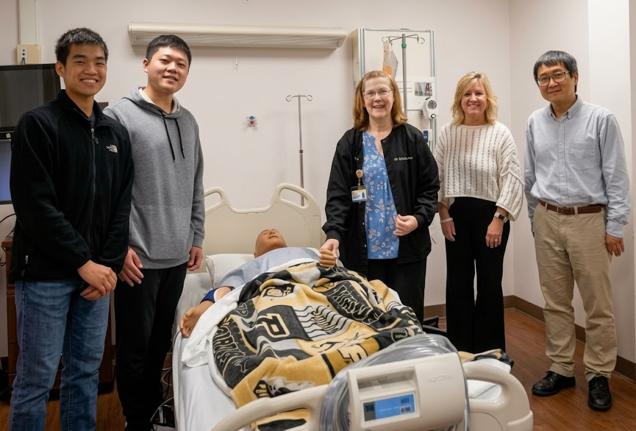
Francis Lung (UG student in BME), Shen Chang (PhD student in BME), Dagne Hartman (Clinical Assistant Professor, Nursing), Jennifer Coddington (Clinical Professor, Nursing), Professor Nan Kong
Dr. Kong also served as the faculty advisor of another student-led project, an AI-based solution focused on Building Community Pathway Intelligence for Opioid Response. This is in collaboration with Dr. Yingjie Chen, Professor in Polytech Institute, and Dr. Nicole Adams, a research scientist at the Regenstrief Center for Healthcare Engineering. Alongside his students H. Zhou, S. Ahmad, P Marpu, and N. Khanal, the team determined this as an area where system-level decision support could be valuable. After identifying this clear, real-world problem, the team reached out to the Drug-Free Coalition of Tippecanoe County to understand local needs, refine their project topic, and establish an initial partnership that could develop into a feasible community impact.
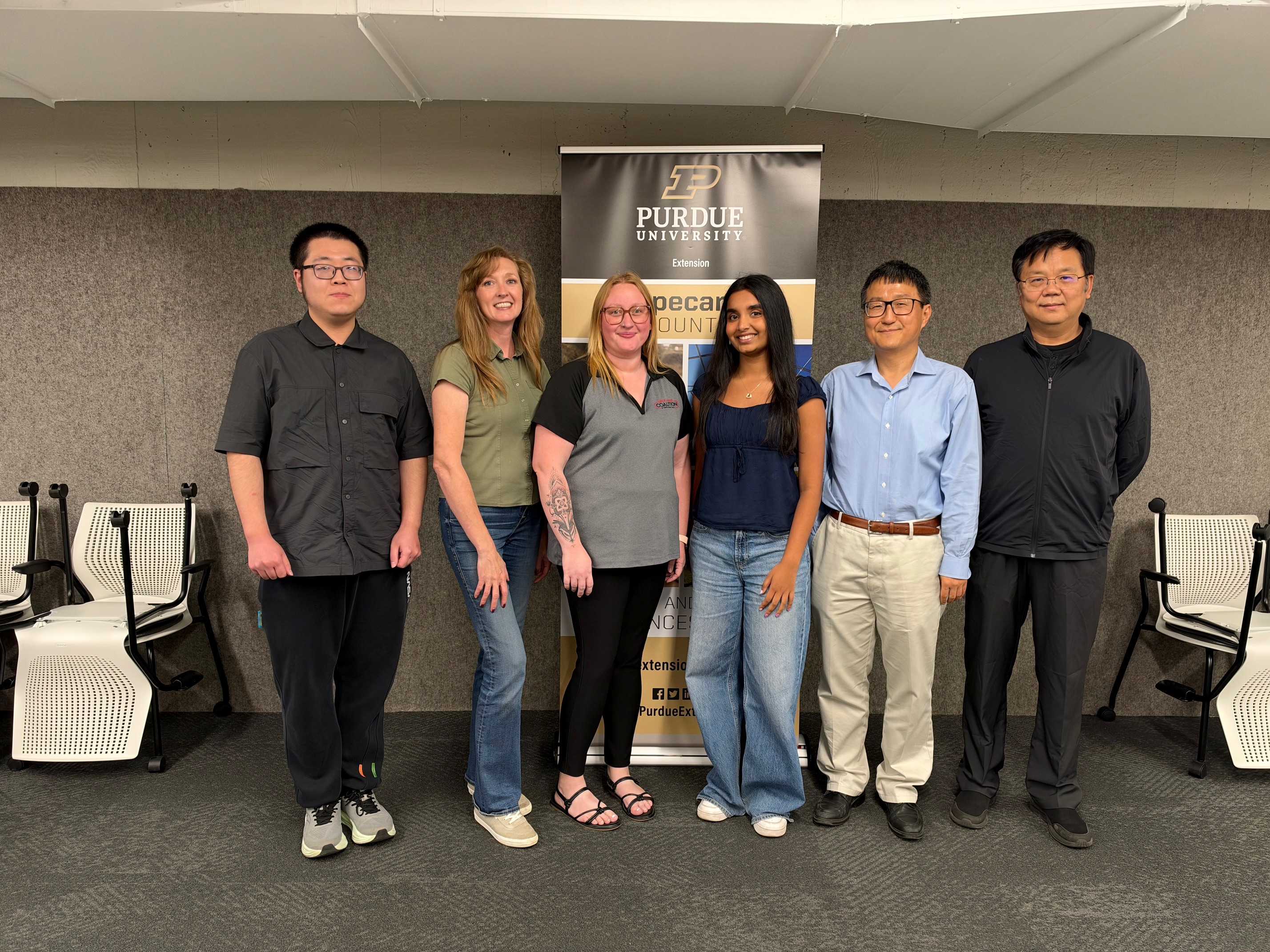
Haopeng Zhou (student lead, IE PhD), Nicole Adams (Research Scientist, RCHE), Rebekah Ferney (Executive Director, Drug-Free Coalition of Tippecanoe County), Prisha Marpu (CS Undergrad), Nan Kong (Professor, BME & IE), Yingjie Chen (Professor, Polytech)
The team aims to create the Community Pathway Intelligence Platform (CPIP), a web-based, AI-enabled platform that helps communities understand how people move through opioid prevention, treatment, recovery, emergency response, and justice-related systems. By translating qualitative narratives and records into structured pathway maps, they hope CPIP will be able to help groups from coalitions to frontline practitioners alike.
“Before you optimize, model, or automate anything, spend time listening to the people who experience the system every day,” says Zhou. Having an IE background was monumental in directing his approach to the problem at hand. He was able to view the issue of opioid response as a complex web of interactions between stakeholders, feedback loops, resource constraints, and decision points. This mindset translated into the implementation of actionable system intelligence, coexisting with privacy-aware data practices and user-centered documentation. The team prides itself on their mission to keep the platform understandable and trustworthy for non-technical users in the community. This, in turn, informs their Phase 2 goals of integrating multimodal data ingestion with community-specific pathway quantification, ensuring the platform is modular enough to adapt to various other societies.
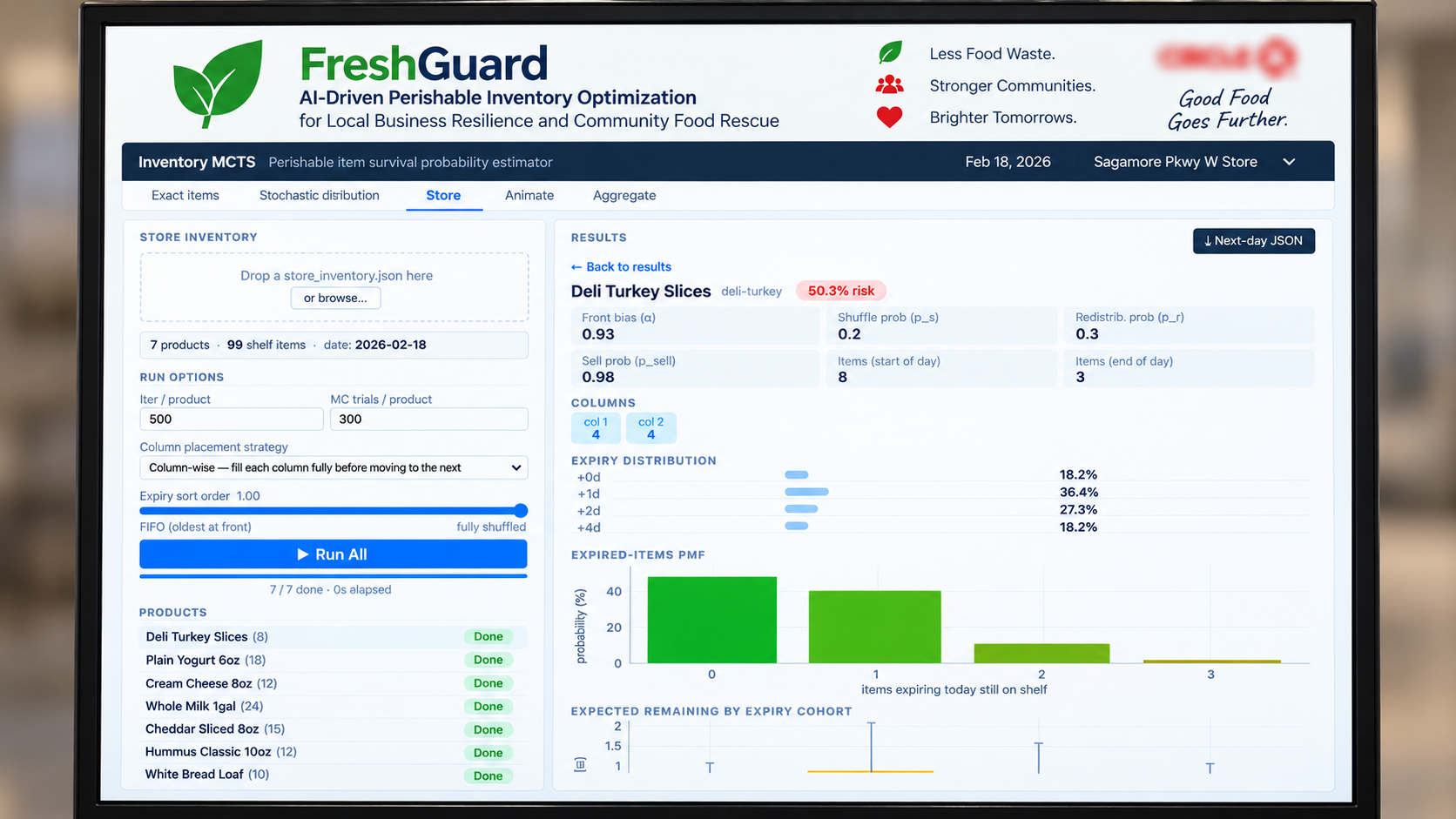
The FreshGuard dashboard, demo
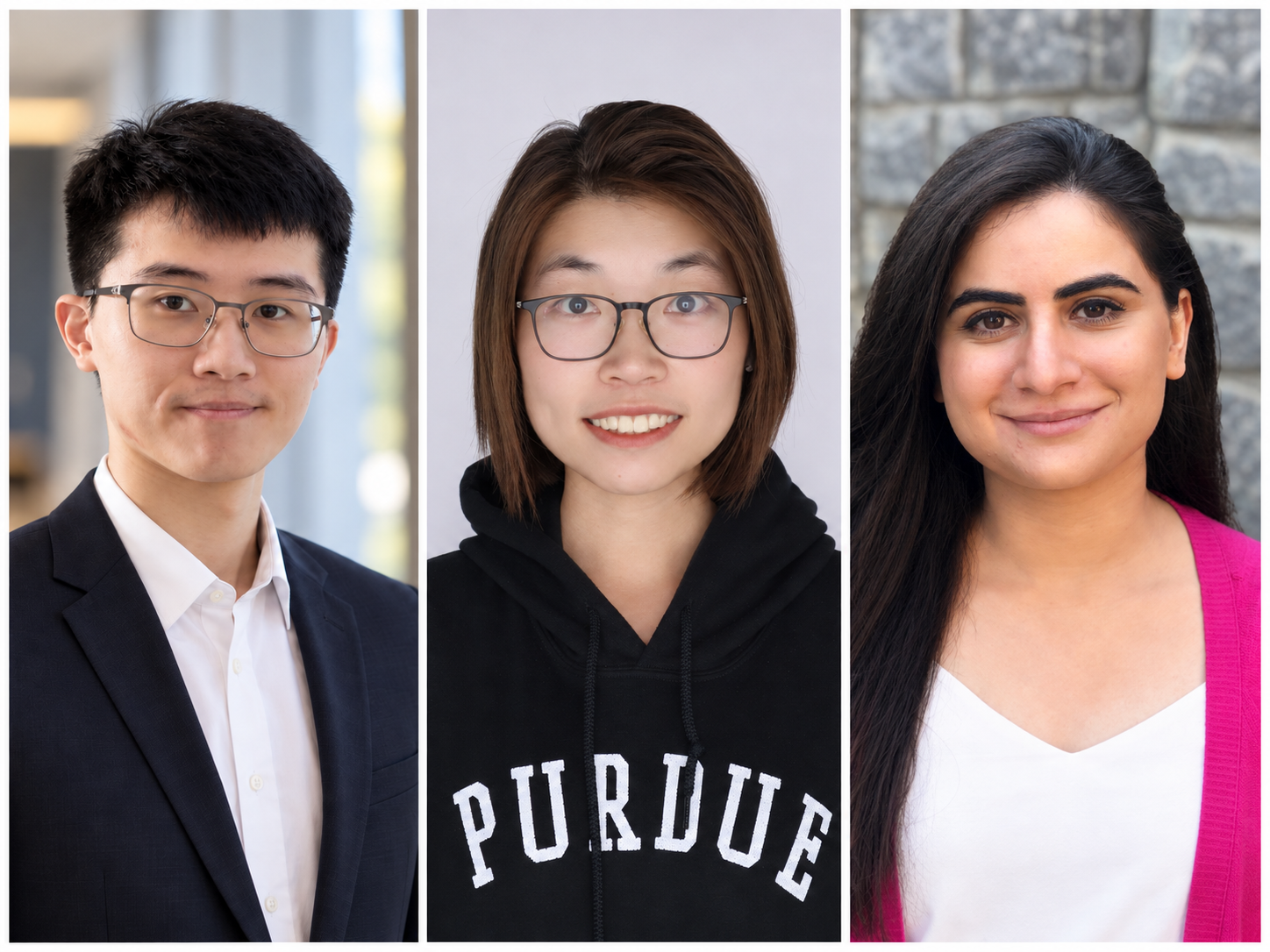
FreshGuard, advised by Dr. Reem Khir, is another IE project moving on in this competition. Their solution was inspired by a frequent problem the team recognized: stores throwing away good food, while people a mere few blocks away go hungry. In response, the team, including students Hsu-Hsing Mark Chen and Hazel He, took it upon themselves to determine why this was happening. By communicating with local store owners and observing how they ran their day, they were able to design a project simple enough to fit into someone’s daily life. FreshGuard informs store owners which foods are about to go bad before it does. By presenting that foresight, foods headed to the dumpster can instead go to shelters or sold at a discount while still fresh.
Currently, the team is working on tailoring their prototype to their seed store, so the decisions it supports are directly relevant to that store’s method of operation. This guarantees a convenient solution to local owners, instead of them needing to adapt to a new methodology in order to improve their food practices. FreshGuard’s ability to provide informed, actionable insights directly aligns with IE’s emphasis on improving the world around it. Though it is in its initial modelling stages now, as the competition progresses, the team hopes to scale and test the system across business models, shaping direct change in the Greater Lafayette area.
All three of these AI systems present realistic solutions to real-world problems. By maintaining a community-forward approach, these student-advisor teams are able to engineer strategies that fit into the day-to-day life of those facing the problem. Not only does this make their solution accessible, but it is also more likely to be implemented and drive fundamental change in society. As they move onto the next stages, each project will have the opportunity to receive up to $50,000 to further scale their idea by collaborating with an organization. By matching Purdue’s research capabilities with partner expertise, our IE-oriented teams demonstrate the true potential of AI for Social Good.
Related Links
The next phase of the competition will take place on Wednesday October 21, 2026 at the Hub for Innovation, Ventures and Entrepreneurship (HIVE)