
Purdue Chemical Engineering Welcomes Kaustav Bera as Assistant Professor
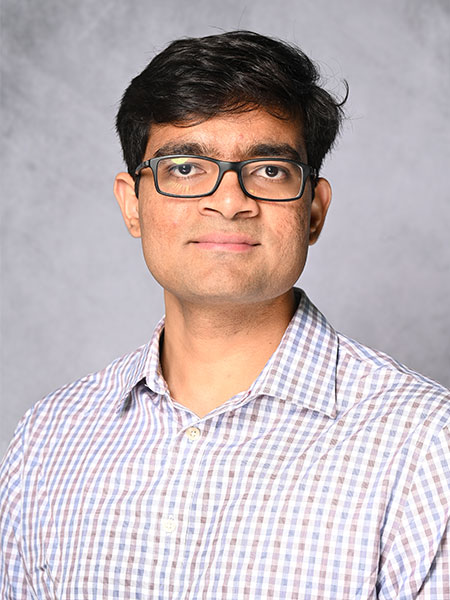
WEST LAFAYETTE, Ind. — The Davidson School of Chemical Engineering at Purdue University has appointed Kaustav Bera, Ph.D., as an assistant professor, expanding the school’s expertise in biomolecular engineering, mechanobiology and advanced biomaterials.
Bera joins Purdue from the University of Colorado Boulder, where he is a Helen Hay Whitney Foundation postdoctoral fellow. His research combines phototunable hydrogel systems, three-dimensional organoids and advanced microscopy to develop tissue-mimetic models that better replicate the structure and function of human organs.
He earned his Ph.D. in chemical and biomolecular engineering from Johns Hopkins University, where his research examined how physical forces — particularly those generated by body fluids — regulate cell movement and cancer spread. He holds bachelor’s and master’s degrees from the Indian Institute of Technology Kharagpur.
Bera’s research focuses on understanding how physical forces within the cellular environment — including fluid properties and tissue mechanics — regulate cell behavior, with implications for diseases such as cancer. His work seeks to uncover how mechanical and molecular signals shape tissue homeostasis and disease progression, ultimately informing new strategies for drug discovery and regenerative medicine.
Bera has published extensively in leading journals, including Nature, Nature Materials, Advanced Materials, and Science Advances, and has secured more than $300,000 in individual research funding as a principal investigator. His research has contributed to the understanding of how extracellular fluid properties influence cell migration and cancer metastasis, and how phototunable biomaterials can be used to study tissue morphogenesis and homeostasis.
Bera is deeply committed to teaching and mentorship. He has designed and taught hands-on engineering courses, including a freshman-level curriculum at Johns Hopkins University that introduced students to bioengineering approaches for studying cell biology.
Bera is also active in the broader engineering and scientific community, having served in leadership roles with the American Institute of Chemical Engineers, the Postdoctoral Association of Colorado Boulder, and during National Cancer Institute Junior Investigator Meetings.
Learn more about Bera and his work here.