
Prof. Albright's memoir of the Manhattan Project
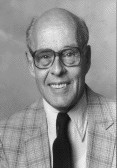
Experiences Relative to Atomic Energy and the Bomb: 1944-1946
by
Lyle F. Albright
Introduction
I first learned of producing atomic energy on a large scale in 1944. In the next 18-19 months, I became involved in the Manhattan Project, which resulted in the atom bombs dropped on
Experiences at
I was starting my last semester of my masters program in chemical engineering in January 1944. I had obtained my B.S. degree on May 1943 and had immediately started the graduate program plus a research project said to be of major importance to the war effort. The project investigated one step of the process to produce the high-explosive TNT. Several years later, I learned that my research advisor, a full professor, was making a major error in the analysis and explanation of the data.
When it became time to enroll for the last semester of my masters program, I was told (actually ordered) to take an advanced modern physics course. The instructor of this course was less than outstanding, but one portion of the course discussed the use of uranium for the production of atomic energy.
As the semester progressed, the chemical engineering staff suggested that I go into industry upon completion of my masters program; there was a need for engineers in industries that were key to the war effort.
(a) A
(b) Since I had been awarded a fellowship sponsored by Allied Chemical Co., I contacted them. They provided travel money for me to fly to
(c) Shortly thereafter, the head of Chemical Engineering at the University informed me that E.I. Du Pont de Nemours was interested in offering me a position at the Grasselli Laboratory in
Experiences at Grasselli Laboratory (May to mid-July 1944)
My supervisor at the Laboratory was a Purdue chemical engineering graduate (whose son would 12-15 years later be in one of my classes at Purdue). After signing the confidentiality papers, the father picked up a slug (solid cylinder) of metal. He said, We call it T-metal, but it is really uranium. I instantly recognized that this project concerned atomic energy. The project was being funded by the U.S. Army and under their general supervision. It was part of the Manhattan Project.
While in
We worked in one wing of the Grasseli Laboratory; entry into this wing was restricted. Our group consisted of perhaps 10-12 engineers with various degrees. One had his Ph.D. and later became a well-known chemical engineering professor at the
I did not know at the time that canning the uranium slugs was of major concern and not yet perfected. Later, I learned that the major work on canning was done at the
On at least two weekends, I took the Friday evening ferry boat from Cleveland to Detroit, and then the bus to Bay City (and then home). On Sunday afternoon, I made the reverse trip arriving in
In July, we were told that our group would be split. Younger members, including me, were to be transferred to the Hanford Engineering Works in
Events at
At the train station, we were met by a bus which transferred us to
Construction of all varieties was occurring in
The construction workers numbering in the thousands were located at what had been the
The location of the Hanford Engineering Works was chosen for the following reasons. First it had been sparsely populated so relatively few people had to be moved in order to maintain secrecy. Second, the
A few Bing cherry orchards had been abandoned. Shortly after I arrived, it was announced that we could pick cherries for 2 ¢/pound. I picked a considerable amount and for the next 2-3 days ate cherries. As a result, I became a very regular fellow.
My first work assignment was within the 300 Area, where Du Pont supervisory and research personnel worked. We soon learned that select individuals were considered to be rising stars in the Du Pont organization. One such individual was the husband of a lady having numerous relatives whose last name was Du Pont. We predicted that he had a bright future. And we were correct, as he later assumed the presidency of the Du Pont company. We heard that Fermi, the world famous physicist originally from
My specific assignment again was to do more work on the canning project. We were probably in a holding pattern waiting for construction of the huge atomic plants. Or the
We were definitely in a shake-down phase. After two or three months, I was told to move to another dormitory. Six of the eight mens dormitories were closed. Apparently there was not enough demand.
The following incidents all occurred in mid-1944. First I swam almost daily in the outdoor 25 yard pool built prior to the Hanford Project. Here I learned for the first time to really swim the crawl stroke. I also perfected side, breast, and back strokes. A year later at a Village picnic, I was asked to demonstrate my swimming abilities.
Second, I only once journeyed to
Third I journeyed to
Fourth in August 1944, I tried out for the very first regular drama of the Richland Village Players. I was chosen to play the hero in the melodrama, Bertha, The Beautiful Typewriter Girl. I was not the perfect choice since I was less than 6 feet tall and was somewhat shorter then the main villain. Bertha, who was beautiful, had a boy friend in the military. Even though I had made no move, one of the lady members of the Players informed me that Bertha would not welcome my attention. Did I really look that dangerous? In any case, historians of the Players claim that Bertha was one of their most successful plays. Who am I to contradict them?
Fifth, I performed magic for several groups, including a show at the Officers Club. This club was in
In probably October or early November 1944, I was transferred at work to the Health Physics Group. This group acted somewhat as safety engineers, but with special responsibilities of protecting plant personnel from all types of radiation beta, gamma, and alpha. The group had been set up about 1-2 months earlier. About 10-15 individuals were in the first group. Then it was decided to expand substantially the group. The first group got the supervisory and day jobs, including the head supervisor of the Health Physics group. The second group, in my opinion, sometimes had more qualified members.
The Health Physics group was divided into at least three sections. The first was to work in the 100 Area where the plutonium was to be produced when the canned uranium slugs were positioned in the atomic piles or reactors. There neutron radiation converted the uranium into plutonium plus a wide range of radioactive by-products. The aluminum coating on the uranium slugs prevented the plutonium and by-products from entering the water flowing over and around the canned slugs. The water cooled the slugs, removing the exothermic heat. I was assigned to this group.
The second section of the Health Physics group worked in the 200 Area. Here the plutonium, unreacted uranium, and by-products in the slugs were separated. In 1944, I was told that the plutonium was only partially separated. Over 50 years later, I learned that weapon grade plutonium was produced in the 200 Area. The third section had responsibilities to determine the amounts of radioactive wastes that escaped from the plants and contaminated the surrounding areas. A friend of mine in this group once asked me to accompany him in a plant car when he made a circuit traveling perhaps 100 miles to the west of the plant. We collected samples of sage brush and other vegetation which were analyzed later for radiation. Low levels of radiation were found. Essentially no communication existed between Health Physicists in the 100 and 200 Areas. This was undoubtedly planned and desired.
Shortly after joining the Health Physics group, our group was informed of the main objective of the Manhattan Project, namely an atom bomb. We were also informed of the dangers of radiation, potential dangers of runaway conditions in the atomic piles, etc. Many years later runaways were actually experienced at Three Mile Island and in
The Health Physics personnel were just part of the group dealing with radiation and health-related problems of workers. The overall section was headed by a medical doctor who had no engineering or chemical training. For perhaps two months, members of the Health Physics group read extensive literature, and listened to lectures including one by our MD supervisor. He told us of the dangers of plutonium especially if it entered the body. He said that if he cut his finger and it became contaminated with plutonium (an alpha emitter) that he would amputate his finger. Over 55 years later, I met an individual whose body still contains minute amounts of plutonium. He appears to be in excellent health. He had worked at
During our training, we learned to operate Bechman instruments, which measured radiation levels. The instruments were portable weighing perhaps 15-20 pounds. Personnel in the 100 Areas would be exposed to low but permissible levels of gamma and beta radiation. Presumably they would not be exposed to alpha emission. But if they were, it would be a matter of grave concern. With objects contaminated with alpha emitting material, the instrument had to be placed in essentially direct contact with the object. To the best of my knowledge, no one in the 100 Area was ever exposed to excessive radiation.
Experiences in 100 Areas (January 1945 till September 1946)
The 100 Area with three atomic piles was located perhaps 25-30 miles from
Of the three piles, I was present at the start-up of at least two. These start-ups occurred in late 1944 and early 1945. As the buses filled with shift personnel arrived at a pile, we were met with Oh What a Beautiful Day over the loudspeakers. We were familiar with the musical
During the start-ups, a Health Physics member was present at each pile around the clock. That meant for each pile that at least four members were on shift work. The units operated so well, that in several weeks, the number of Health Physics members was reduced. Only one Health Physics member was provided per shift for all three piles. The routine was as follows. The member traveled by bus to the first pile. There, he inspected select sites around the unit, recorded key information, and talked to select personnel. This member then drove a plant car to the second pile several miles away where he repeated the duties outlined above. Finally he visited the third pile. Hence only 4-5 Health Physics members were needed in the 100 Area.
Most personnel in plant operations were male. In an adjoining building, there was a nurse (or nurses) who was (were) female. Personnel were also needed in outlying areas for maintenances, crew for holding ponds for exhaust water from pile, etc. (these were all male).
Several incidents that seem quite humorous in retrospect are next discussed. Each provides information on the mindset of personnel on the project:
Preparation for Catastrophic Accidents: As mentioned earlier, the Health Physics member was to assume responsibility as the captain of the ship if a serious accident occurred such as runaway reaction, protective shell of the pile broke in case of an earthquake, etc. In such an emergency, the Health Physics member directed the evacuation of the plant and was to be the last member to enter the evacuation bus. The shift supervisor in charge of plant operations quickly let me know that he was not pleased with this arrangement. In hindsight, I can understand his concern. I was initially only 23 years old while he was probably in his 40s with considerable Du Pont experience as a plant supervisor. Of course, I had the grand total of maybe 2 months training as a Health Physicist. One day, he said to me, Lyle, in case of an accident, come to me and I will tell you what to do. I replied Karl, I will appreciate your advice before I make my decision.
Some time later, we scheduled a practice evacuation. The shift supervisor and I together cleared the building of personnel scheduled to leave. I was the last to enter the bus where I gave the driver the command to leave. Eventually I hope that I earned at least partial respect from the operating personnel including the shift supervisor.
Japanese Balloon Attacks
Health Physicists Are Always Alert: Those of us with top clearance knew that the bomb was to be assembled at the Los Alamos Laboratories in
Was He a Security Agent?: One day, a plant worker tried to pump me for classified information. What was being produced? Obviously, he knew that radiation was present around the unit. He seemed to be too smooth and just a step above most non-technical workers. I politely refused to answer questions, but I immediately suspected that he was a security agent. I knew at the time that a government security agent had made the rounds in my home community shortly after I joined the Grasselli Laboratory.
Did President Truman Really Call Me? On August 6, 1945, the
I was on this afternoon shift and we were boarding the buses at midnight to return to
Exchange of Information at
As I arrived to start the afternoon shift at one of the piles, I found the pile had been shut down. A work crew was inspecting a portion of pile looking for a leak. My Health Physics supervisor was sitting in our office reading something.
As soon as I learned what was occurring, I got my Bechman instrument. On this pile but not on the other two piles, I knew that there was an area of relatively high radiation. I had reported this problem earlier including recording it in our log book. As I approached the location, the radiation level was also still high. I reported this information directly to the shift supervisor. As soon as he inspected the leak, he terminated the work being done by the crew.
A leak had obviously been occurring for weeks, since the radiation levels had been there for weeks. The shift supervisor certainly knew for some time that a leak was occurring. If he had informed me, as he should have because there was the danger of exposing personnel to high levels of radiation, I would have suggested looking in this area.
This pile was shutdown for an extended period of time. Some decay of the radiation levels had to occur before repairs could be made. Fortunately the shutdown occurred after the end of World War II.
Transfer to 200 Area: In late 1945, I was transferred to the Health Physics group in the 200 Area, where plutonium was separated before being shipped to
Then in a week or so, I was abruptly transferred back to the 100 Area. No explanation was given. I have speculated why and considered the following possibilities:
(a) Personnel in the 200 Area complained about me. That seems unlikely since I had only minimal contact with anyone. I spent most of my time reading.
(b) The top management of the Hanford Works realized that I would learn considerable about both the 100 and 200 Areas. They decided that there was no good reason to let me learn so much.
Transfer to Day Shift: Beginning about January 1946, I was promoted to the day shift in the 100 Area. My social life improved greatly. I became more active in the Village Players and the Singles Club.
Questions Frequently Asked:
1) Was it exciting working with the scientific celebrities? My associates by and large were competent, with a few exceptions, but not celebrities. Fermi was the only real celebrity that I saw but did not get a chance to visit. It was an exciting project even though I did not use my chemical engineering skills.
2) For the following questions, the answers are no or I had no information.
(a) How was the atomic bomb constructed? After the war, I learned there were two bomb designs. The test bomb exploded in the
(b) Did I know when the atom bombs would be built and used? The newspaper inconspicuously reported that an ammunition dump had blown up in
(c) Did I know if another bomb was available after the Nagaski bomb?
(d) Did I know how much plutonium was needed to produce an atom bomb? Or what was the production rate of plutonium in the three
3) Could
Leaving